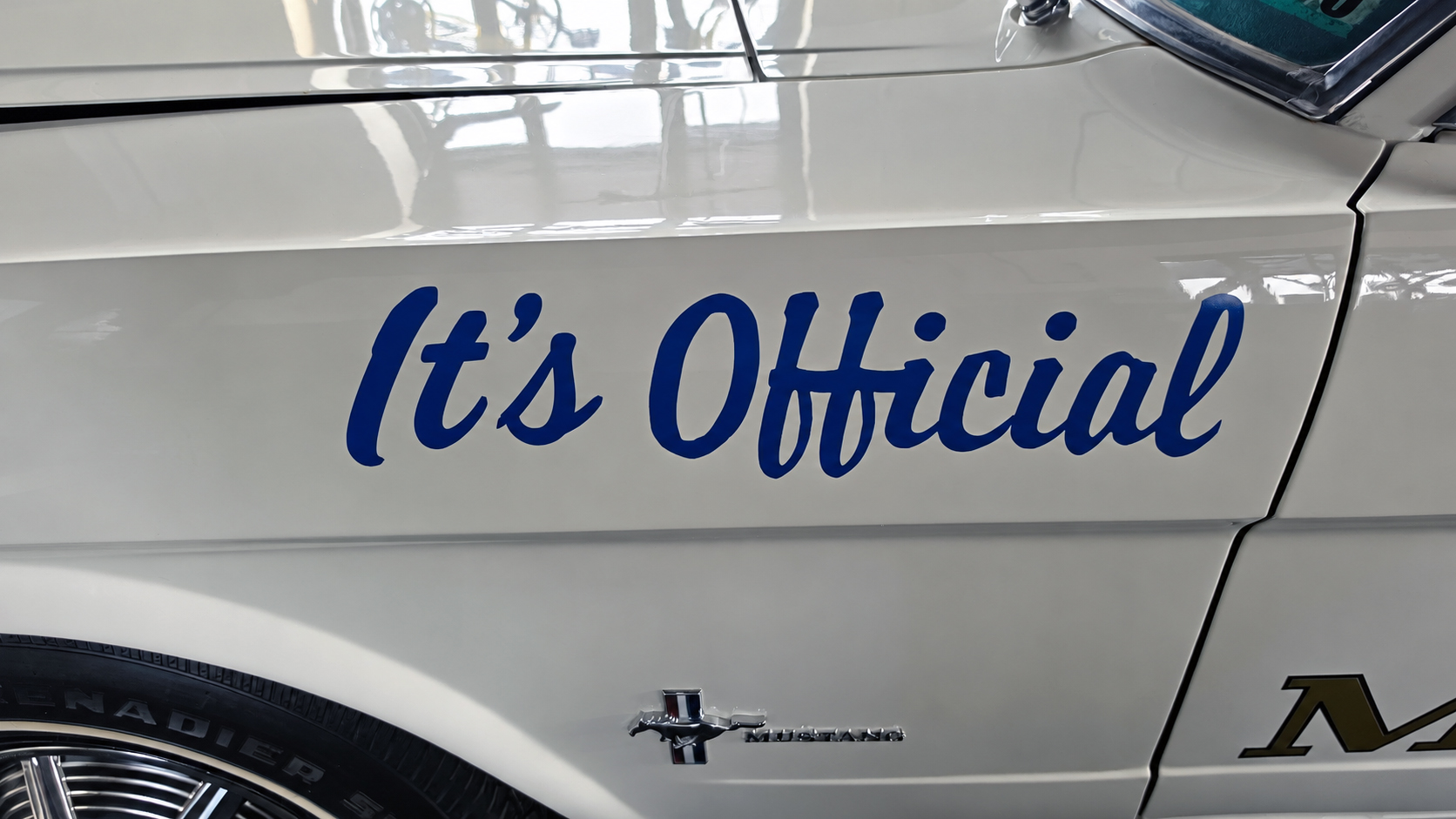
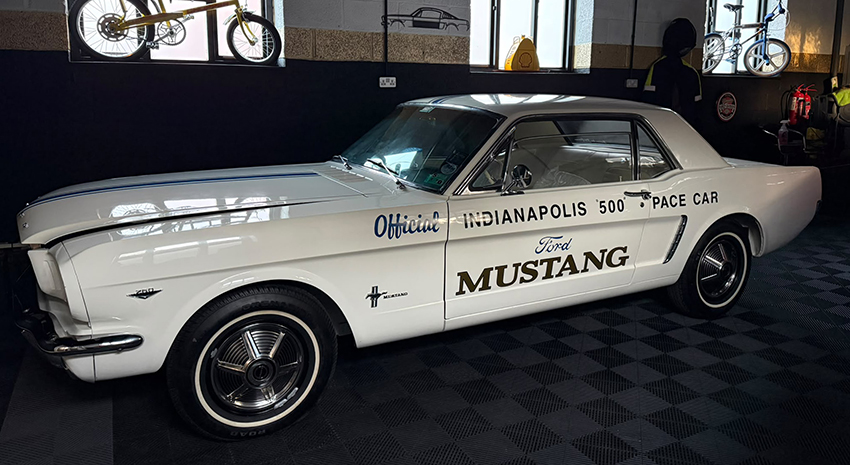
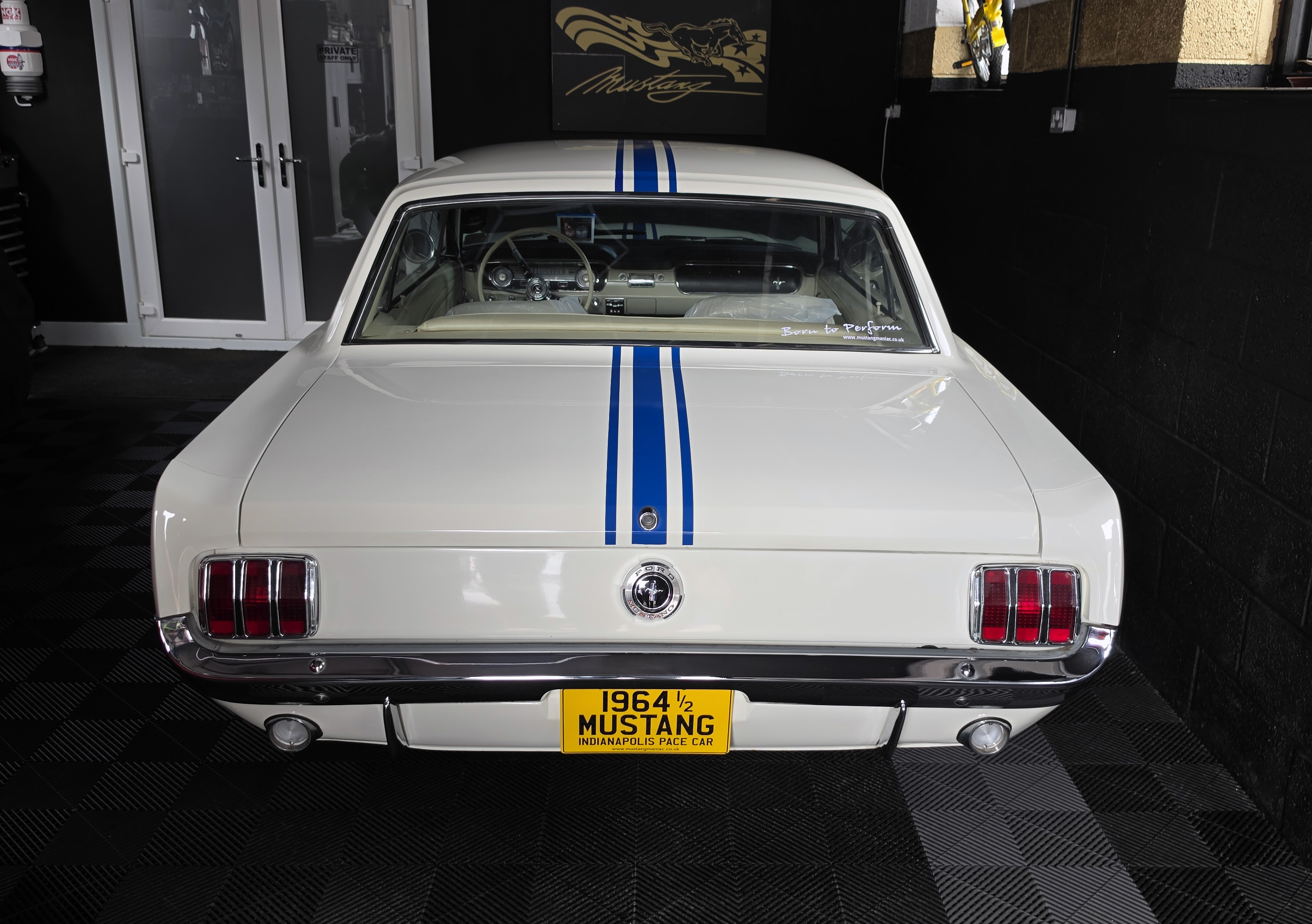
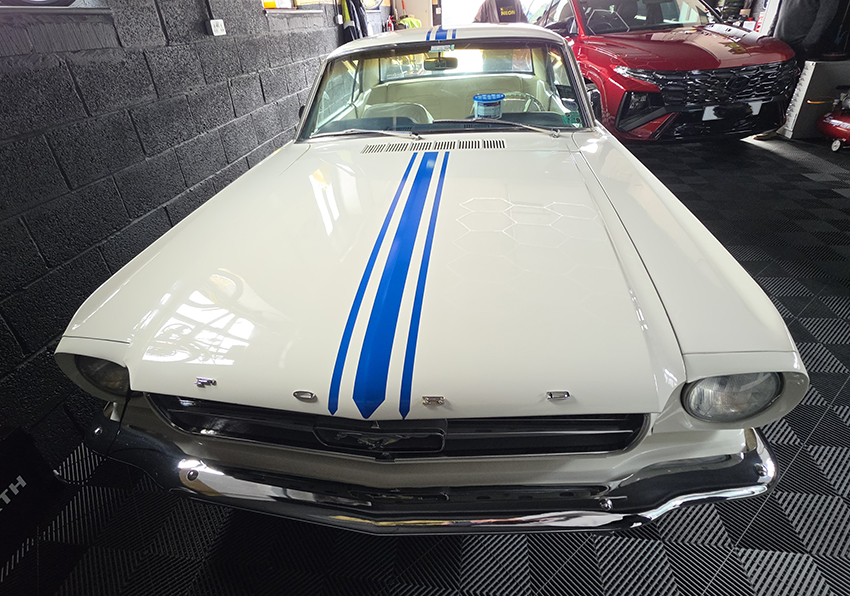
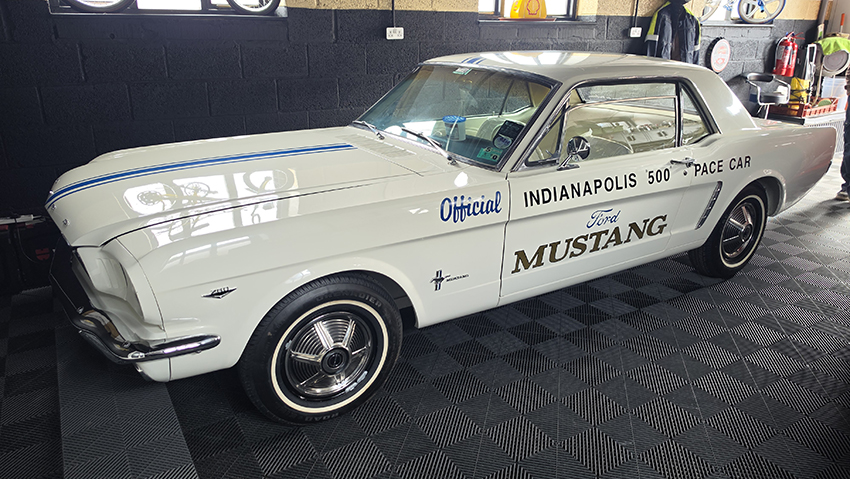
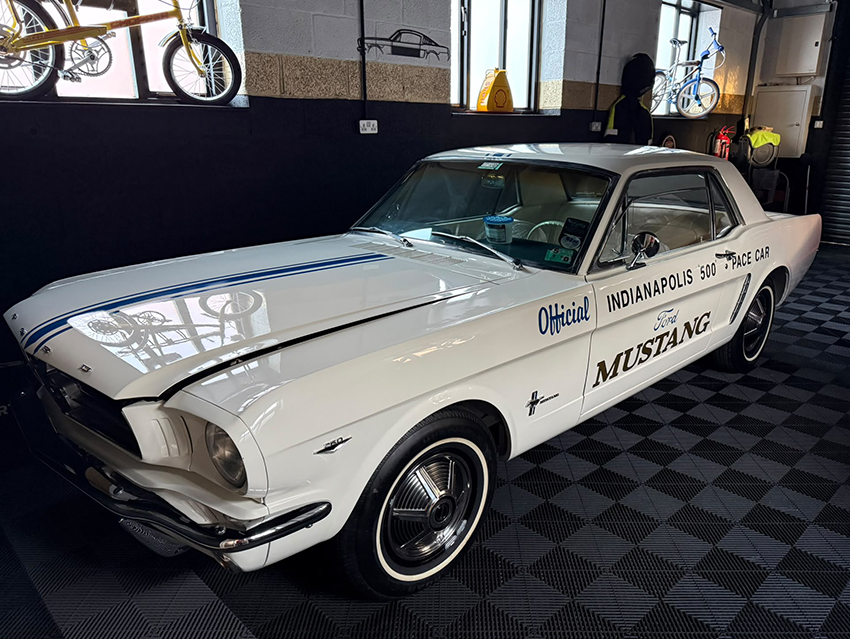
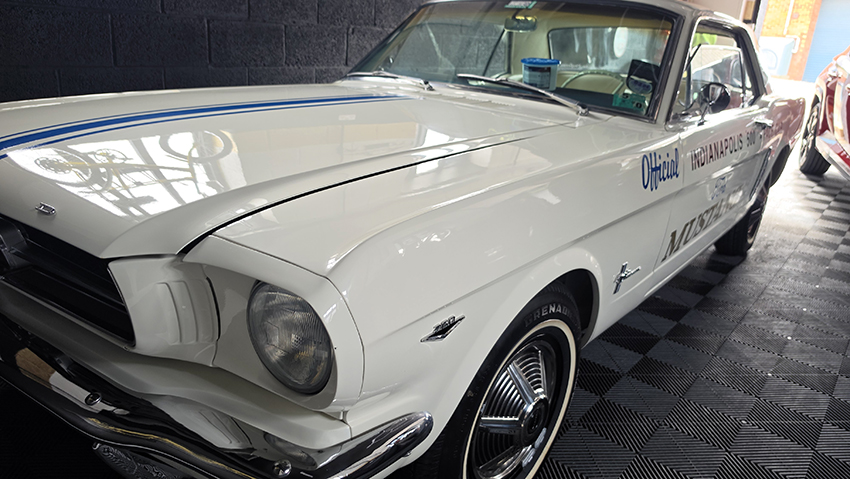
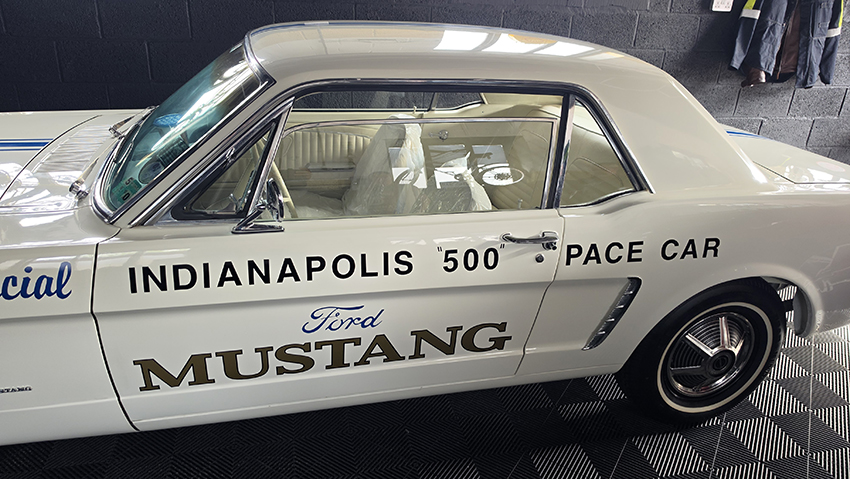
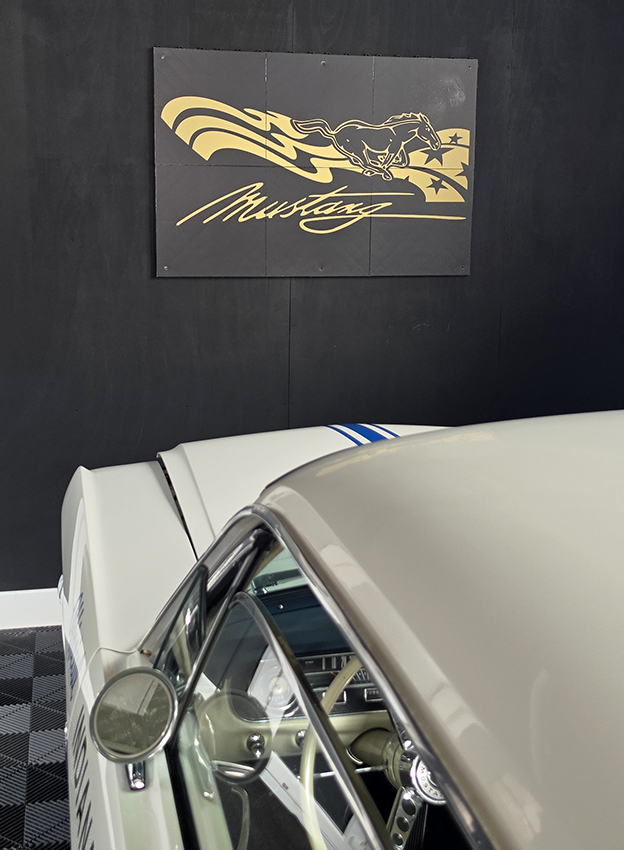
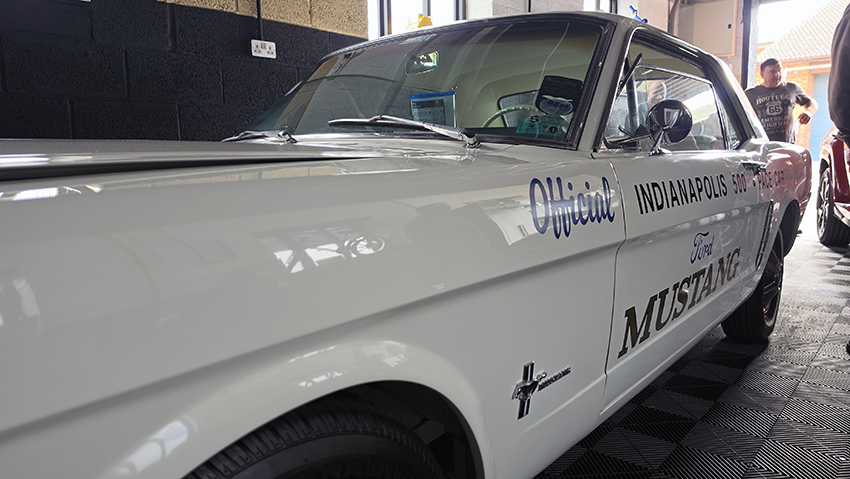
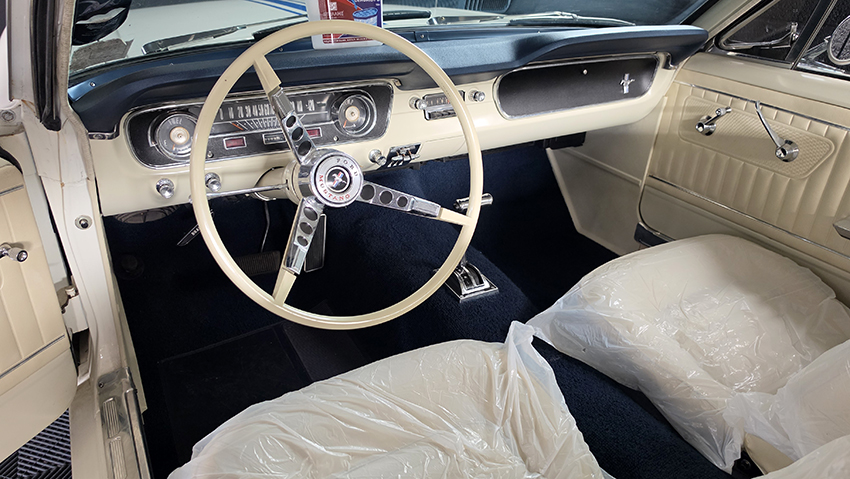
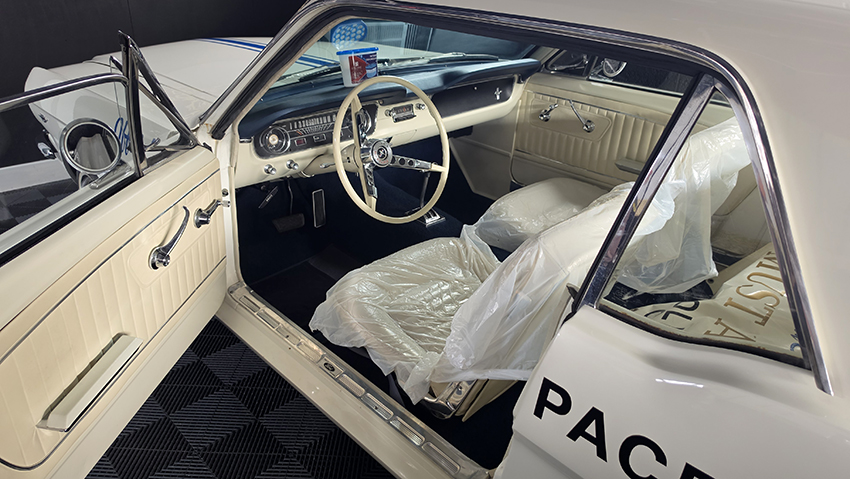
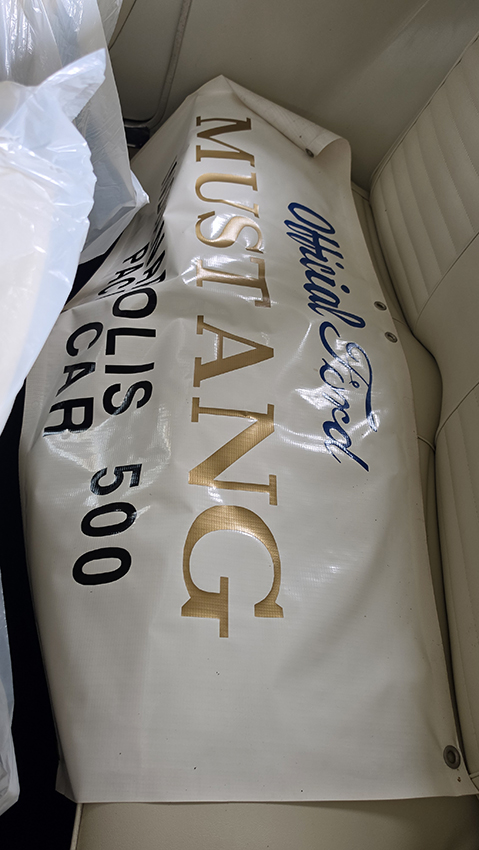
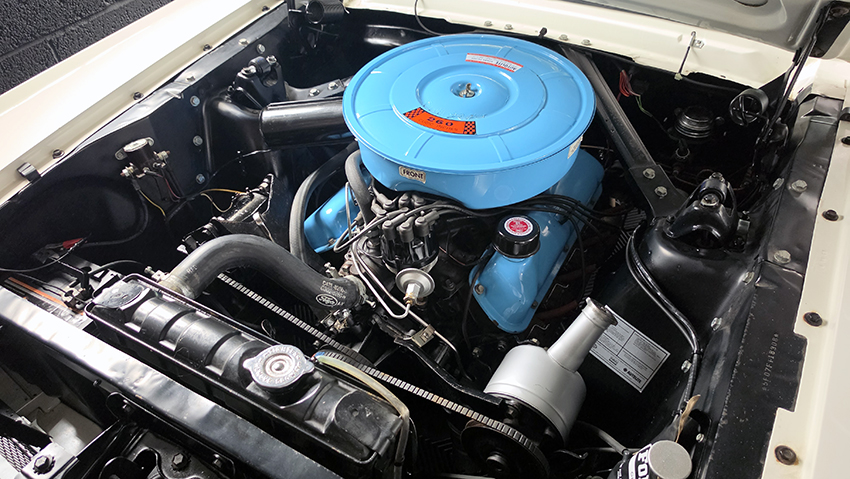
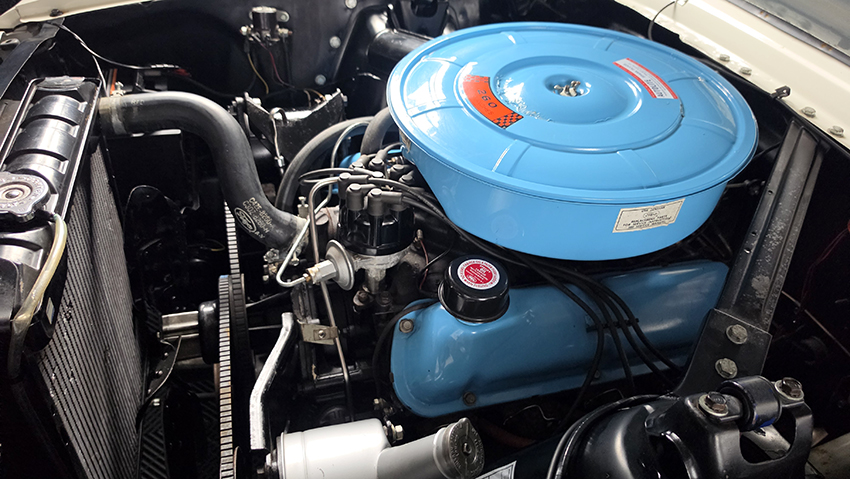
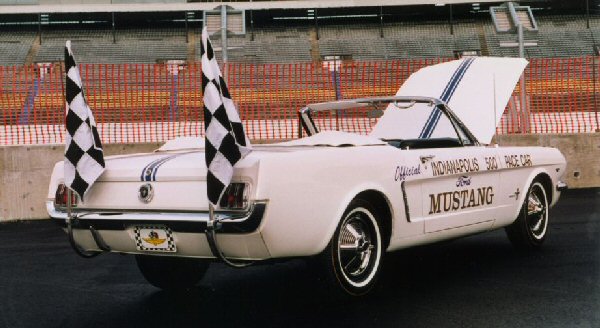
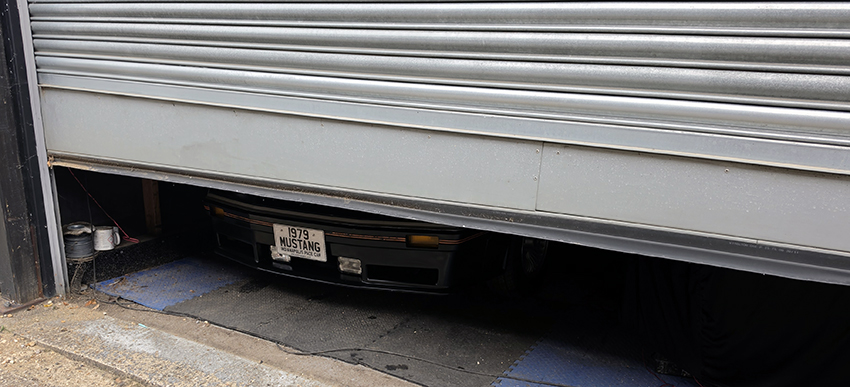
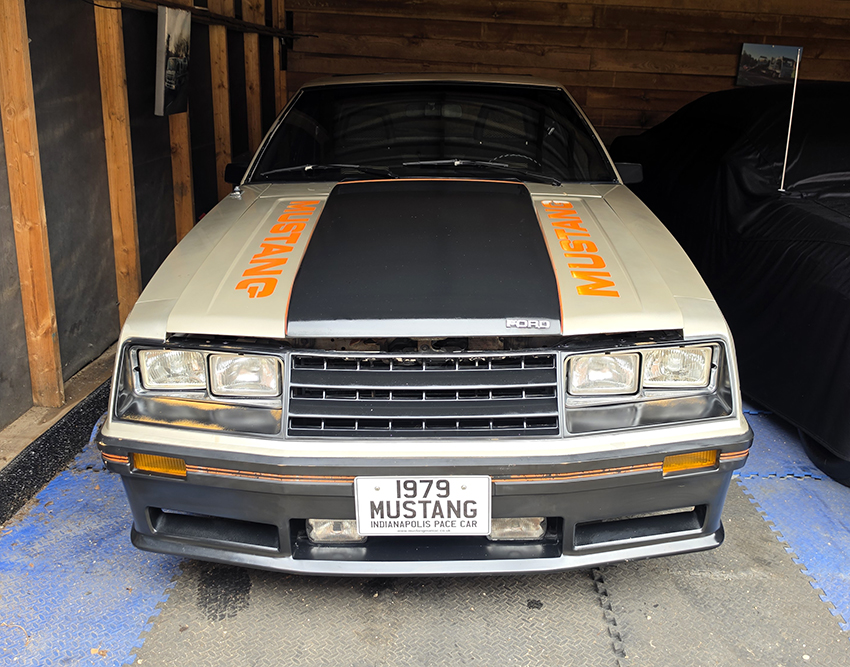
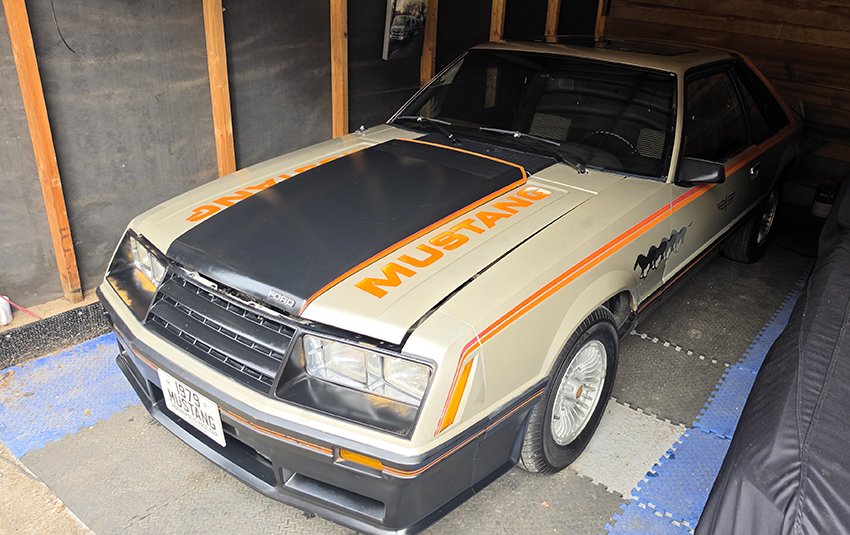
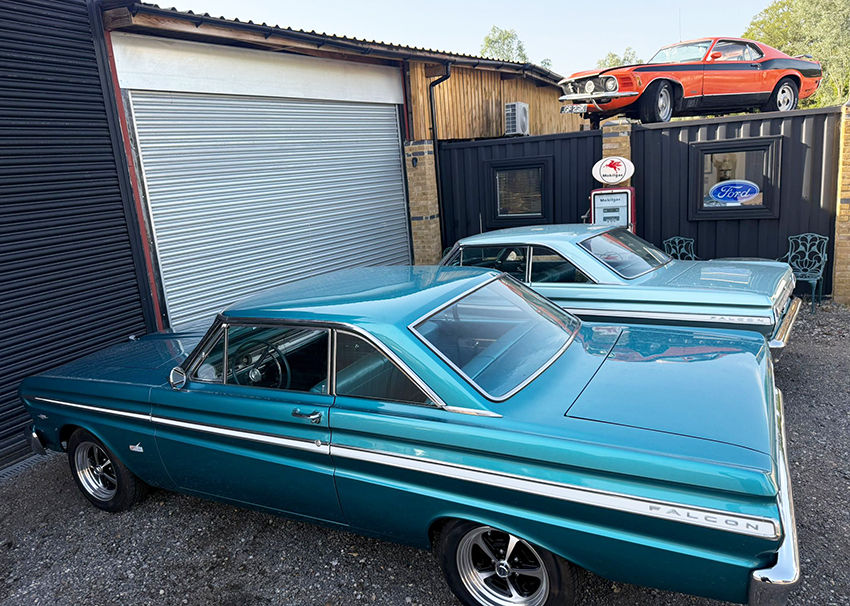
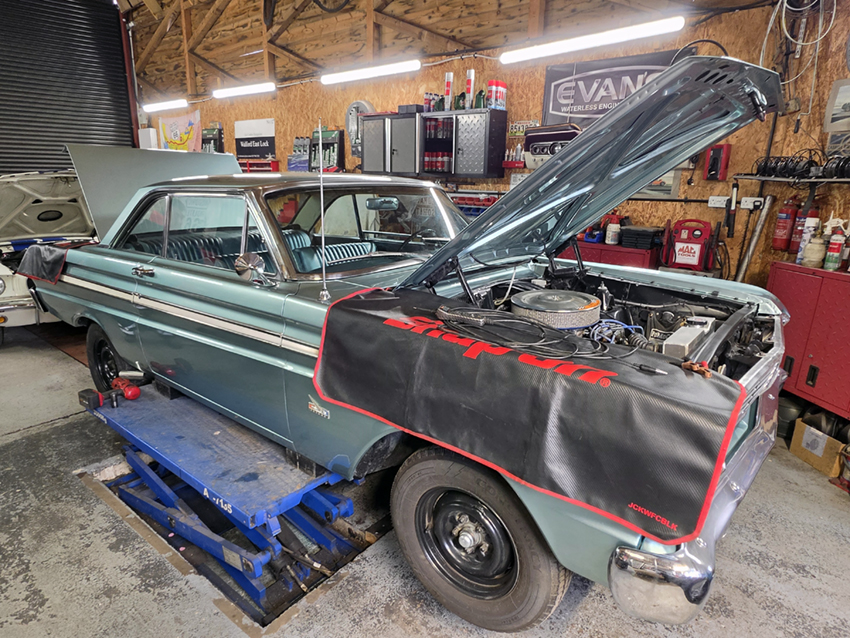
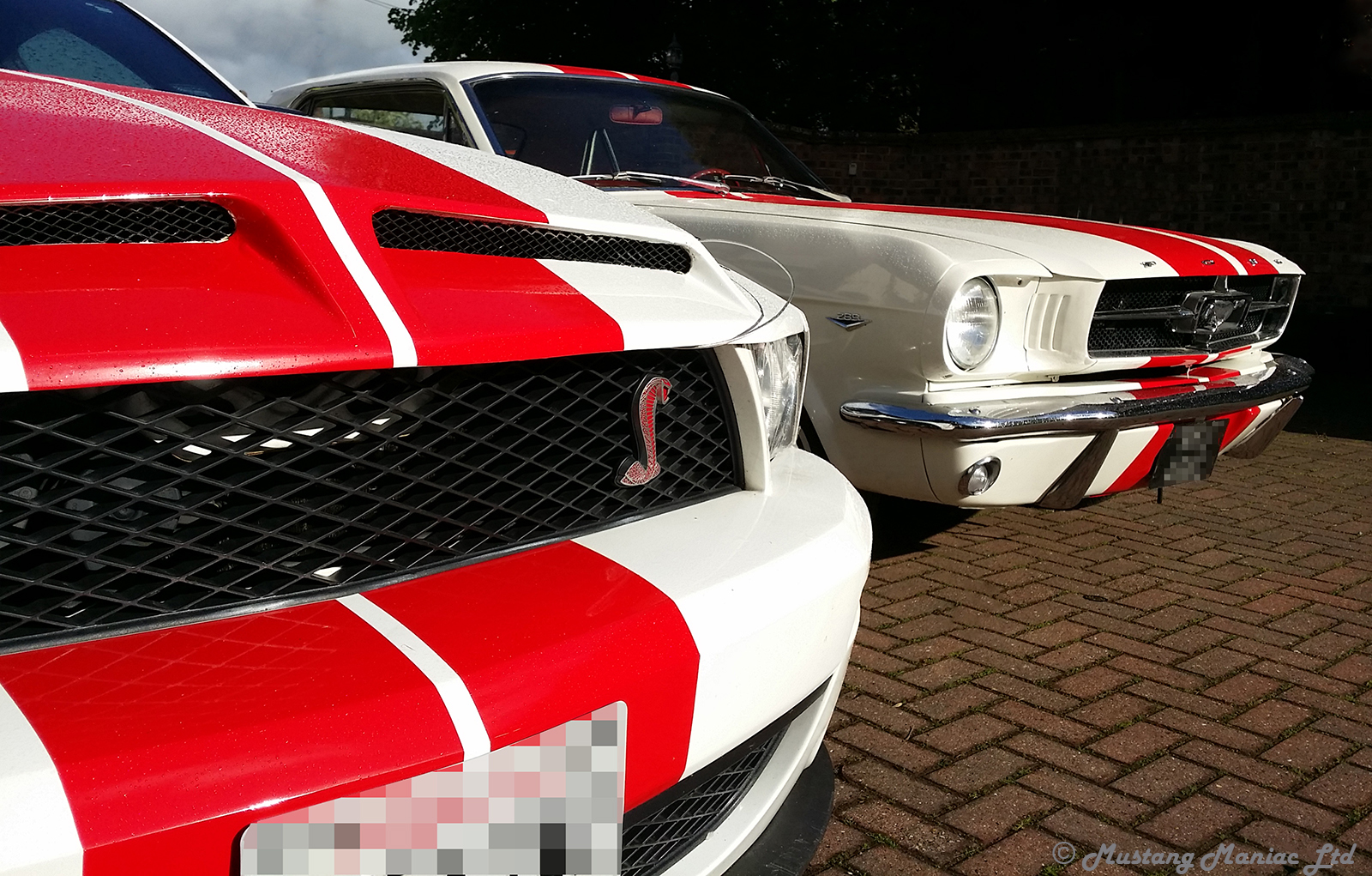
This year at the Classic Motor Show Birmingham NEC 13-15 November 2026 (link here) we will be taking two of our cars to the Mustang Owners Club Of Great Britain stand which has a unique theme of ‘Pace Cars’, so we offered to help out; the first car we will be taking is our 1964 1/4 Pace Car which as far as we know is the only one in Europe on the road. The second car is our 1979 Pace Car.
1964 1/2 Pace Car
We have already posted about this car way back in 2013 and gave some history to this very special car here, it’s worth a recap.
Lance has been working hard to get them out of our secure storage and give them a clean and they’ve come up really well after a good few hours.
Did you know?
The three pace cars used on the track were all convertibles. There were 195 Special Edition pace cars released, all were Coupes.
1979 Pace Car
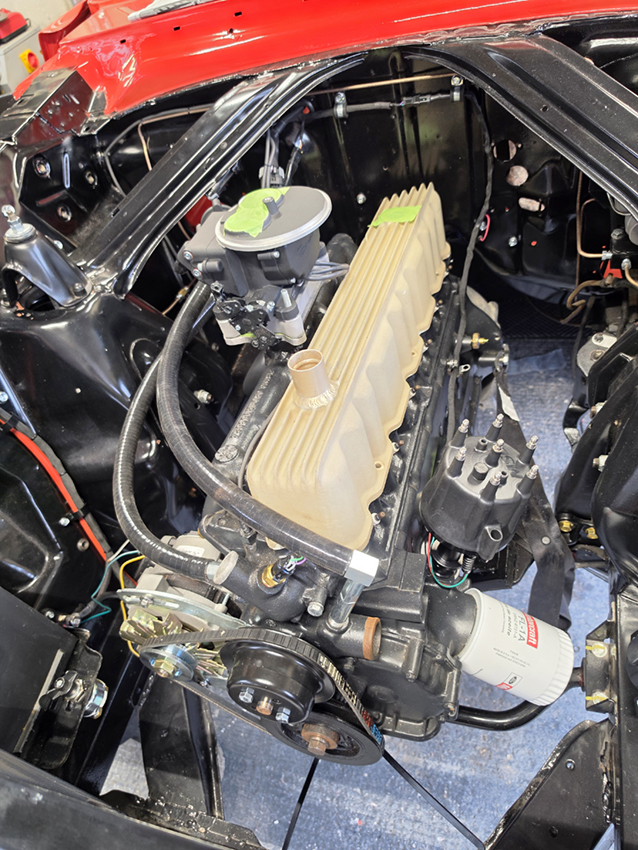
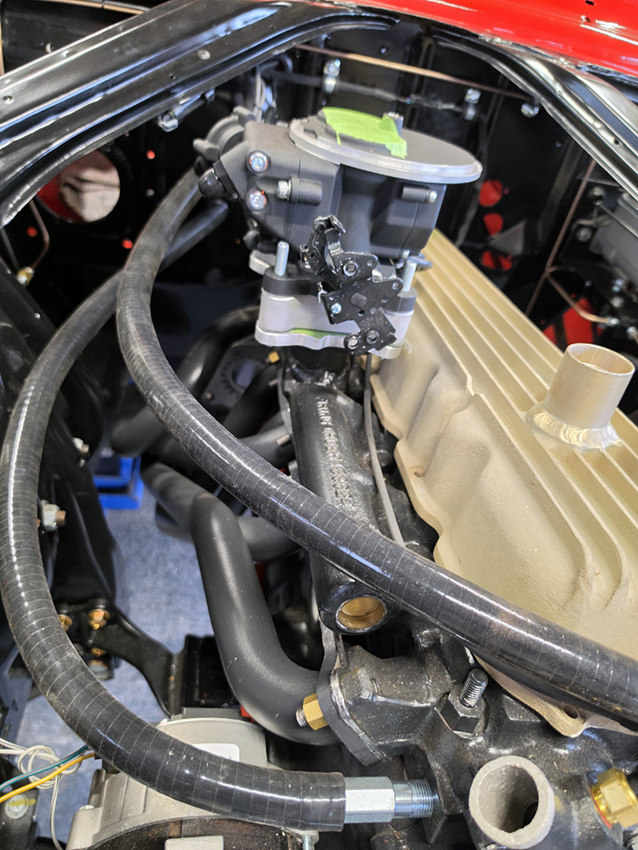
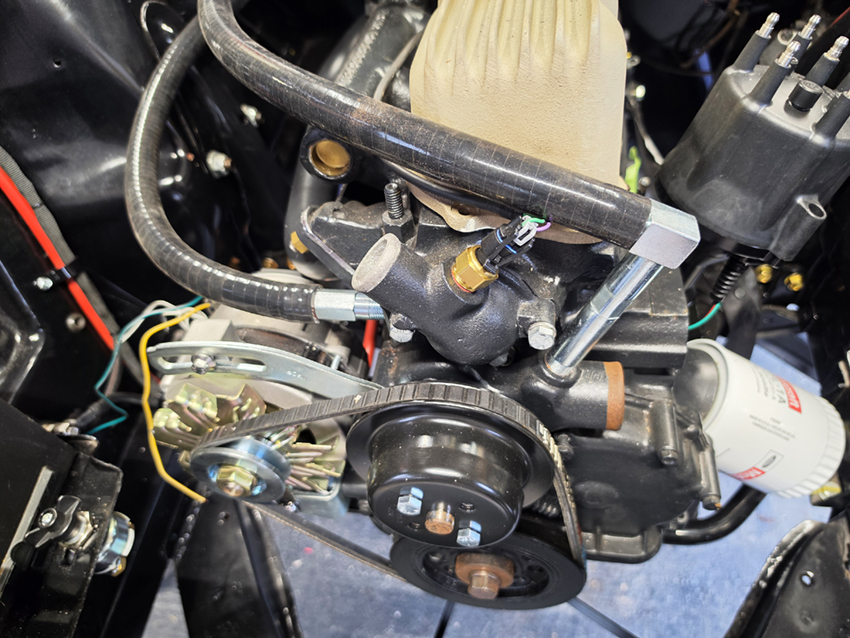
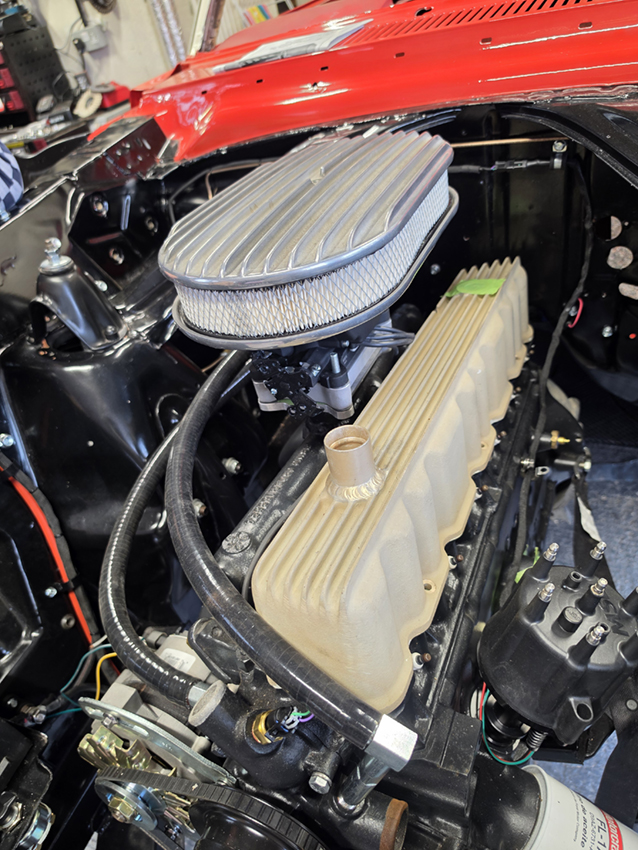
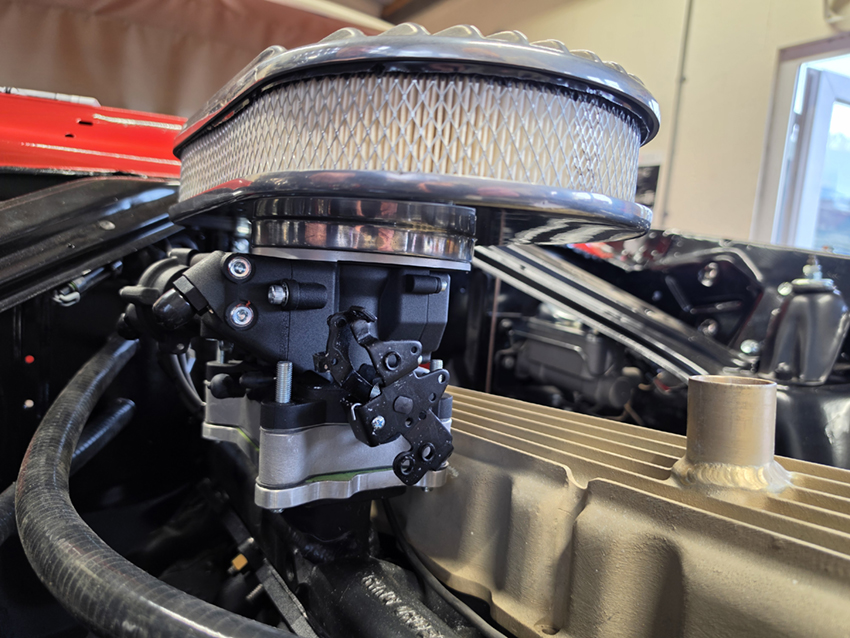
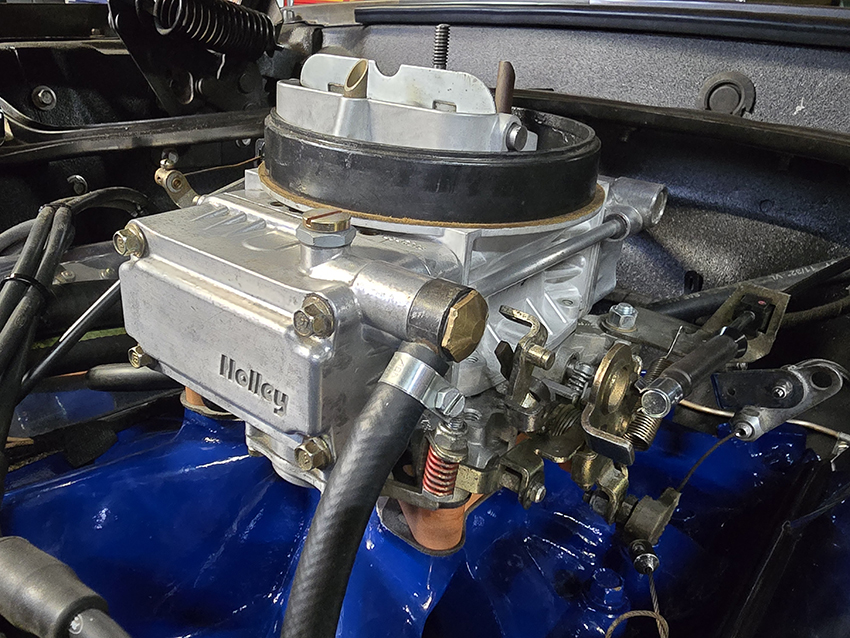
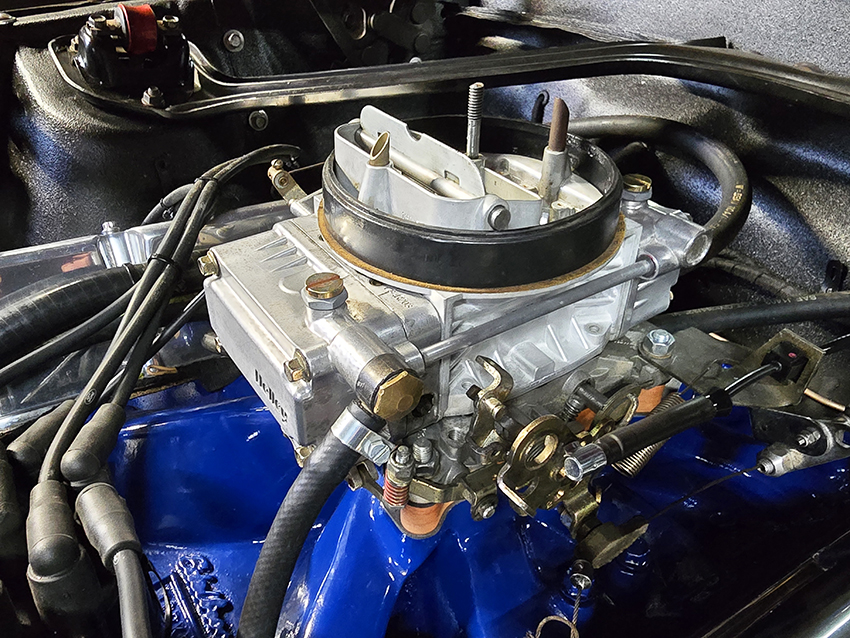
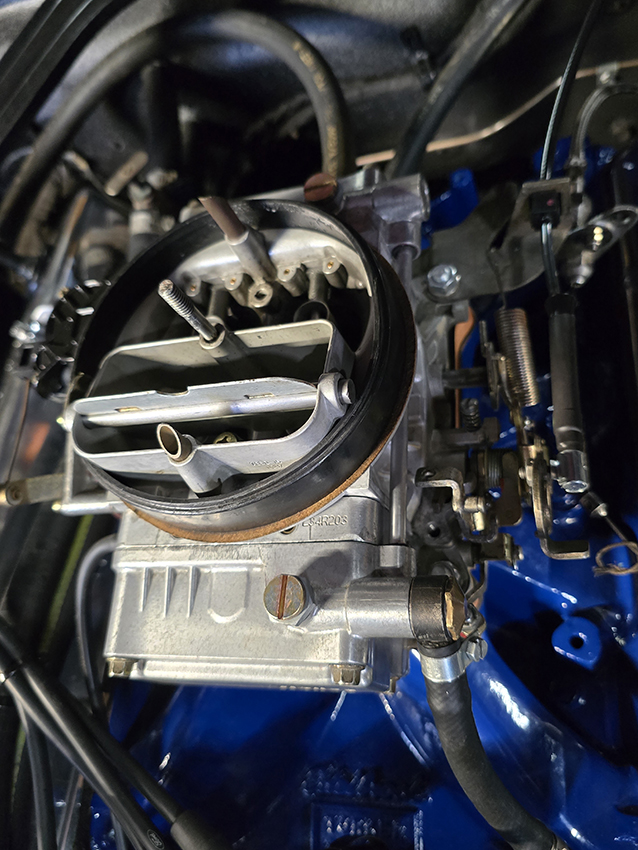
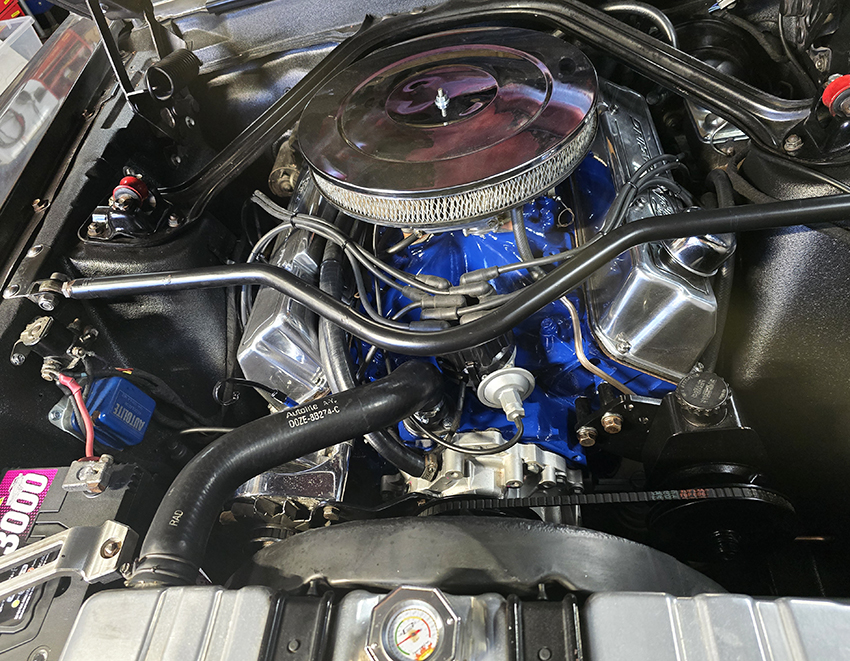
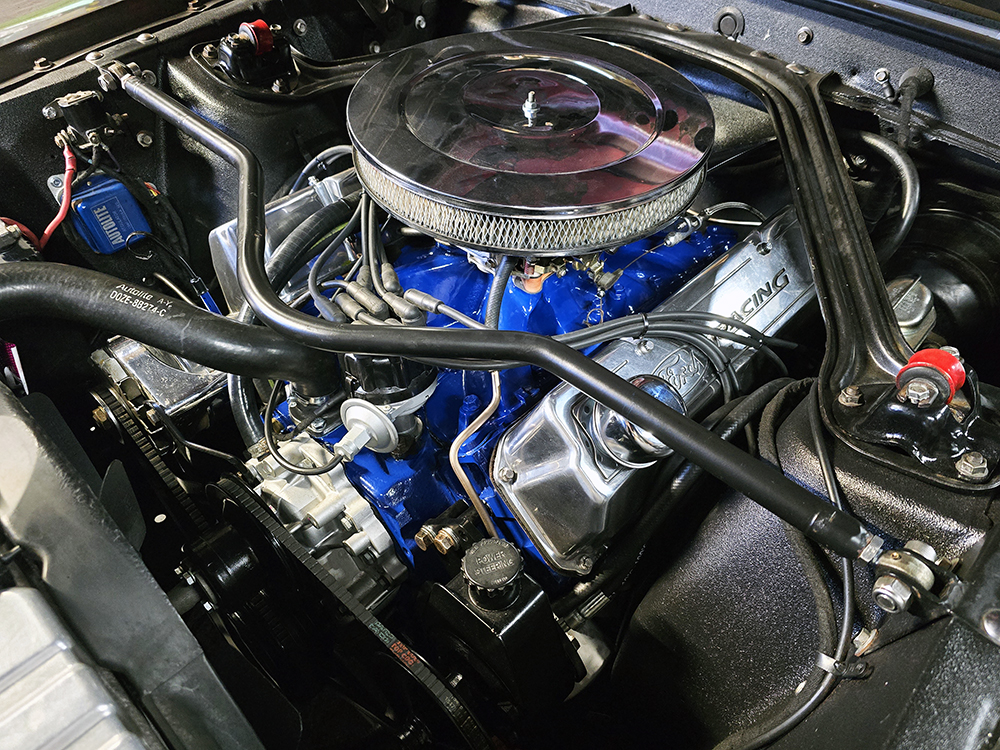
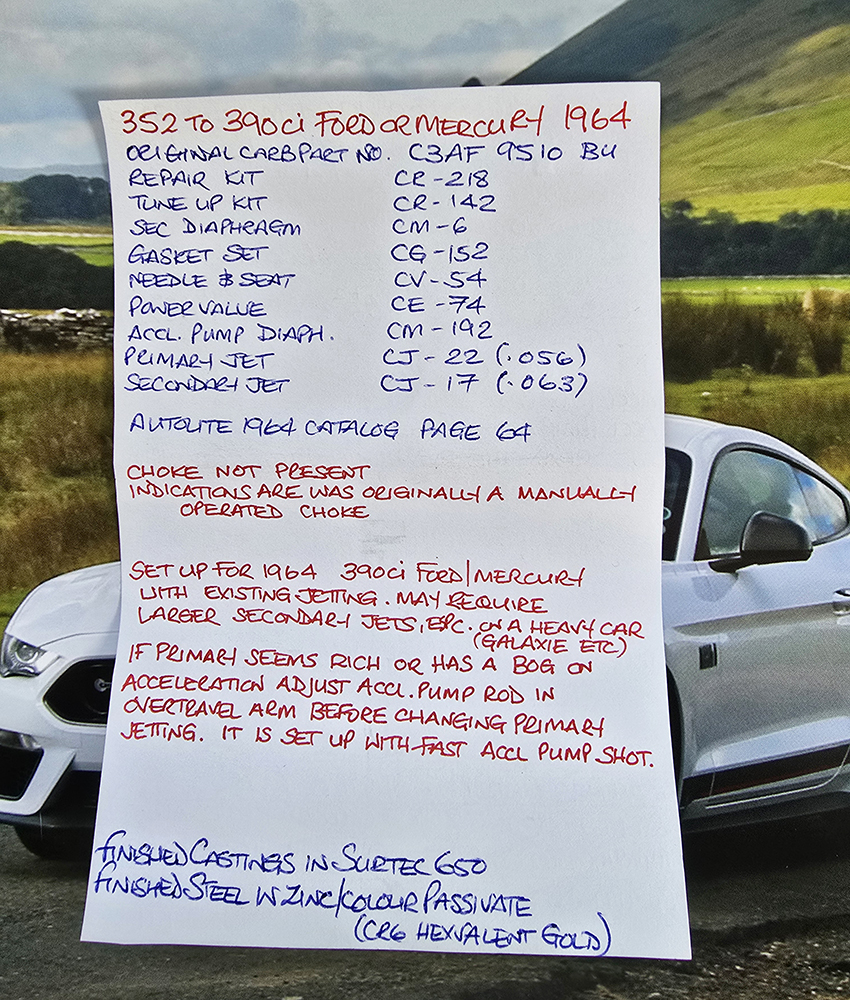
This car has been in storage and hasn’t been on the road for a very long time. Still a rare car even if many have survived from the reported 10,485 Special Editions made. This one has had a Chinese carb fitted as the original won’t be ready in time for the show sadly, as we have stripped down the original and it needs a few little bits which are on back order.
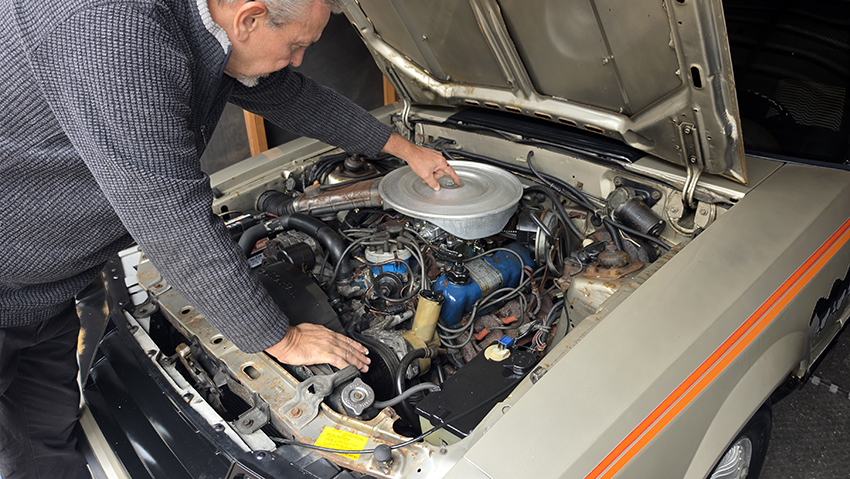
Here we have a video of this car cold starting after sitting for a week or so. Mark took the air filter pan off just to show the workings as it started. Remember this a Chinese carb for now, the ones that people moan don’t work. We have had this car on the road for a break-in and drives nicely with our carb know-how.
Chinese Carbs
Every so often we get emails from people who have purchased a a Chinese Carb for their cars and then come running to us that they don’t work, but they do (now) if you do your home work and know what you’re doing. Thanks to Mark who has written this article to explain it a little bit better. It’s worth the read, we won’t reveal everything we have found, but we reveal quite a lot!
“Over the years, since their appearance on the market, we’ve had experience of these Chinese 1 and 2 barrel Autolite carburettor copies.
Our first experience years ago wasn’t good. They were poorly cast, poorly machined, and assembled by Mr Magoo. After trialling a couple, both 1 and 2 barrel versions, we ended up putting them on the “Death Row Shelf.” Where they would end up getting torn apart for spares to keep genuine Autolites going. They were just junk.
Having noticed an improvement a year or two ago (we’re not saying 100% satisfaction here) to other Chinese manufactured parts, we decided a reappraisal of the Chinese “Autolites” might be in order. A couple were ordered and sat waiting for an opportunity.
Like buses, the opportunities came all at once this month. We need to replace a very worn 1 barrel Autolite on a 6 cylinder and a similar condition 2 barrel on a V8.
We pulled the latest purchase of Chinese carbs out of stock and decided to tear them down to every last component on the bench for an examination and reassembly before trying them on the cars. We found some pleasant surprises and confirmed some long-held beliefs.
Firstly, we can say the casting quality itself has much improved since our last dealings with these years ago. Much nicer looking casting with a lot less rough casting flash. The material itself also seems to be improved, but we will find out more about that shortly from our local electroplater guys … thankfully, a couple of petrol heads too. These guys work predominantly in the Defence and Aerospace field and have the knowledge and equipment to delve into that deeper than we ever could.
The machine work performed on the castings is also better, but this is let down by a lack of thorough cleaning afterwards. The older Chinese carbs were notorious for the leftover swarf, even in the float bowl. These newer ones are better, but we did find and remove some minute swarf/machine chippings in both the 1 and 2 barrel. Not enough to block a jet but enough to impact sizing or an air bleed orifice.
Quality control now employs someone at last … alas with only one eye, but it’s an improvement.
Unfortunately, they still employ Mr Magoo on the assembly line. There are two specific areas not assembled as the original Autolites were, and one trips the other up in operation of the cold enrichment circuit. It’ll still work but not to its best potential.
It’s also clear that these are not run or set up on a test engine before shipping.
However, those niggles aside, we then went through the jetting. We found again that the Chinese manufacturers still do not mark their jets exactly as the original jets were by Autolite and they seem to favour 0.005 increments and mark them accordingly. For example their equivalent of a “48F” Autolite jet is marked “485”. Only the pair we removed measured out to .046 and .0485. A spread of 1.5 to almost 2 full jet sizes on the 2 barrels. This measured with our pin gauge set with a +/- tolerance of 0.0002″. Obviously, that is going to impact trying to synchronise the idle mixture and have further effect.
We clean all our original Autolite jets in a nitric acid based solution, which removes EVERY spec of dirt. Then we check them on the pin gauges before storing them. We got two original Autolite jets (of the correct matching sizes) and installed those into the thoroughly clean casting. Then reassembled the carbs as per Autolites schematics and put them on the respective cars.
After filling the float bowls, working the linkage until the discharge nozzle was primed and dropping a small amount of fuel into the bone dry intakes, we turned the key.
The V8 started almost immediately and settled into a high (unadjusted idle). A good sign. The straight 6 took more cranking and we feel this is due to the intake design of the 6 with its long straight intake and right angle turns in the runner to the chamber in the head. However, after a couple of turns of the key, the 6 then fired up and set into a high idle of its own.
We were happy. We set the chokes cold/fast idle to a more sensible rpm and let both cars get up to operating temps. Then proceeded in checking/adjusting hot idle rpm, timing, vacuum and idle mixture. Once we were happy, we shut off and checked hot starts.
Both carbs lit off and started both motors perfectly. Our smiles broadened but we weren’t out of the woods yet. So far starting and (hot and cold) idle proved acceptable, but there’s still idle to part throttle transition, cruise and acceleration (WOT) to go.
Alas, time beat us, it was the end of the week. Beers, hot tubs and women of dubious character were screaming for our attention over the weekend so keep an eye out for part two When we delve further and road test them but our conclusion so far is … they’re better than they were but they aren’t a “bolt on” replacement we’d be happy with …. yet.”
Pop by the Mustang Owners Club of Great Britain to see the collection of these cars, as far as we know this will first time that all the Pace Car years have come together in the UK. Adam will be there on the Sunday, so if you see him and say hello and tell him how much you love his blog!
We have always tried to be innovative with the products we supply and where we get them from. Mustang Maniac are pleased to announce that we have teamed up with the innovators ‘Street Or Track‘ AND ‘Open Tracker Racing‘ who have developed some serious performance upgrades for our beloved Mustangs. We have had our first delivery through with what we think is a real game changer for the first year Mustang suspension. We have asked our technicians for an upgrade on an already popular upgrade of modern day electronics, rear LED lights.
Lower Control Arm Upgrades.
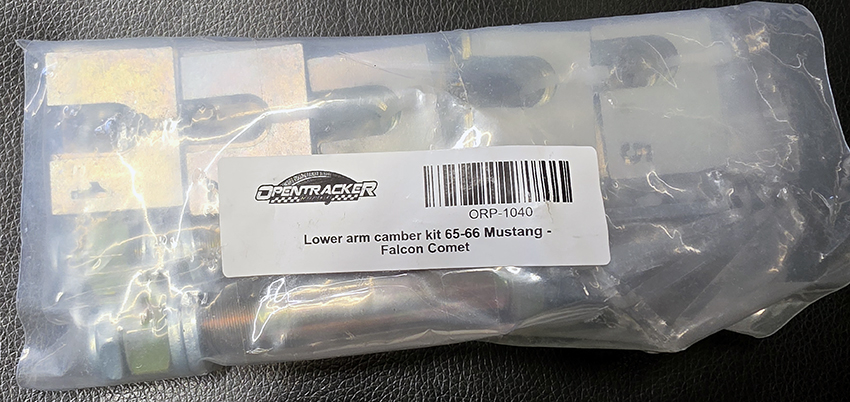
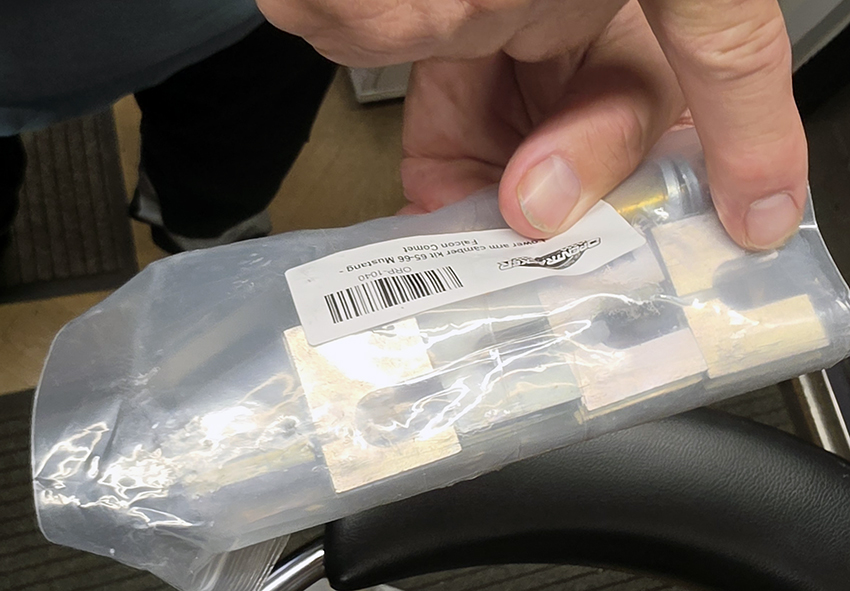
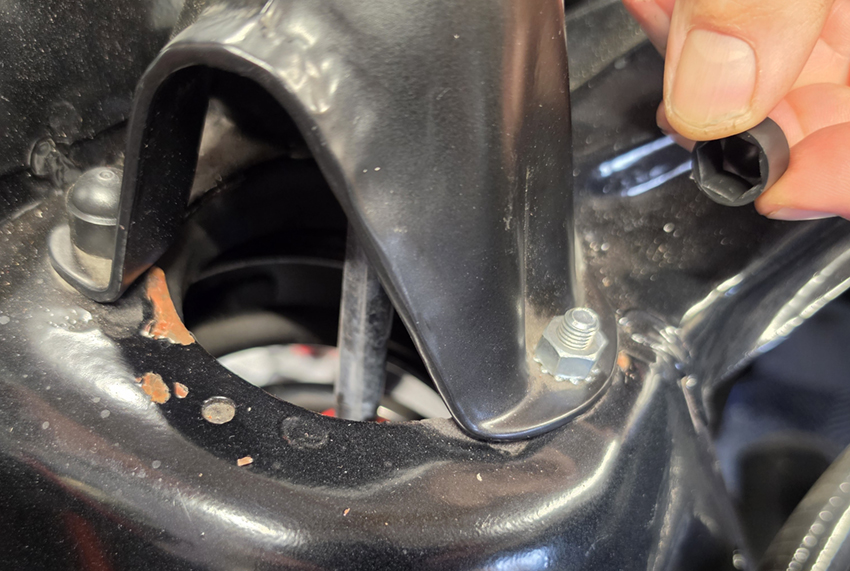
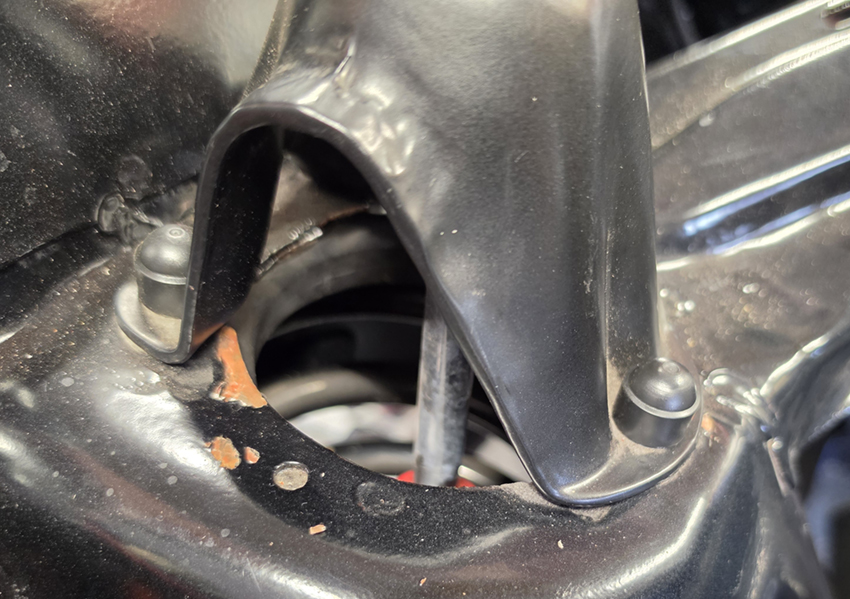
On the early 65-66 Mustangs, Falcons & Comets, the front suspension camber adjustment is always a pain due to the fact you have to use shims to make an adjustment, reassemble, check and repeat until you get it right, a fairly straight forward job can turn out to be a spanner and time intensive undertaking. On the later Mustangs camber adjustments was much more straight forward via an adjustable cam which makes life so much simpler. With that later design in mind we now have a kit that can give that ease of adjustment to the early cars.
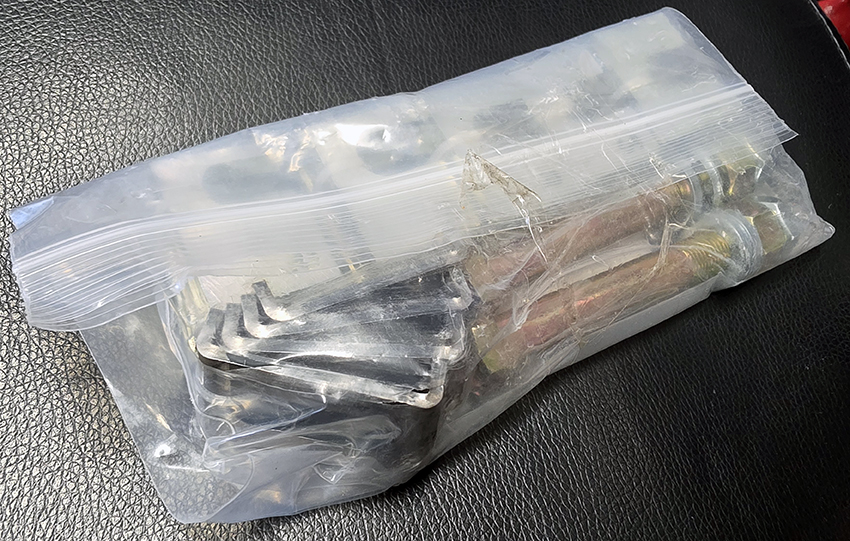
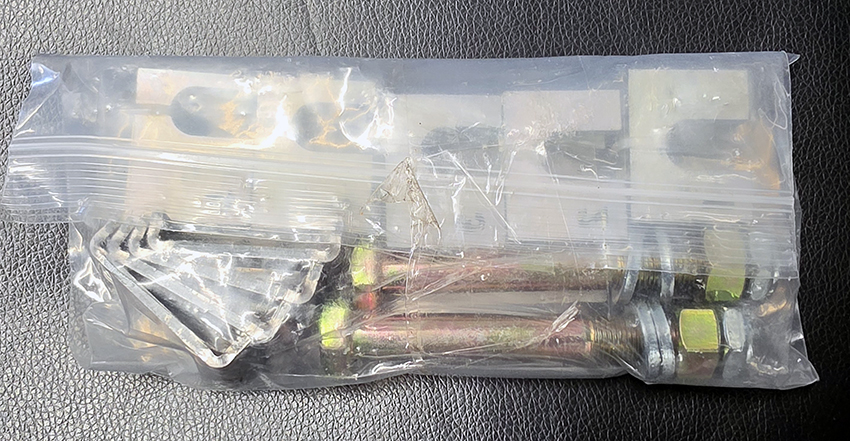
Our delivery box of mechanical tricks arrived in the offices on Friday and we couldn’t wait to see what we had so far.
These kits do require a mod to the lower control arm via some welding, trimming and a little bit of grinding for the installation, but the time it takes to do, it will far outweigh the hassle of the shim adjustments.
Note: This kit is for the qualified fabricator who has done this type of work before. It is not for the first-timer or someone who is not familiar with these cars.
Adam was explaining the principles and benefits on how the new kits work to a customer.
A worth while upgrade and money well spent for ease of adjustments. These kits have just been added to our WebShop for the direct link click here or the image below.
More Bespoke LEDs
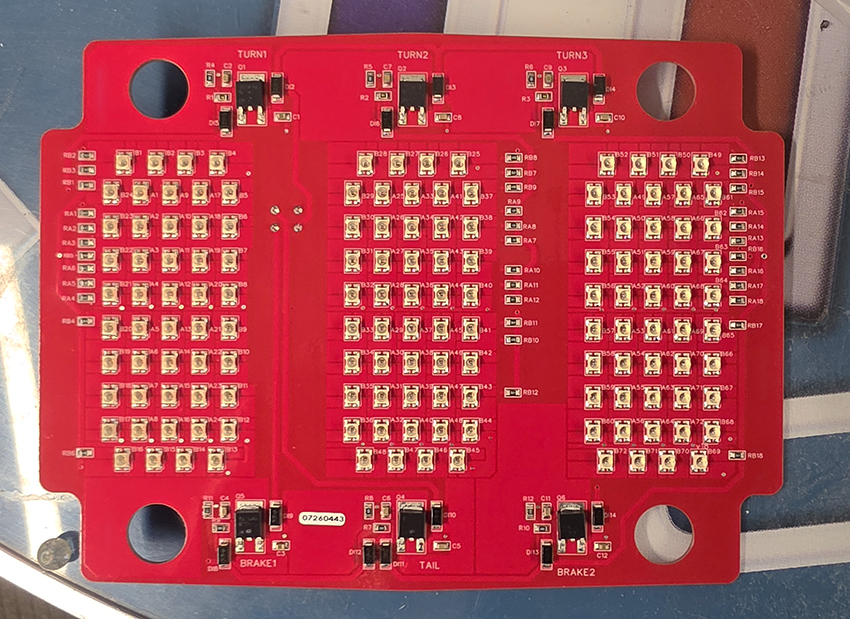
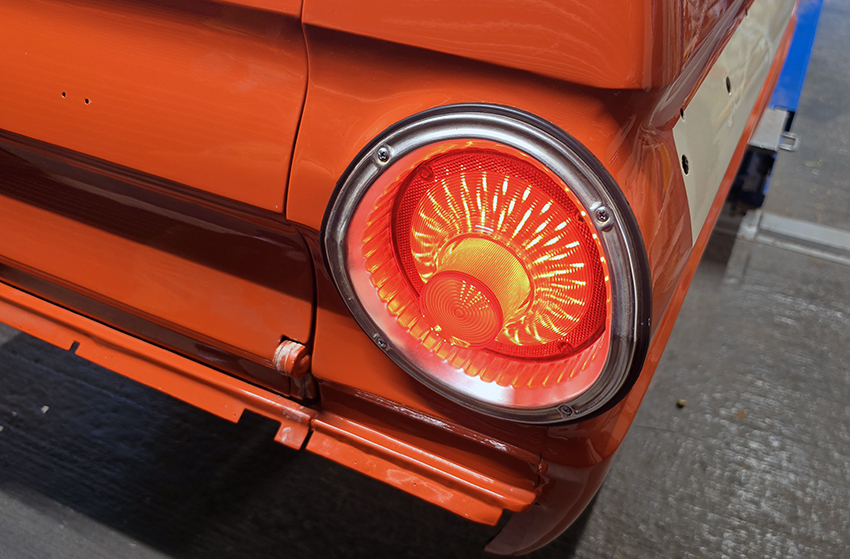
We now have our own bespoke branded LED upgrade boards for the 64-66 Mustangs. These new updated versions have a smaller LED bulb profile and are designed to flash amber through the standard red lenses. The colour for the LED and lens combination is by the far most difficult thing to get right, but we have done it, again. A simple rear plug and you have Euro compliant separate; drive, stop and indicators to your classic Mustang rear end all hidden behind the totally stock look red lenses.
These are Mustang Maniac branded boards which are now on our WebShop, for the direct link click here or the image below.
For our Ranchero Adam has had a bespoke set of lights made, these are pretty special and the images don’t do these lights justice. It’s difficult to show the true colours of the LED lights on a camera, but we played around with the exposures to try and show you. The left image is the natural look, the colour to the eye is more like the image on the right.
These are bright LEDs featuring distinctive drive, stop and integrated red indicators. Adam didn’t want the amber on these lights, he wanted to keep the all red theme going.
While we’re talking about the Ranchero we have now wrapped the headers in black with some black stainless bands for that subtle look.
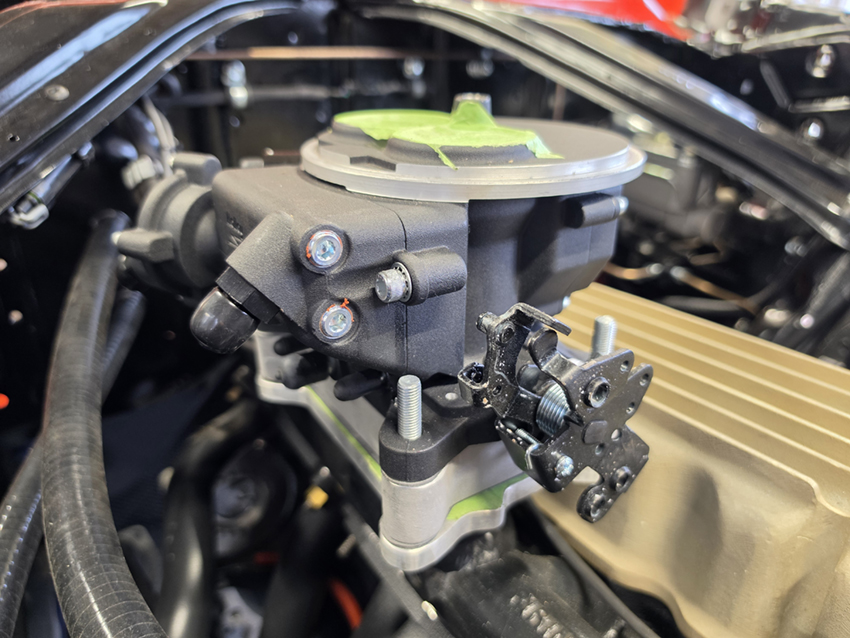
The keen eyed amongst you will notice these headers are far from standard, which will get the most from the EFI sniper we have fitted on the inline six engine.
We are so looking forward to getting this lady on the road, a bespoke build and will be a real head turner, with the attention to all the details.
During the recent hot spells we have sold more than usual number of radiators for these classic cars. High temperatures in the UK is a rarity, but when it does arrive it will show any weakness in these old car’s system with anything from a leaking hose to a catastrophic failure. Early Mustang radiators also shared cooling with the automatic transmission cooling lines at the bottom of the radiator, so in effect the cooling system can be working twice as hard. If the welds fail at the bottom end of the radiator you could get coolant into your gearbox potentially destroying the gearbox as well. A few radiators below we have stockpiled, not all are from our customer cars, but a number are recently.
To hlp out we have put together a quick reference giide for cooling. This doesn’t cover everything, but should help answer a few questions.
Keeping Your Classic 1964–1973 Mustang Cool: A quick guide to cooling system care.
There’s nothing quite like cruising in a first-generation Mustang, that is until the temperature gauge starts creeping toward the red. These cars were engineered for the roads and traffic conditions of the 1960s, not modern stop-and-go driving or summer heat waves of today. With the right components, regular maintenance, and a little know-how, you can keep your classic running cool for many years to come.
Understanding Radiator Types and Row Configurations
Not all radiators are created equal, and when it comes to classic Mustangs, you have several options to consider. OEM-style copper-brass radiators were factory equipment and offer a period-correct look, but they’re heavier and less efficient than modern alternatives. Aluminum radiators have become the go-to upgrade for most enthusiasts as they’re lighter, dissipate heat more effectively, and are available as direct replacements that bolt right in.
When shopping for a radiator, you’ll encounter different row configurations. A two-row radiator was standard on most six-cylinder cars and works fine for stock applications with light use. Three-row radiators provide additional cooling capacity and suit mildly modified V8s or cars driven in warmer climates. Four-row radiators offer maximum cooling but come with diminishing returns—the added thickness can actually restrict airflow, and the extra weight strains mounts and brackets. For most builds, a high-quality two-row aluminum radiator with wide tubes outperforms a four-row copper-brass unit while weighing less and costing about the same.
Radiator Type
Pros
Cons
OEM Copper-Brass (2–3 row)
Period-correct appearance, easy to repair
Heavy, less efficient, prone to corrosion
Aluminum (2 row, wide tube)
Lightweight, excellent heat transfer, durable
Not original-looking, requires proper grounding
Aluminum (3–4 row)
Maximum cooling capacity
Heavier, can restrict airflow, overkill for most builds
The Often-Overlooked Radiator Cap
Your radiator cap does more than keep coolant from sloshing out—it’s a precision pressure valve that directly affects your cooling system’s efficiency. Pressurizing the system raises the boiling point of your coolant, allowing it to absorb more heat before turning to steam. For every pound of pressure, the boiling point increases by roughly 3°F (1.7°C).
Factory caps on early Mustangs were typically rated at 13–15 psi, which was adequate for stock engines running on the highways of the era. If you’ve upgraded your engine, added air conditioning, or regularly sit in traffic, consider stepping up to a 16–18 psi cap—this raises the boiling point enough to provide a meaningful safety margin. However, don’t go overboard: a cap rated too high can stress aging hoses, heater cores, and radiator tanks. Always ensure your entire cooling system is in good condition before increasing pressure. A failed cap that doesn’t hold pressure is a common culprit in overheating issues, so replace it every few years as preventive maintenance.
Radiator Cap Pressure Ratings Used on Classic Mustangs
7 PSI Caps
This rating was frequently paired with early 1964½ to 1966 baseline inline-6 setups or low-temperature thermostats (like a 160°F or 180°F unit).
Pros: Puts minimal physical stress on aged vintage components. It heavily reduces the risk of blowing out a fragile, 60-year-old original heater core or splitting a weak seam on a factory brass/copper radiator.
Cons: Lowers the maximum boil-over threshold significantly. In modern stop-and-go summer traffic, a 7 PSI cap will prematurely vent expansion fluid out of the overflow tube onto the pavement, causing a persistent loss of coolant.
13 PSI Caps (The Factory V8 Standard)
This is a standard specification for most V8 Mustangs from Ford factory manuals between 1965 and 1973. It balances cooling capability with safety.
Pros: Raises the coolant boiling point by roughly 39°F above standard atmospheric pressure. This keeps a healthy vintage 289 or 390 V8 from “gurgling” or spitting out fluid immediately after hot shutdowns.
Cons: Requires the entire cooling loop to be in decent condition. While it is a safe factory baseline, an original, corroded heater matrix or a dry-rotted bypass hose can still crack under a true 13 PSI load.
16 PSI Caps
Commonly introduced via aftermarket aluminum radiators or when upgrading classic Mustangs to high-performance configurations (like stroker builds or track setups).
Pros: Substantially elevates the system’s thermal ceiling to handle heavy engine loads and high ambient temperatures without boil-over. Ideal if you are running modern air conditioning or a tight engine bay layout.
Cons: Increases system stress across all old gaskets, water pump seals, and hose clamps. Never use a 16 PSI cap on an original 1960s brass-tank radiator, as the high pressure can balloon or burst the core seams.
Mustang Maniac sells many styles of radiator caps, make sure you choose the correct one for your vehicles setup.
Regular Maintenance: The Foundation of a Cool Engine
Even the best radiator won’t save you if you neglect basic upkeep. Establish a maintenance routine that includes:
Coolant flush and refill every two years or 30,000 miles. Old coolant loses its corrosion inhibitors and becomes acidic, eating away at aluminum, copper, and iron components from the inside out.
Inspect hoses and clamps at every oil change. Squeeze the upper and lower radiator hoses—they should feel firm but pliable, not rock-hard, spongy, or cracked. Replace any hose that shows signs of swelling, softness, or surface cracking.
Check the thermostat if you experience temperature fluctuations. A stuck-closed thermostat causes rapid overheating; a stuck-open one prevents the engine from reaching operating temperature. Replace it with a quality unit rated for your climate (180°F for most applications, 160°F for very hot regions or high-performance builds).
Test the water pump for bearing play or weeping seals. Grab the fan (with the engine OFF) and check for wobble—any movement means it’s time for a new pump.
Clean the radiator exterior annually. Bugs, road debris, and corrosion can block airflow through the fins, dramatically reducing cooling efficiency. A gentle spray from a garden hose (from the engine side outward) clears most obstructions.
Verify fan operation and belt tension. Check the radiator belt is not cracked or split. A broken radiator belt will stop water flow from the pump potentially causing serious damage within a short space of time.
Electric fan conversions are popular upgrades, with manual override operating from the cabin can be great preventative measure.
If you’re running a viscous mechanical fan, ensure the clutch engages properly when the engine warms up.
To help with air flow fit a radiator shroud. This improves the efficiency of the fan pulling cool air through the radiator. The fan blade positioning needs to be set up correctly to get the full benefit.
Fitting a better designed fan will improve air efficiency through your cooling system.
What to Do, and Never Do, When Your Mustang Overheats
If you see the temperature gauge climbing into the danger zone or steam escaping from under the hood, pull over safely as soon as possible and shut off the engine. Turn on your heater full blast while you’re still moving—this draws heat away from the engine, but once stopped, shut everything down. Open the hood to let heat escape, but never remove the radiator cap while the system is hot. The pressurized coolant is well above 212°F and will erupt violently, causing severe burns. Wait at least 30 minutes, or until the upper radiator hose feels cool to the touch, before carefully removing the cap.
Once cooled, check the coolant level and look for obvious leaks. If you must add coolant to get home, add it slowly with the engine running at idle to avoid thermal shock to the engine block. Better yet, call for a tow if the problem isn’t immediately apparent.
What you must never do:
Never keep driving with the gauge pegged in the red. Even a few minutes of severe overheating can warp cylinder heads, blow head gaskets, score cylinder walls, or crack the engine block. These repairs cost thousands of dollars and may total a numbers-matching car in a worst case scenario.
Never pour cold water into a hot engine; the sudden temperature change can crack the block or heads instantly.
Never ignore the warning signs. If your Mustang runs hotter than normal, diagnose it now before it’s to late.
Driving with an overheating engine causes cumulative damage with every passing minute. Head gaskets fail, allowing coolant into the oil or combustion chambers. Aluminum heads warp and require expensive machining or replacement. Pistons expand and scuff cylinder walls, leading to oil consumption and loss of compression. In severe cases, connecting rods seize and punch through the block. The bottom line: an overheating engine is an emergency, not an inconvenience.
Cooling System Additives: Do They Actually Help?
Some are snake oil; others offer genuine benefits. Here’s what could work for you.
Wetting agents can reduce the surface tension of coolant, allowing it to make better contact with hot metal surfaces. This can lower operating temperatures by 10–20°F in some applications and is especially useful if you’re running straight water for racing. For street-driven cars running a proper coolant mix, the benefit is more modest but could still be worthwhile.
Corrosion inhibitor additives replenish the protective chemistry that breaks down over time, extending the life of your coolant between changes. These are particularly valuable for cars that sit for long periods or have mixed-metal cooling systems (iron block, aluminum heads, copper-brass radiator).
Stop-leak products are temporary sticking plasters at best. While they may slow a minor seep, they can also clog heater cores, thermostat passages, and radiator tubes. Use them only in emergencies to limp home, then repair the leak properly.
For most classic Mustangs, a correct mix of a quality antifreeze and distilled water, refreshed every two years, provides all the protection you need. If you want extra insurance, a wetting agent may be a reasonable addition.
Do your homework for the driving environments and what works best for your car. No single answer is the correct answer.
Evans Waterless Coolant: A Modern Solution for Vintage Iron
One product that deserves a mention is Evans Waterless Coolant. Unlike conventional antifreeze, Evans contains no water at all—it’s a propylene glycol-based fluid with a boiling point above 375°F and no vapor pressure at normal operating temperatures. This means your cooling system runs at near-zero pressure, dramatically reducing stress on aging hoses, gaskets, and radiator tanks.
The benefits for classic Mustang owners are worth noting:
No corrosion from water-induced electrolysis—a major plus for cars with original copper-brass radiators and iron blocks.
No boil-over in extreme heat or high-altitude driving.
Eliminates cavitation damage to water pump impellers.
Never needs changing under normal use, making it ideal for collector cars that see limited miles.
The downsides? Evans is significantly more expensive than conventional coolant, and converting requires a thorough flush to remove all traces of water from the system—residual moisture compromises performance. You’ll also need to use Evans-compatible prep fluid and follow their specific procedure. For a daily driver, the cost may be hard to justify. But for a show car, weekend cruiser, or any Mustang with an original, irreplaceable cooling system, Evans offers peace of mind that’s hard to match.
Keeping a classic Mustang cool isn’t complicated, but it does require attention. Choose the right radiator for your build, maintain the system religiously, and respect the warning signs when something goes wrong. Your first-gen pony will reward you with countless miles of trouble-free cruising if you keep on top of the maintenance.
We stock a huge range of cooling parts, click here for the link.
Customer Cars
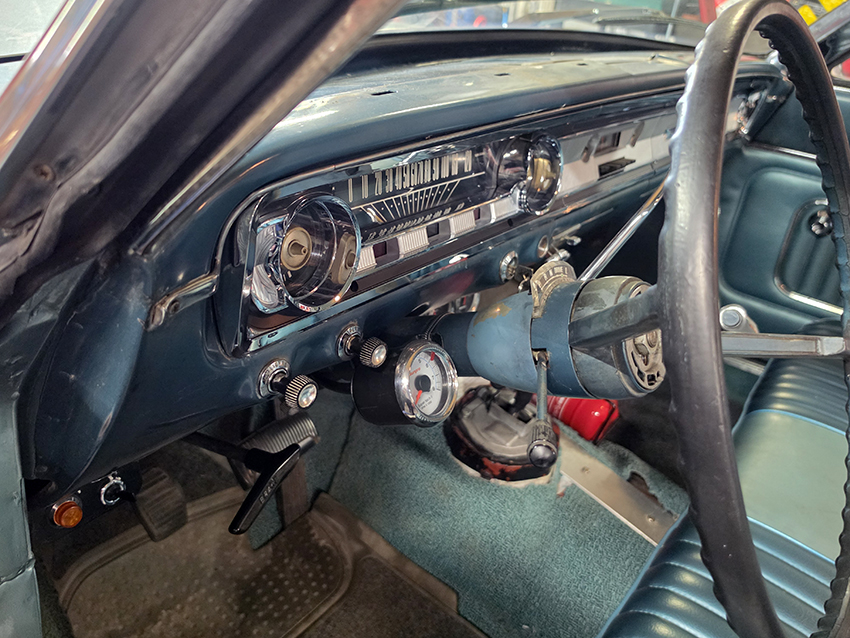
We have been working on a customers Falcon, creating a unique set of rear LED lights for him. A Falcon first that we know of. The interior has a knew four part dash fitted.
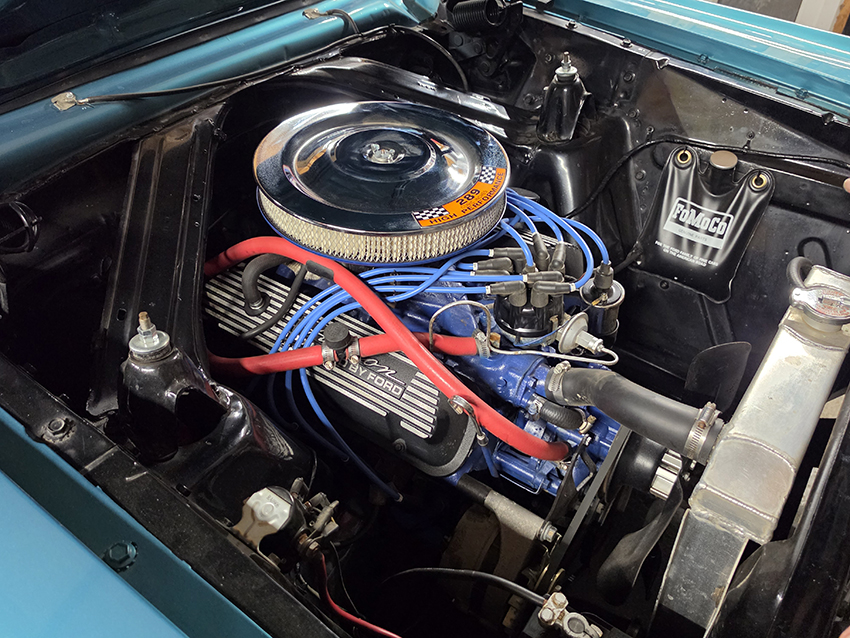
Under the hood has been tidied up and cured a couple of running issues.
WebShop
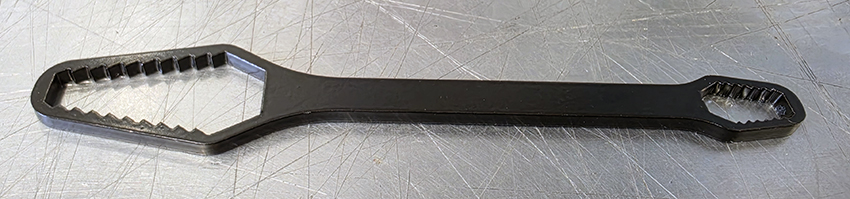
We are in a good mood due to the recent hot weather, so Adam has decided that the next few customers who make a nice order from us will get a little free gift from us. It’s a mini all in one spanner, stick in your glove box as an emergency or quick fix tool. It’s no Snap On giveaway, but it’s a little something from us to say thank you.
Coming Soon
As one of the original and leading suppliers of Mustang parts in the UK we’re often asked about fitting of some of the more complex parts or kits we sell. As we have mentioned many times before, we won’t divulge all our secrets, but we want to help out. With that in mind Adam is in the process of creating a walk-through guide for converting drum brakes to discs. It’s a common question, not only for Mustangs but also Falcons. We will be creating a page guide for that process and uploaded on here soon. Depending on how it’s received we may post more user guides in the future.
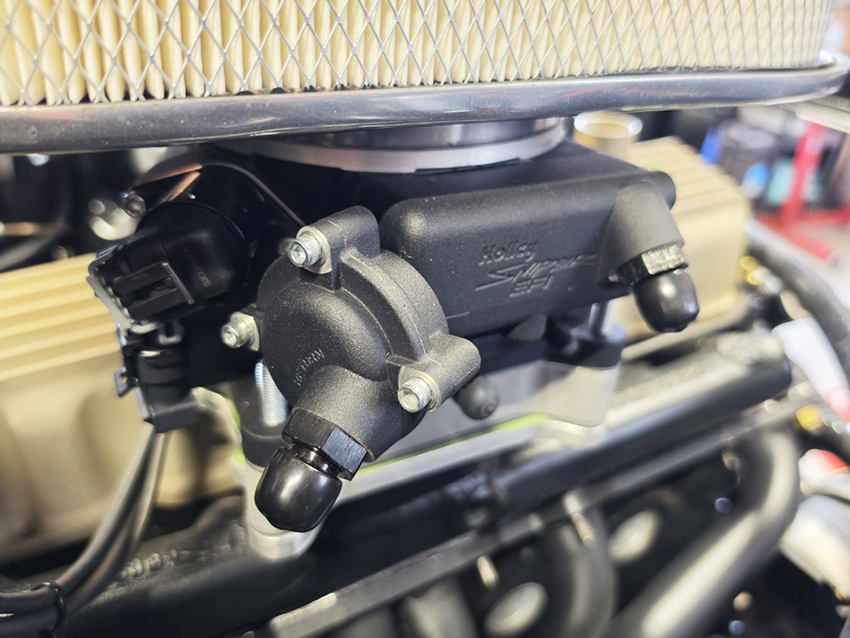
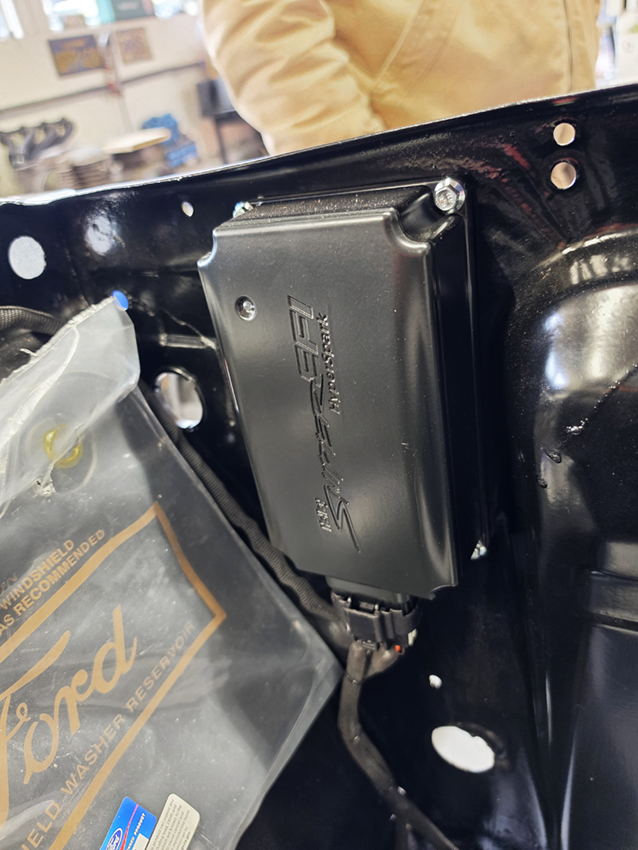
At Mustang Maniac we like to think that we get things new and trial them out ourselves. We have another new product going on our shop truck, our much loved Ford Ranchero. The Engine is an Inline 6, smooth and not in your face. The latest technology for the V8 cars is the EFI throttle bodies, like our Holley 4v Sniper or the Holley 2v Sniper , computer controlled efficiency, reliability and economy, a win/win/win. The down side maybe the cost, but once set up they are a dream. Our Falcon has been fitted with a Sniper EFI throttle body, which will have all the advantages of modern tech on a reliable engine. We have work to do on the car, tuning and some expected fettling to get it stable and consistent, these systems are self learning to your driving style. Once we have it running and and a few miles on the clock we work out if they are any good, if all goes well we may start stocking them. This is one project we’re looking forward to, yes it’s on our car but it could be on yours too, if all goes well.
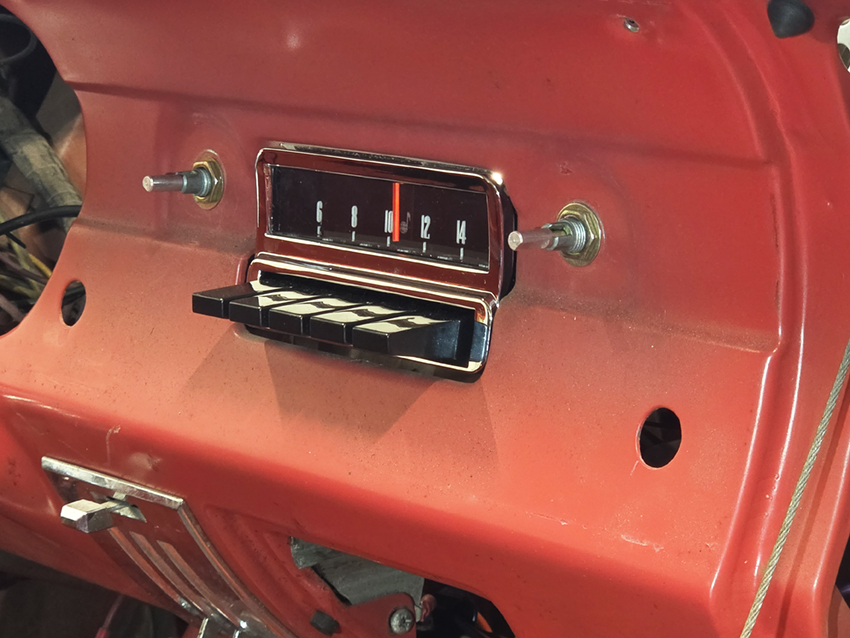
Inside the car we have a new radio with all essential features you expect from a modern car, but the radio looks totally stock, with a little bit of Mustang Maniac magic hidden under the dash as well.
We have a little dress up item that we are trying out which are our new nut or bolt covers. It just neatens things up a little bit if you don’t want to see the see the nuts or bolt heads, very subtle and we suspect hardly anybody will notice the clean lines.
Customer Cars
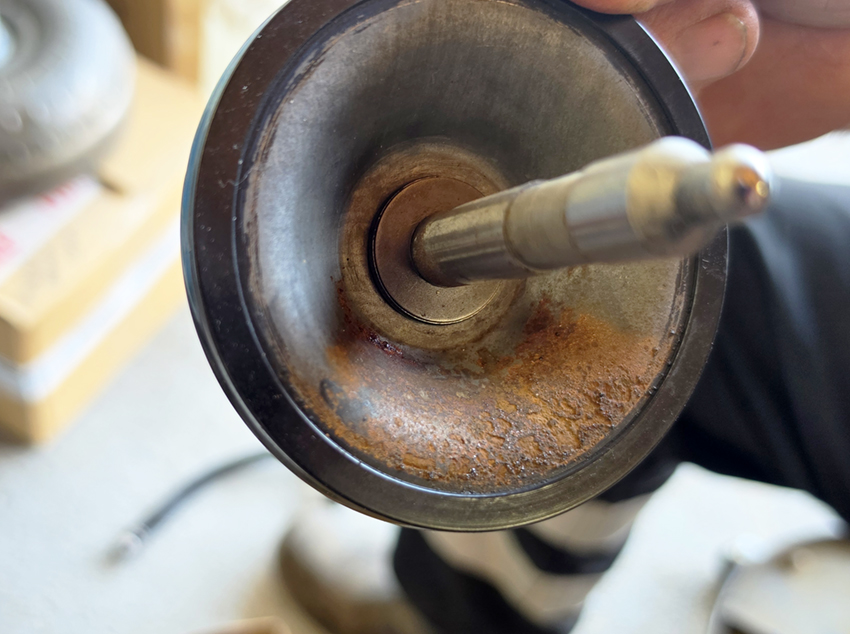
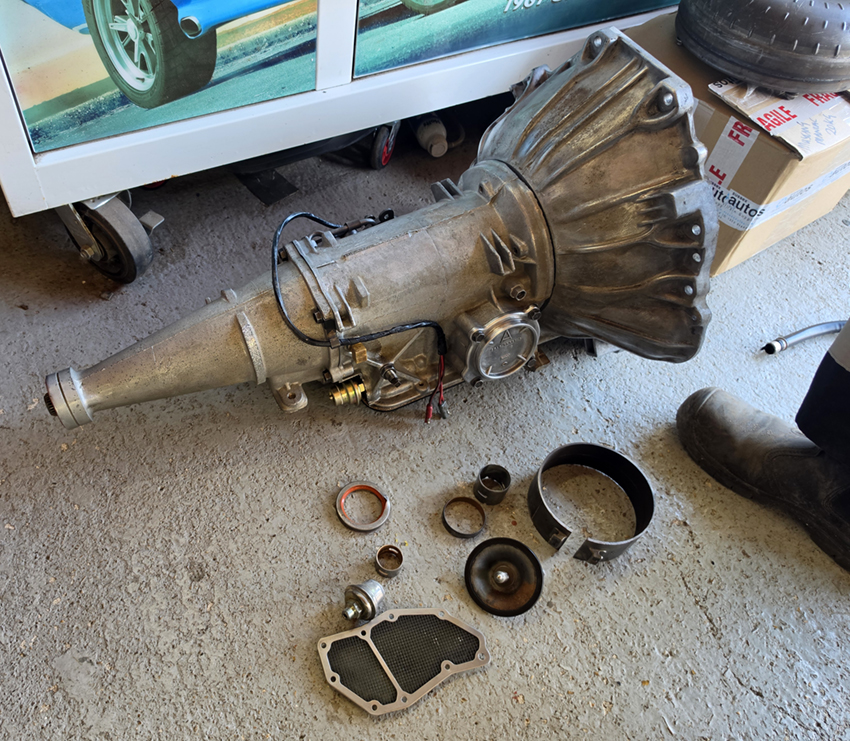
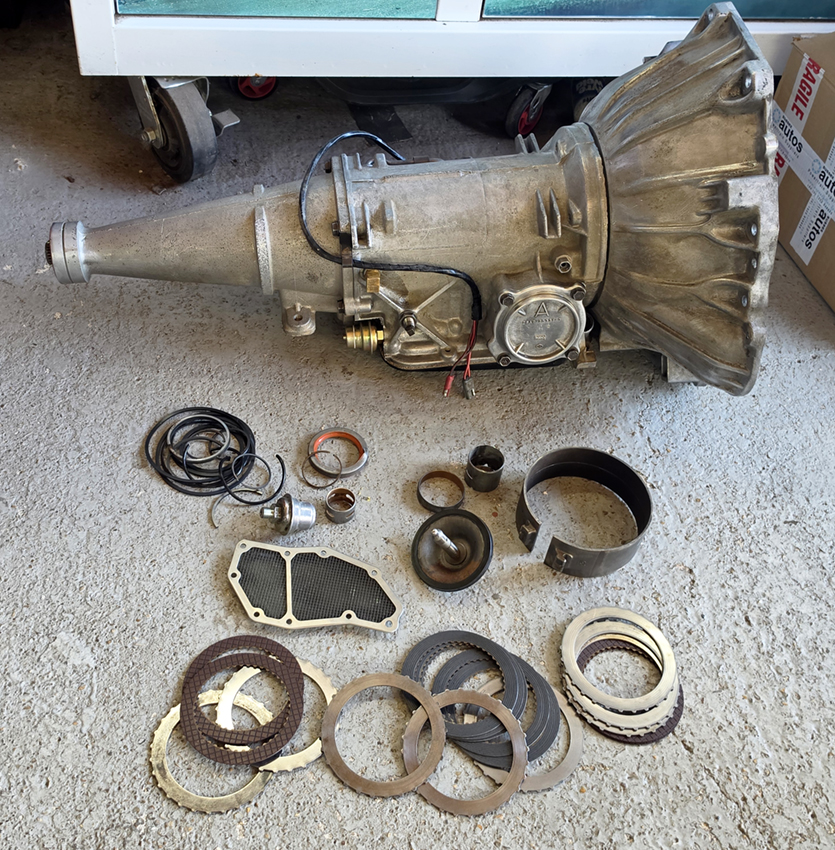
One of our customers Mart from onemanandhismustang.com has recently posted about why you should be driving your classic car on a regular basis and the benefits. Some good points raised and we can add to that information with some coincidental evidence of our own. A C4 gearbox which was sitting around and not moving much. Some moisture which had gotten into the gearbox and caused unseen chaos inside. The moisture had pooled causing eventual rust problems, clearly visible in the photo below, which had gotten into the internals of the gearbox pretty much destroying it when it was moved. An expensive lesson learned for this particular owner.
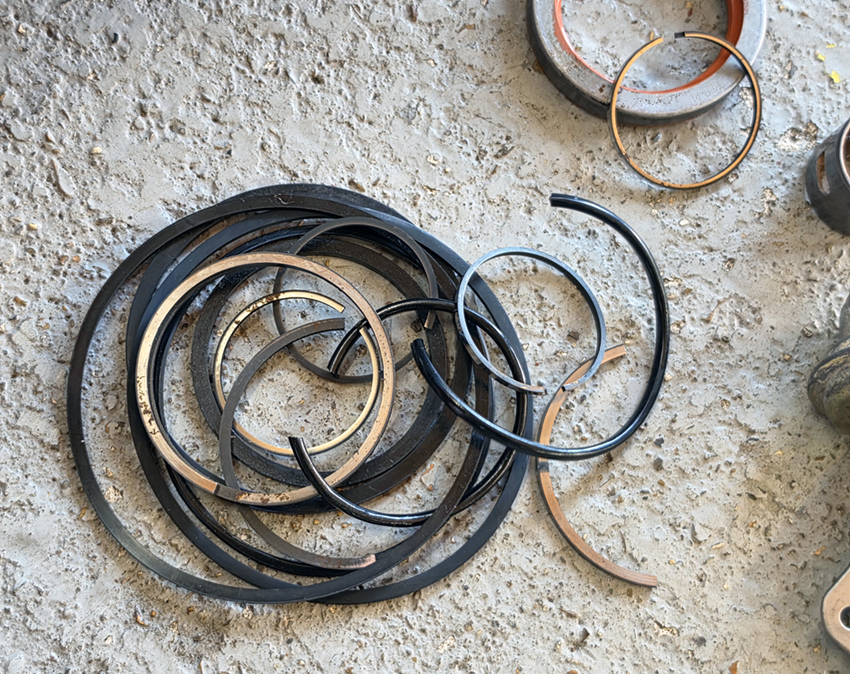
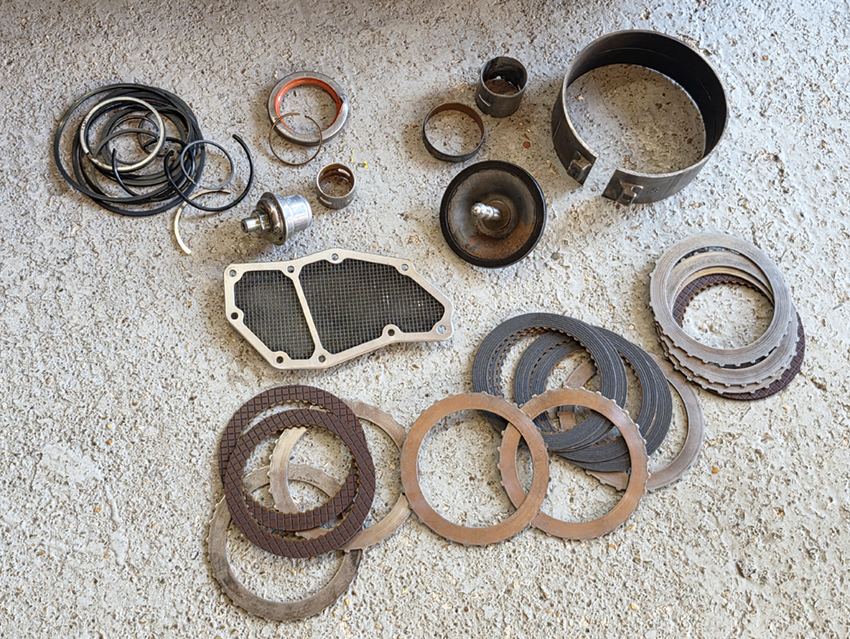
We took the gearbox to our engineering team where it has been completely stripped and reconditioned back factory spec and is now in our stock. Ever wondered just what is inside the C4 gearboxes? Here’s just the more common replaceable parts, bands, friction plates, valves, filters, numerous gaskets and seals.
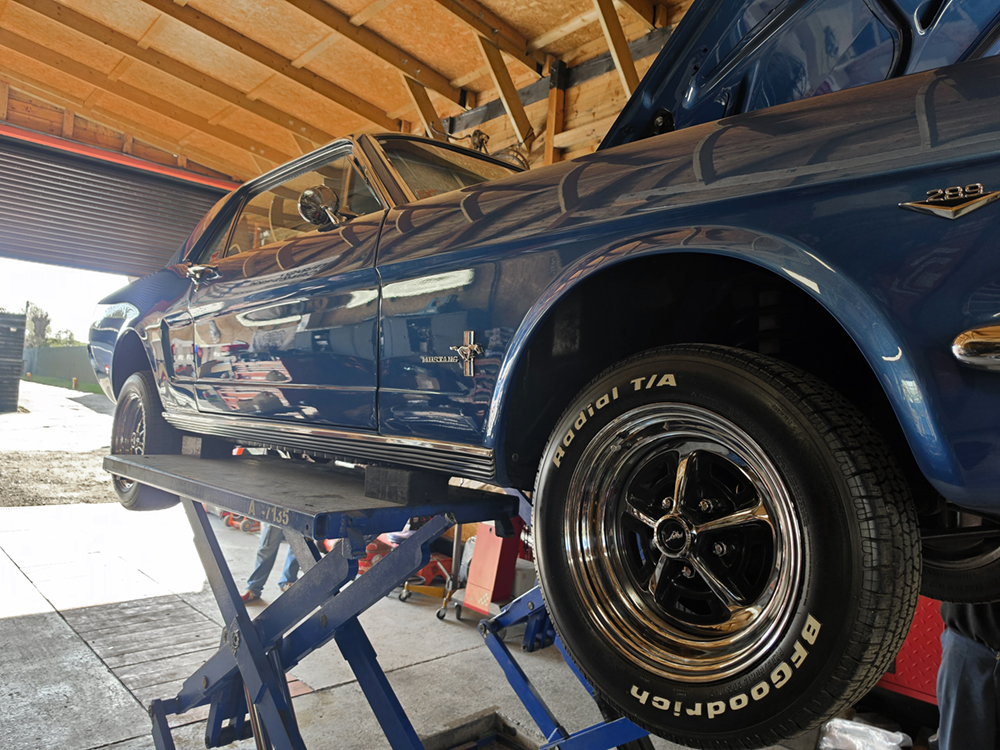
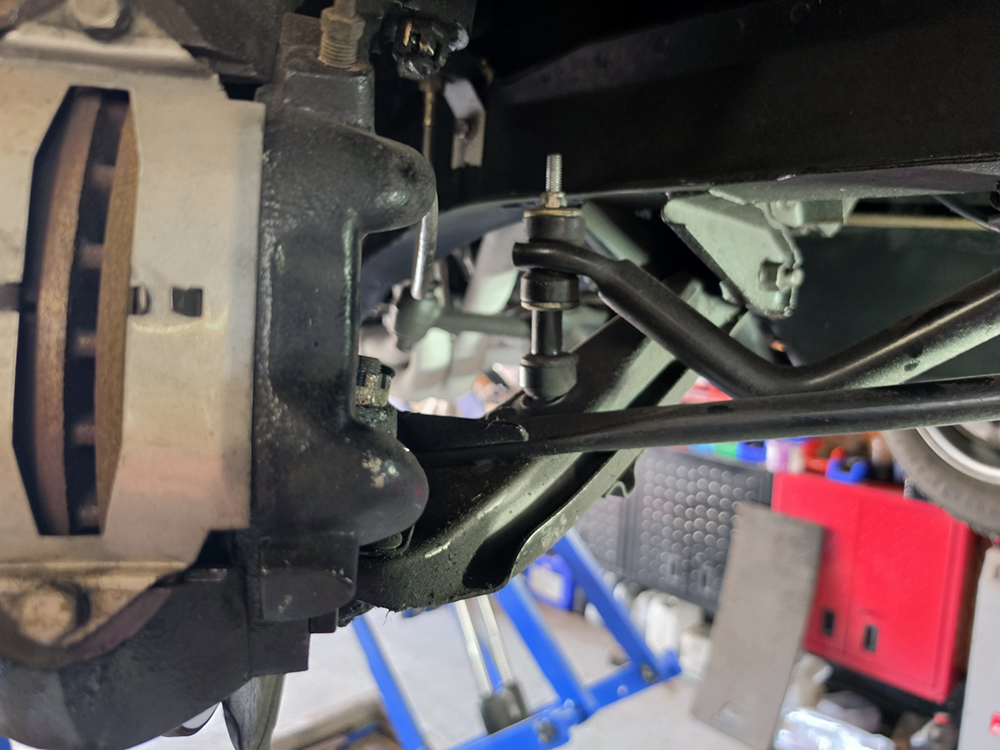
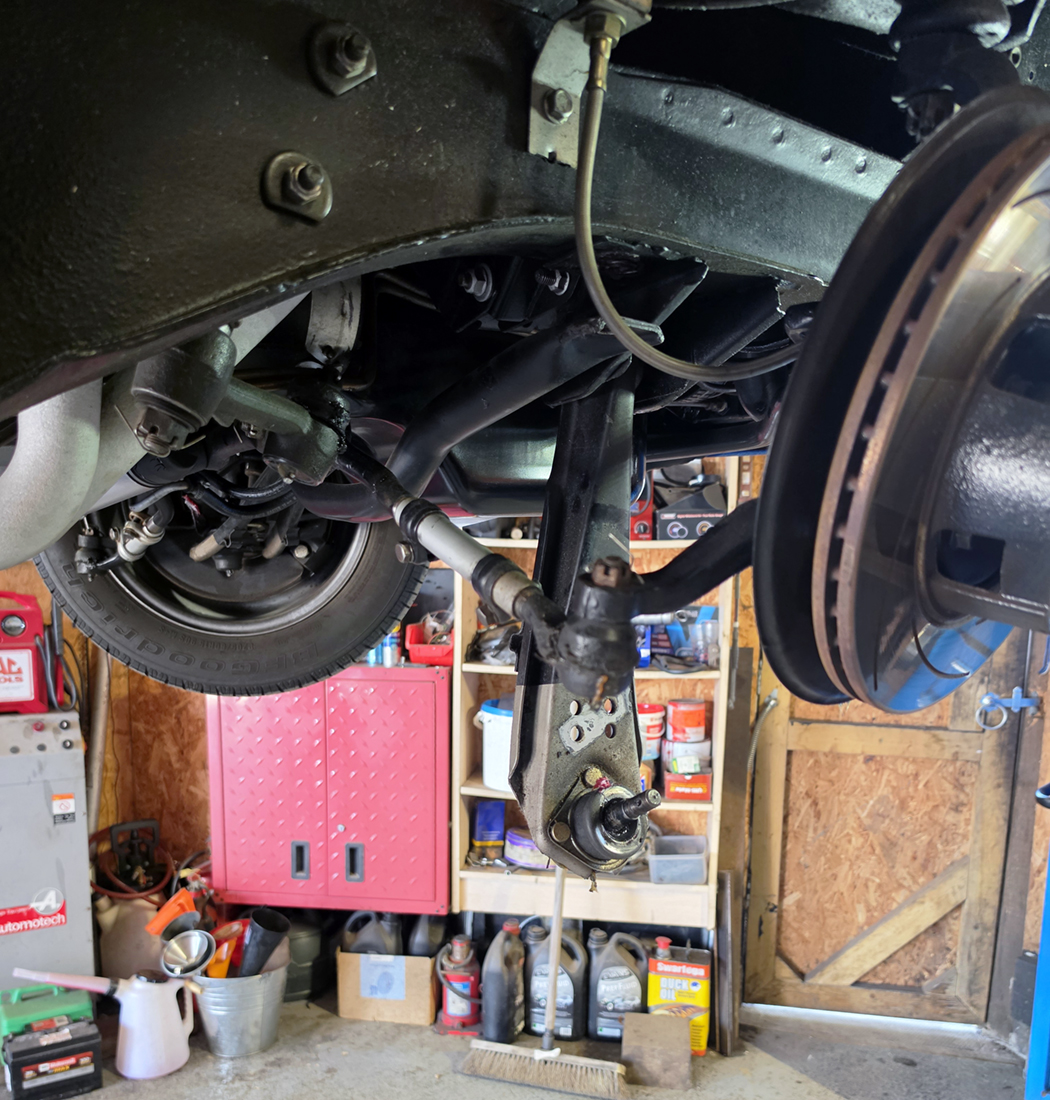
Just because the car looks great doesn’t mean all is well. Mart bought his car to us a couple of weeks ago for an MOT and we gave it a once over in preparation, (he shared his pictures with us). The car came out of winter garage hibernation ready for the car show season. The car was up in the air for a full inspection as soon as it got here with Adam and Mark performing some synchronized mechanical checks.
All was good except for the lower control arm which had play on the passenger side, which needed replacing to get through the imminent MOT test in a couple of hours.
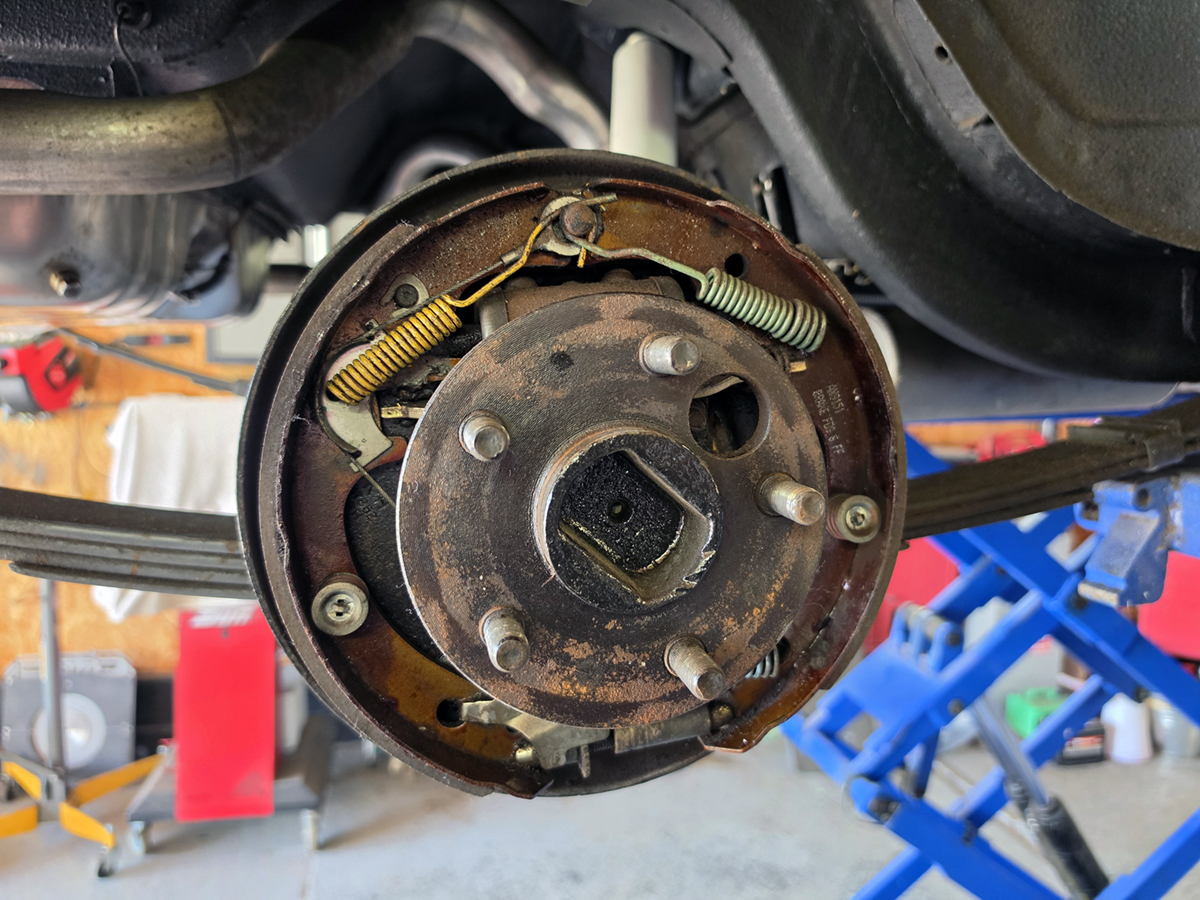
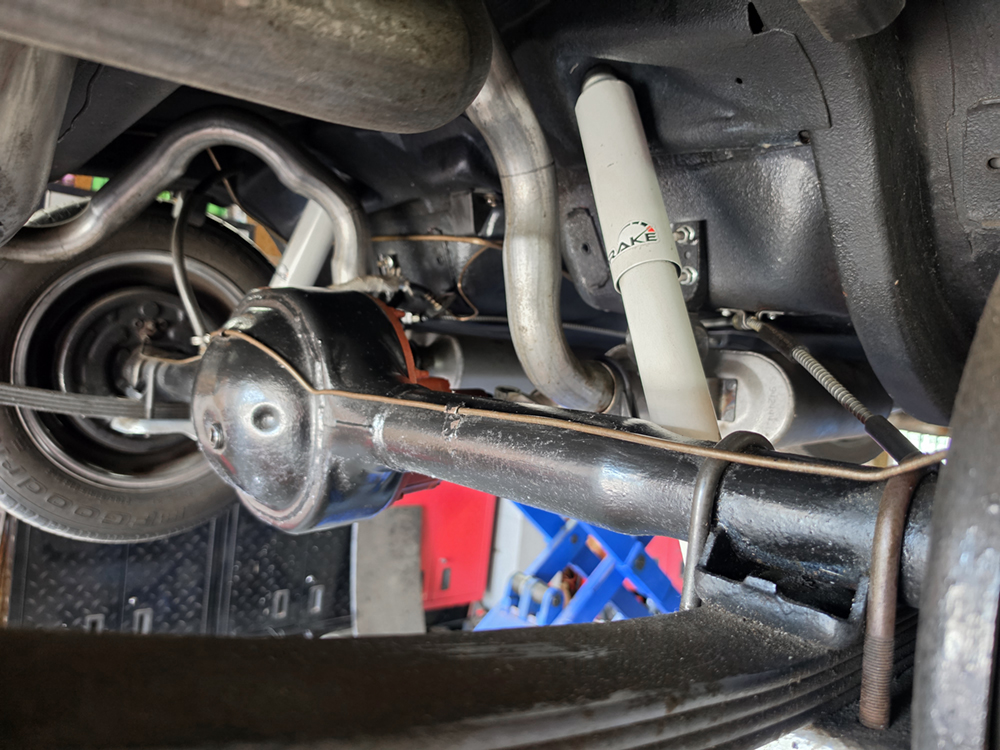
Apparently there was some also some dirt which needed cleaning under the car, which stressed him out a bit, a fair bit actually! Mark replaced the control arm in record time there and then as Adam got the replacement from stock. Mark then worked backwards, checking pipes and lines up to the rear of the car then on to the rear brakes which were cleaned up ready for some adjustments. The car was taken for a quick road test and all was good with the world again. We let Mart take the car to the MOT center a mere fifteen minute drive away, not including the additional five minutes it took for him to sort out the SatNav. The car passed fine. Without an MOT or even a pre-check with us, that part could have gone unnoticed with a big failure at some point. Even though this age of cars don’t need an MOT – we strongly recommend that they are at checked annually or at least given a full check over mechanically when they are serviced.
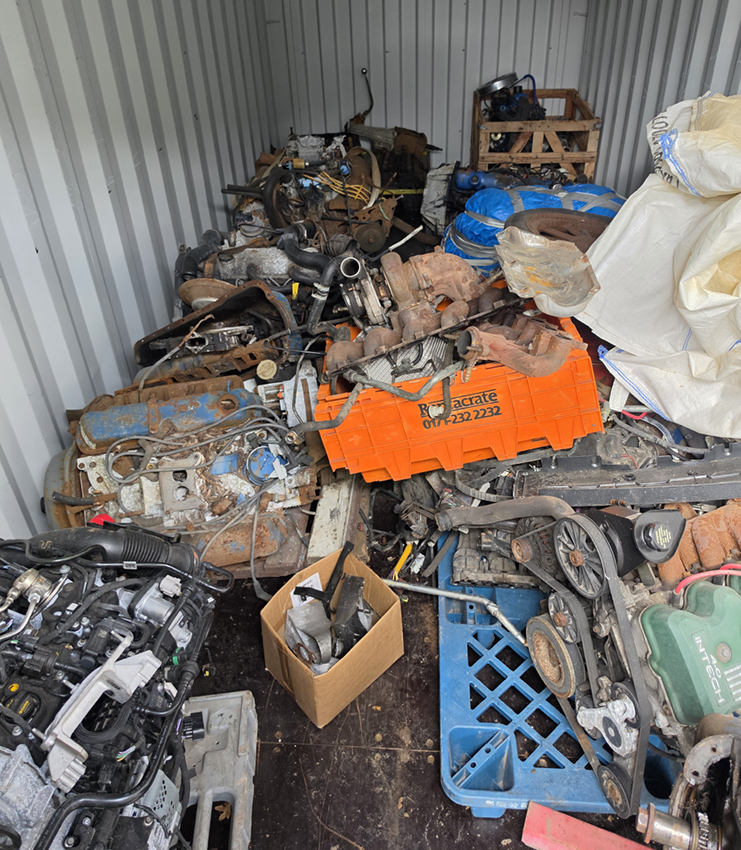
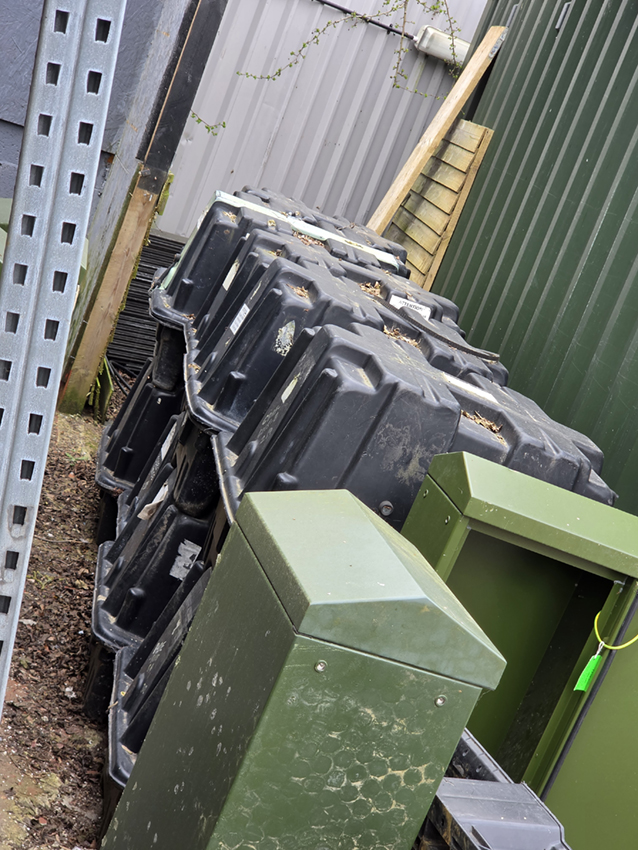
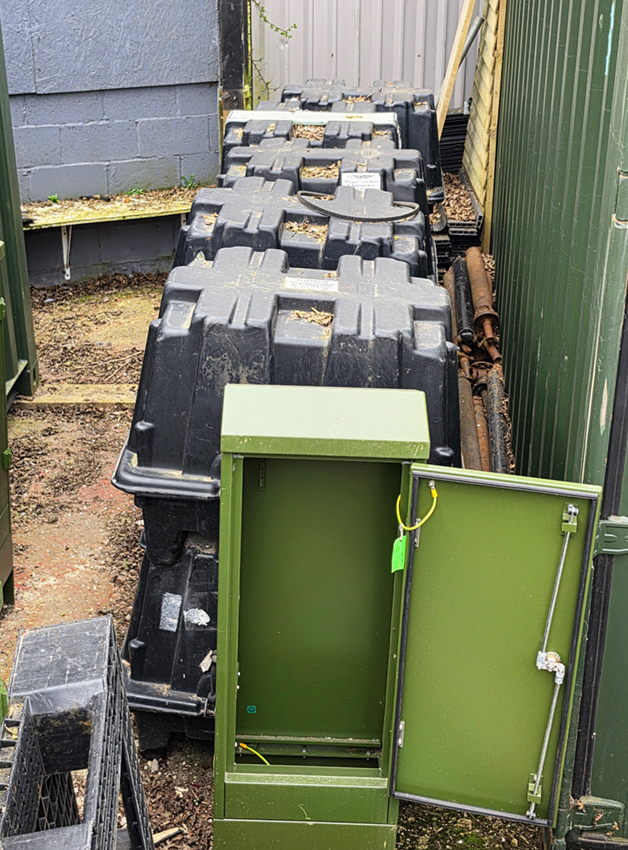
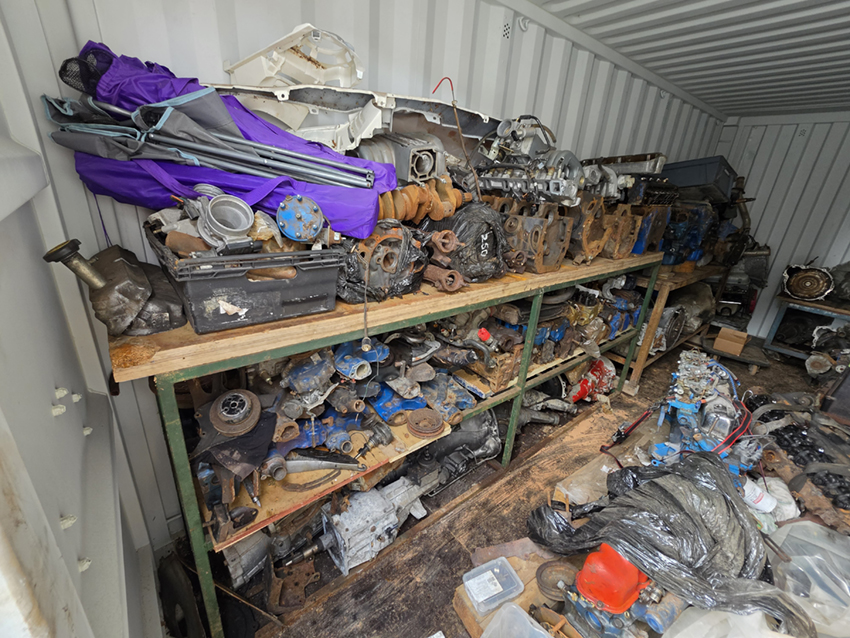
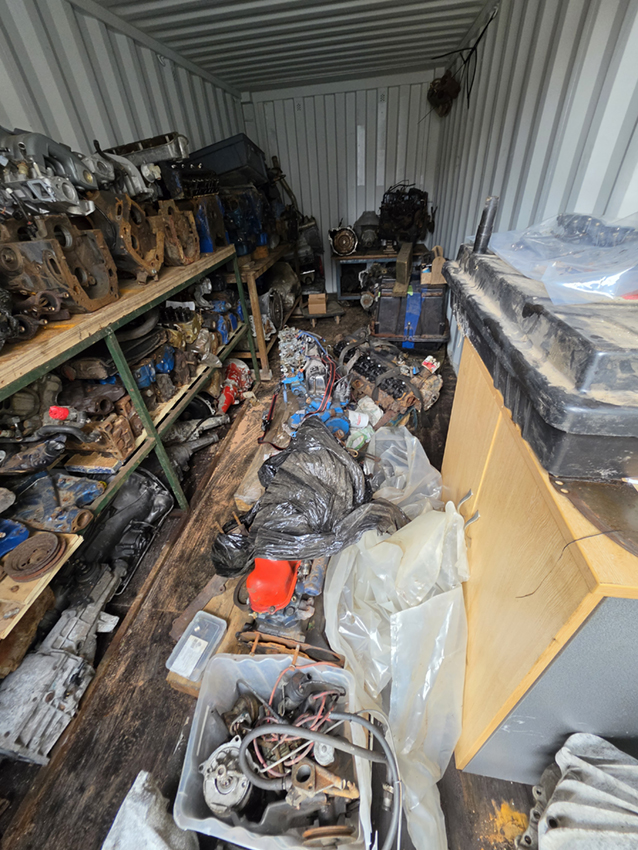
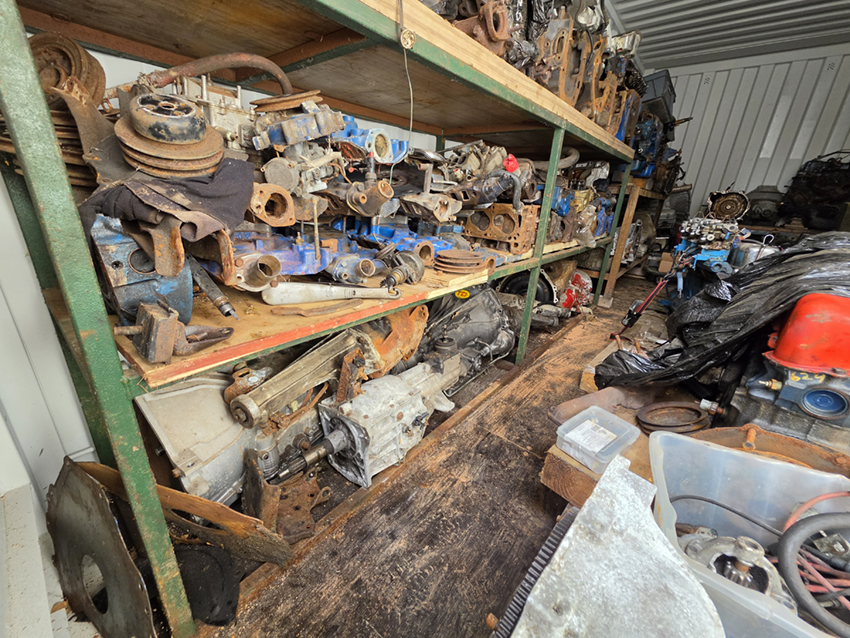
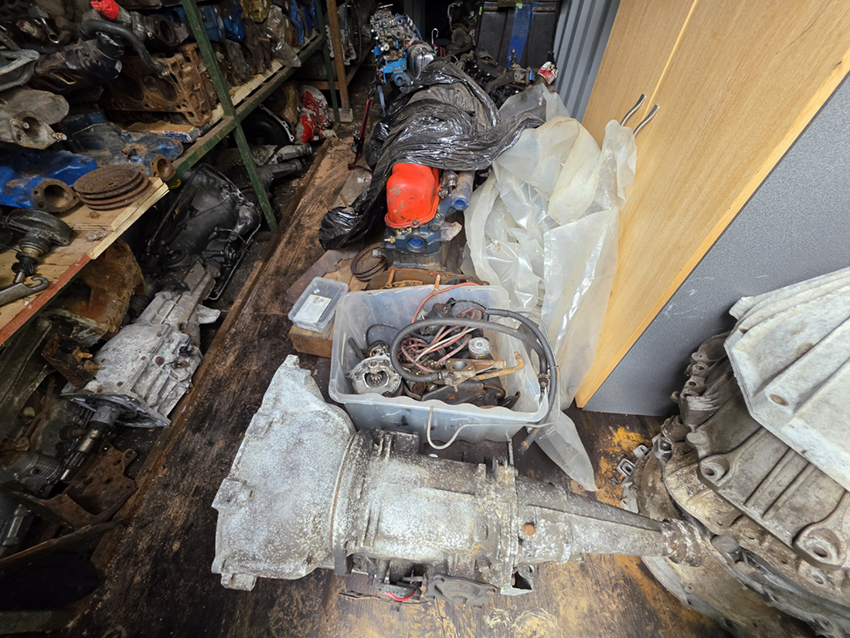
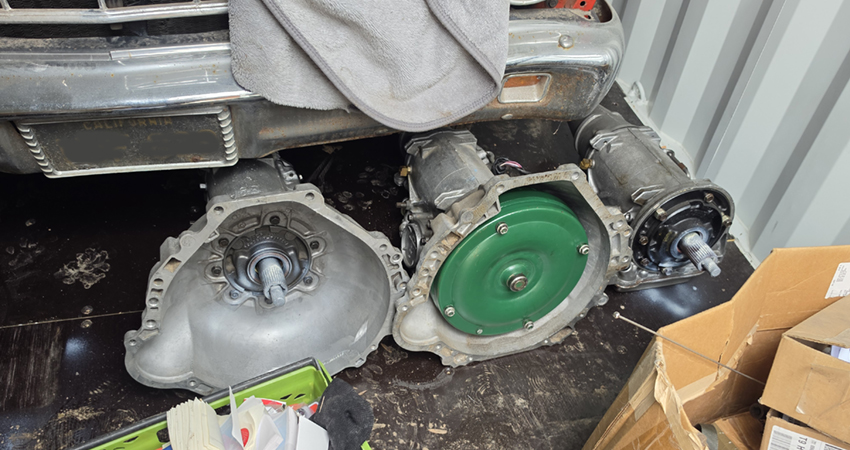
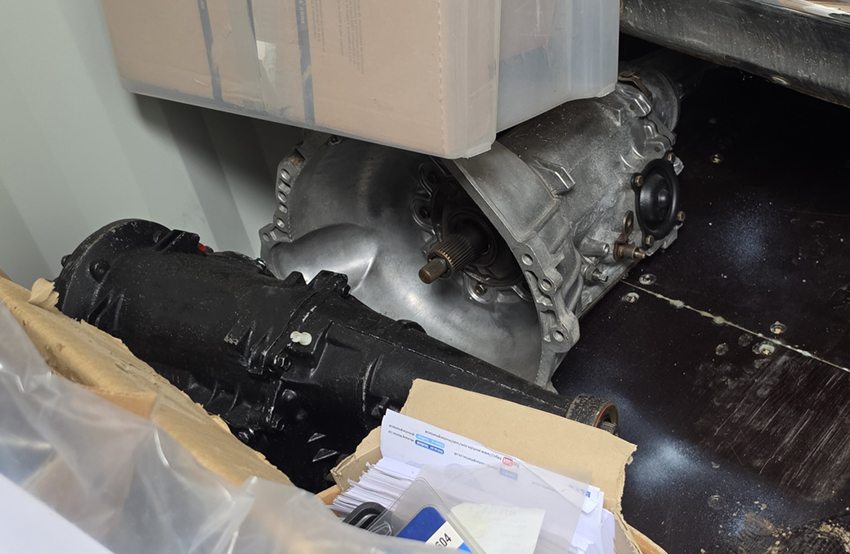
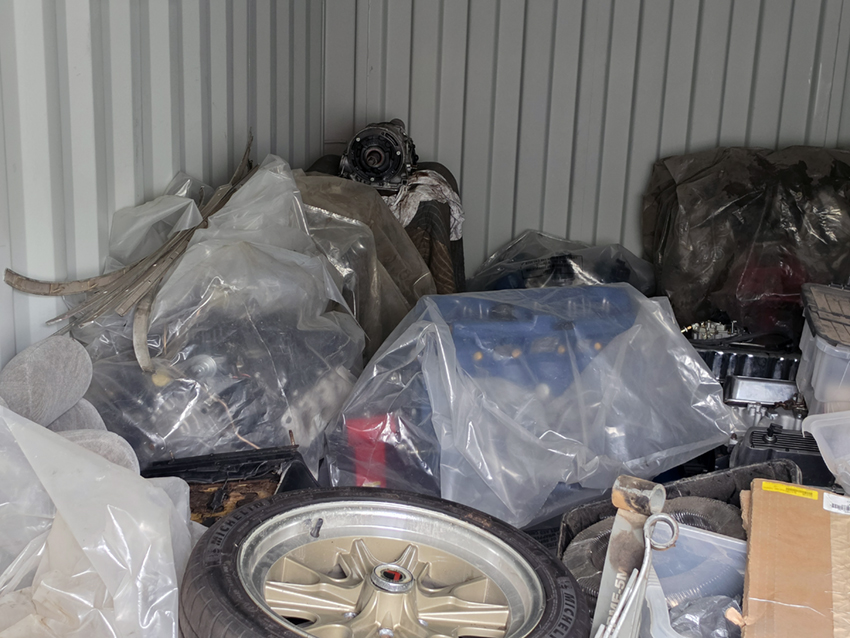
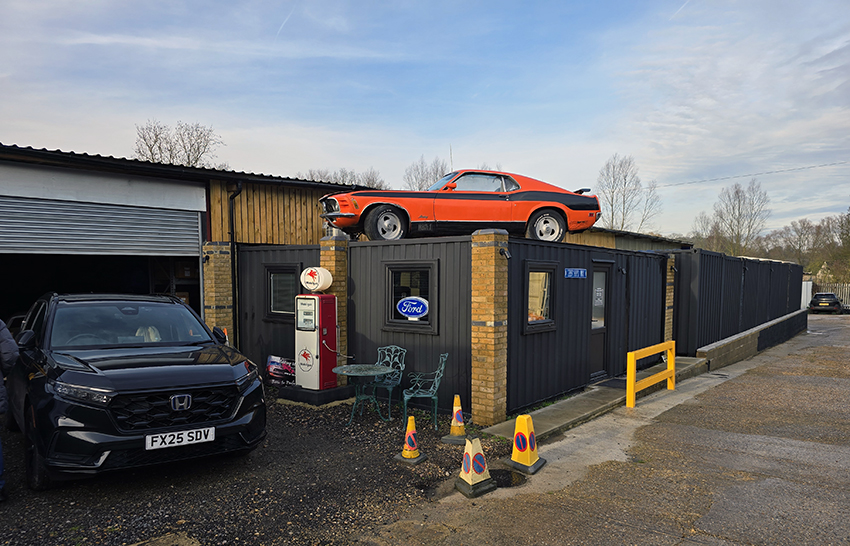
Our regular readers will know that we have moved location to our custom built offices further round the yard. This was to make it easier for customer parking, stock intake and dispatching of our customer’s orders. During this monumental task of relocating some significant heavy items or ‘stock’, Adam has ‘found’ more parts that which he can now get to. He has some ideas that he can only now put into place now that they are accessible. These ‘parts’ as Adam has been referring to them is his huge stock of engines, gearboxes and axles.
The Old:
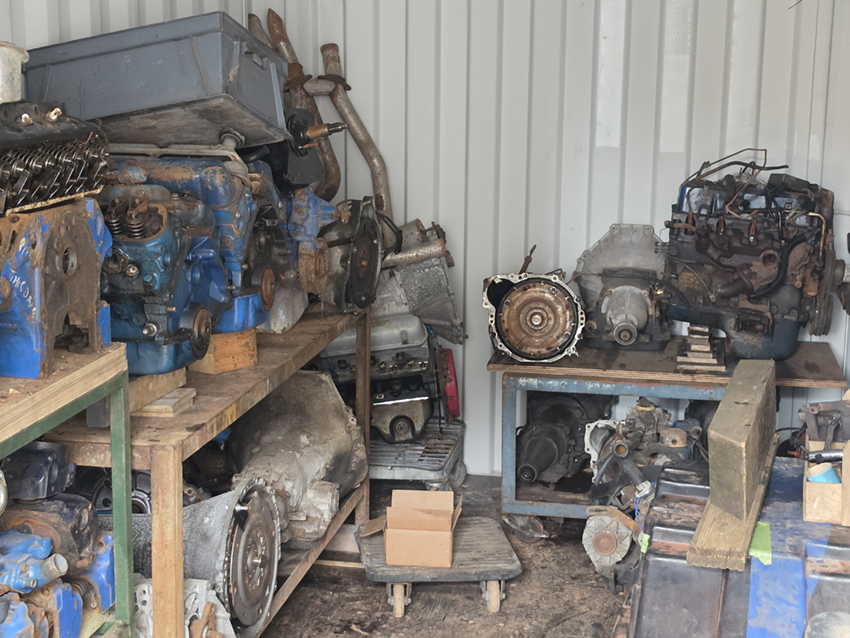
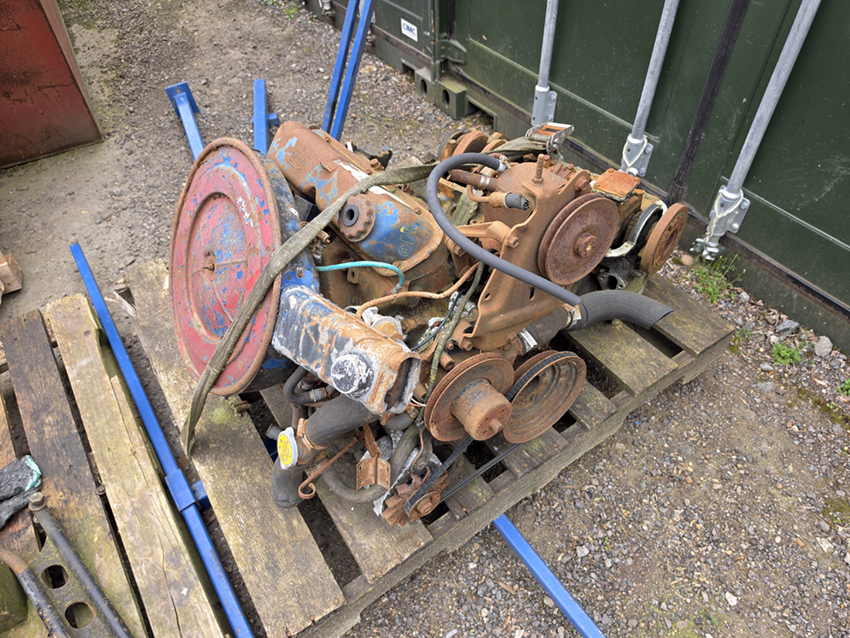
Some parts, have been put into their storage locations and some parts are on racking. There is a method to the madness believe it or not. The first steps is to get all these parts into one area, then we can sort them out on properly at some point in the near future.
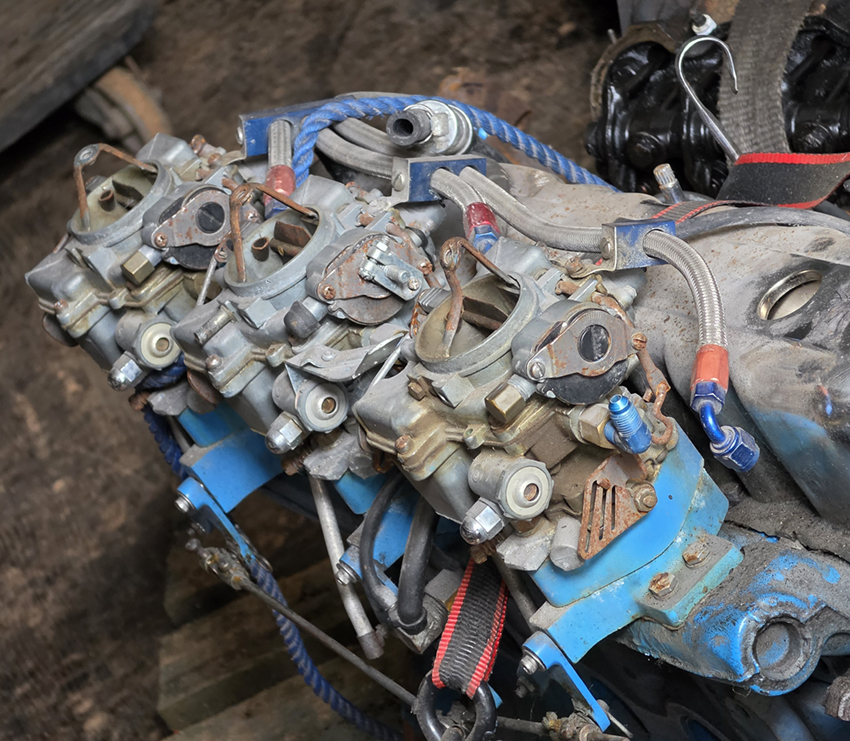
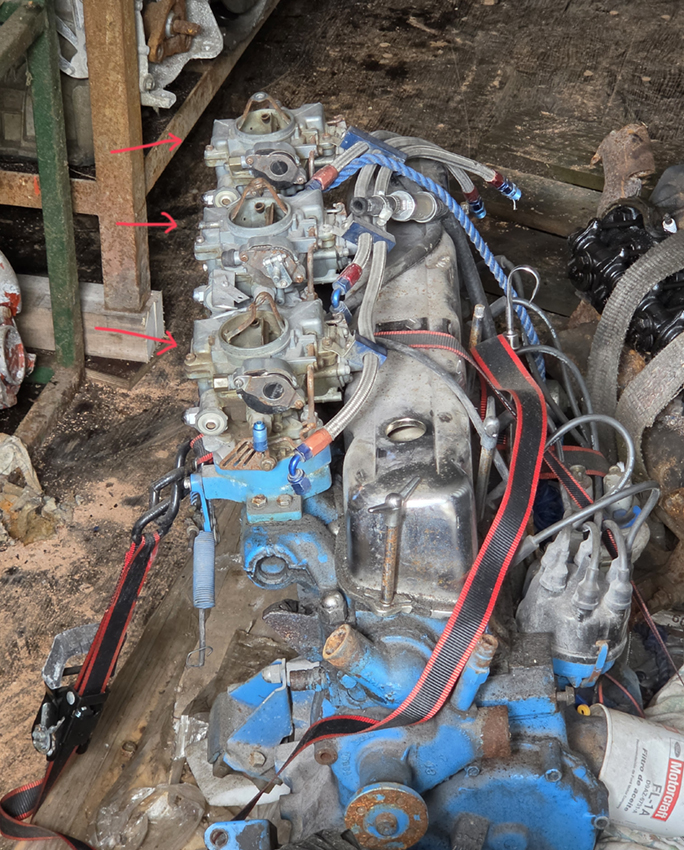
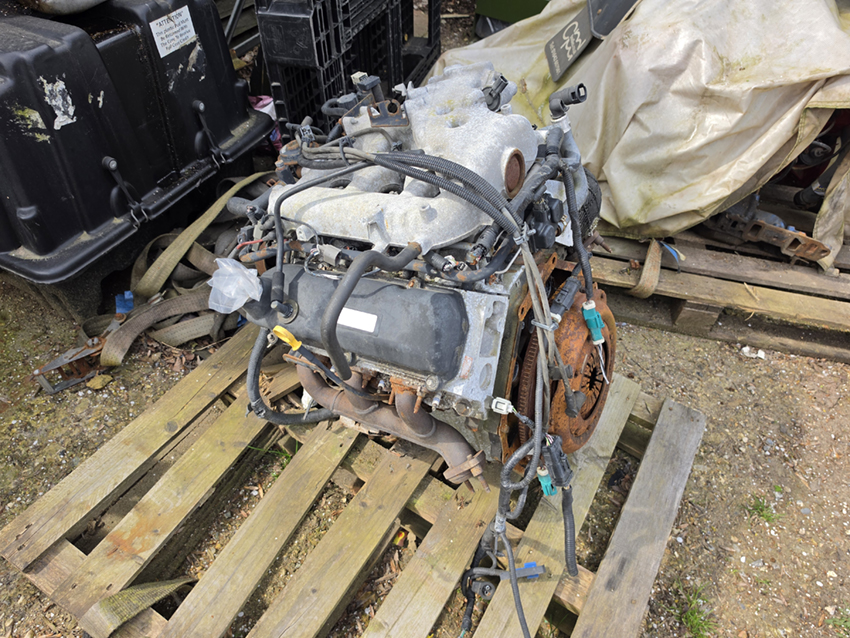
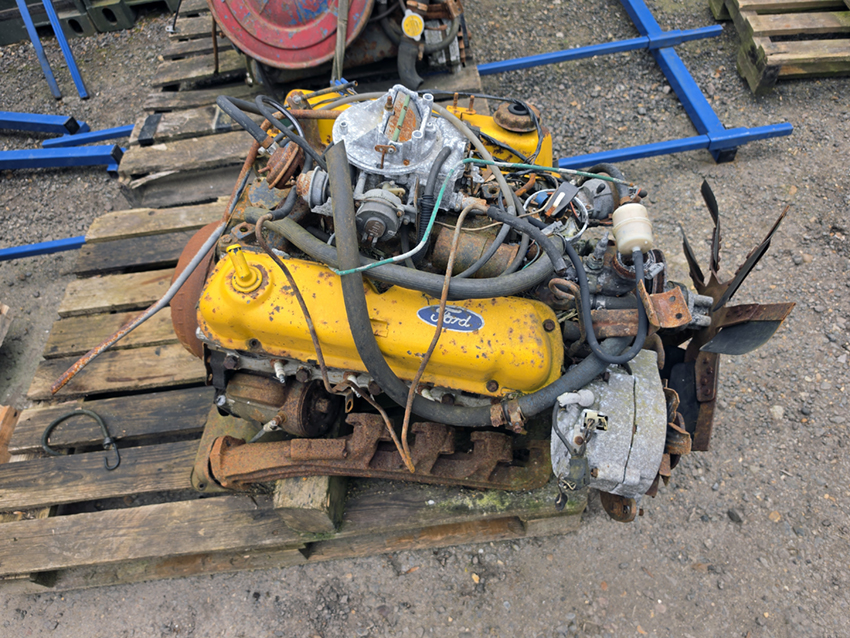
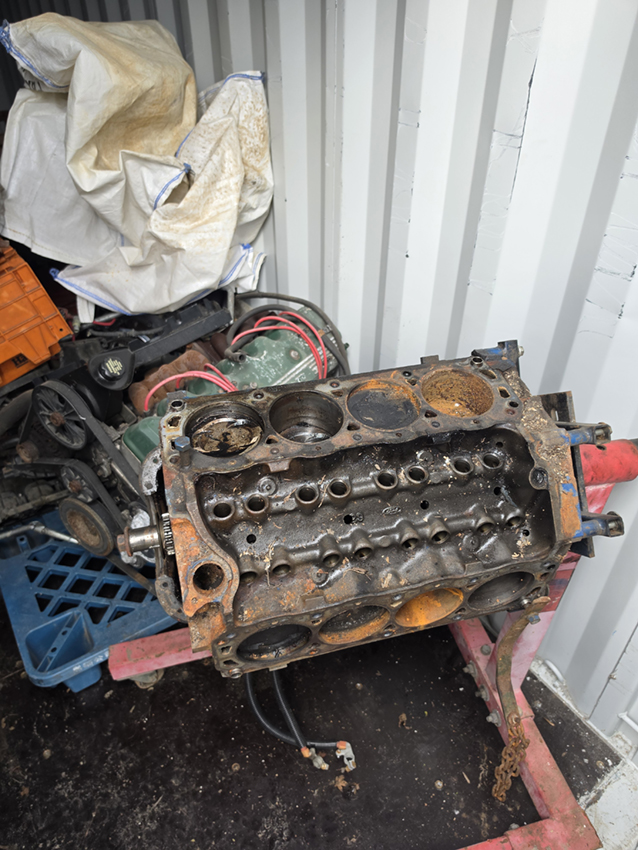
Adam’s plan is to take these old engines apart, get them reconditioned and store them properly. Blocks, heads, cranks, cams, pistons etc. date coded and logged. Some of these engines are highly sought after just for their rarity. Things like this inline 6 with triple single barrel carbs setup.
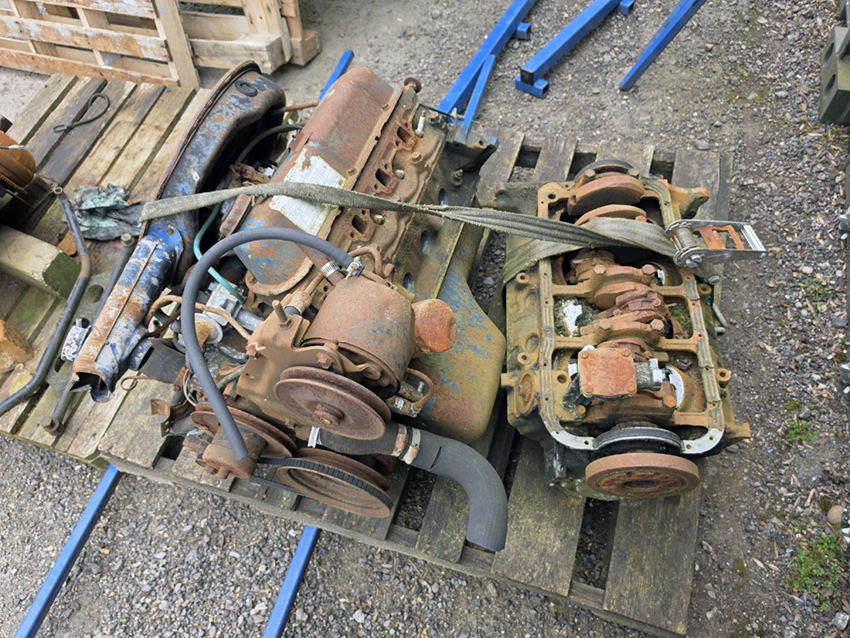
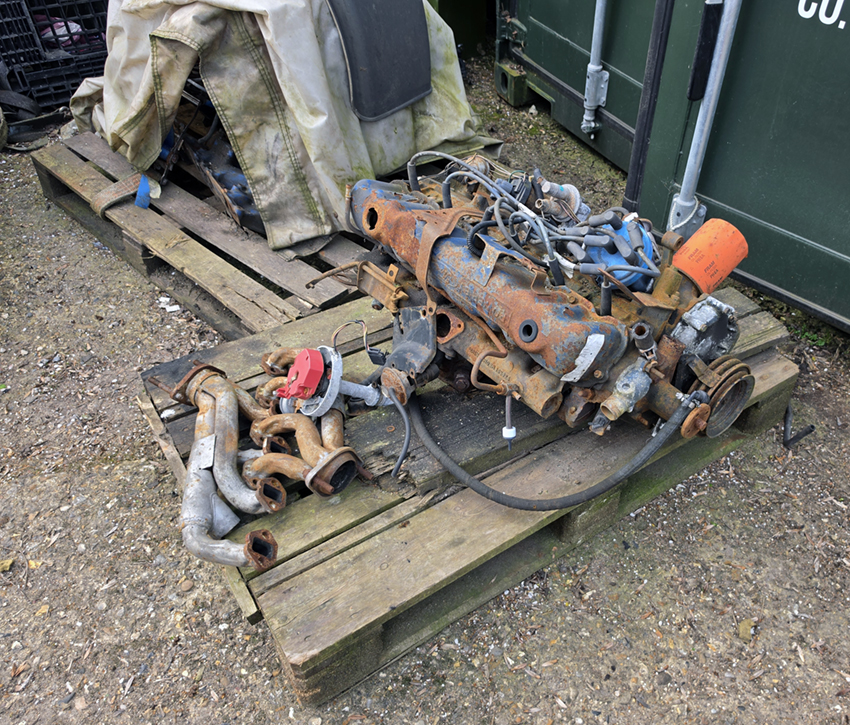
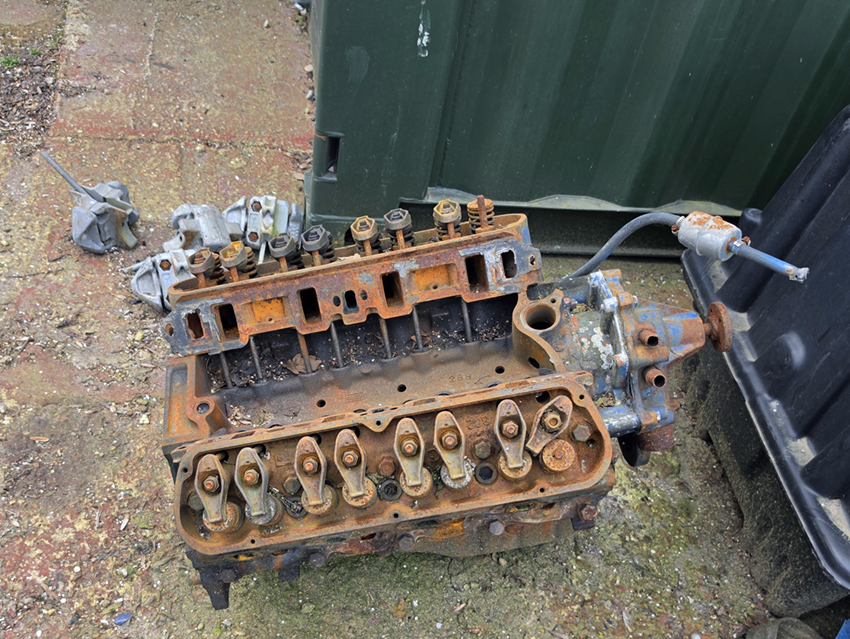
A few of the engines have been pulled out ready for reconditioning/restoration and ready to go to our engineers for a full overhaul. These particular ones will come back to us for stock as parts and not a complete engines.
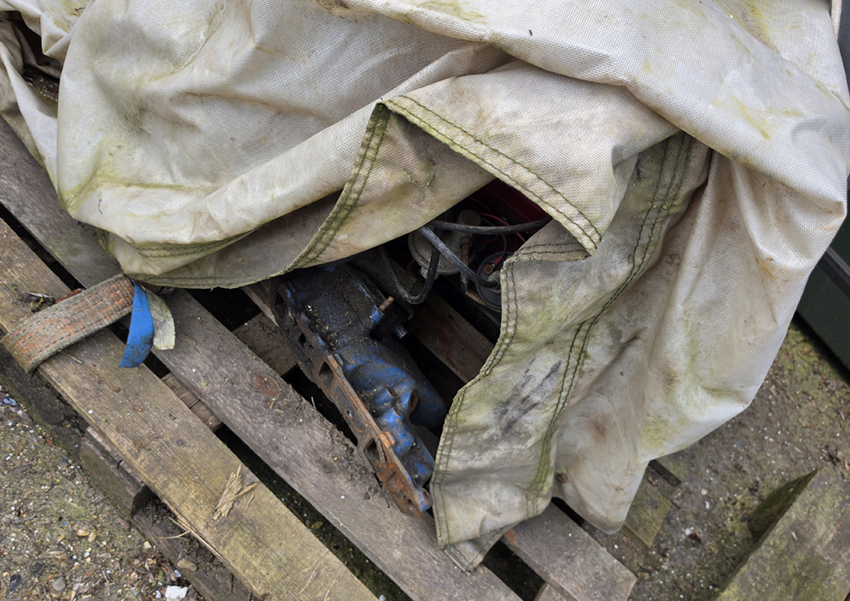
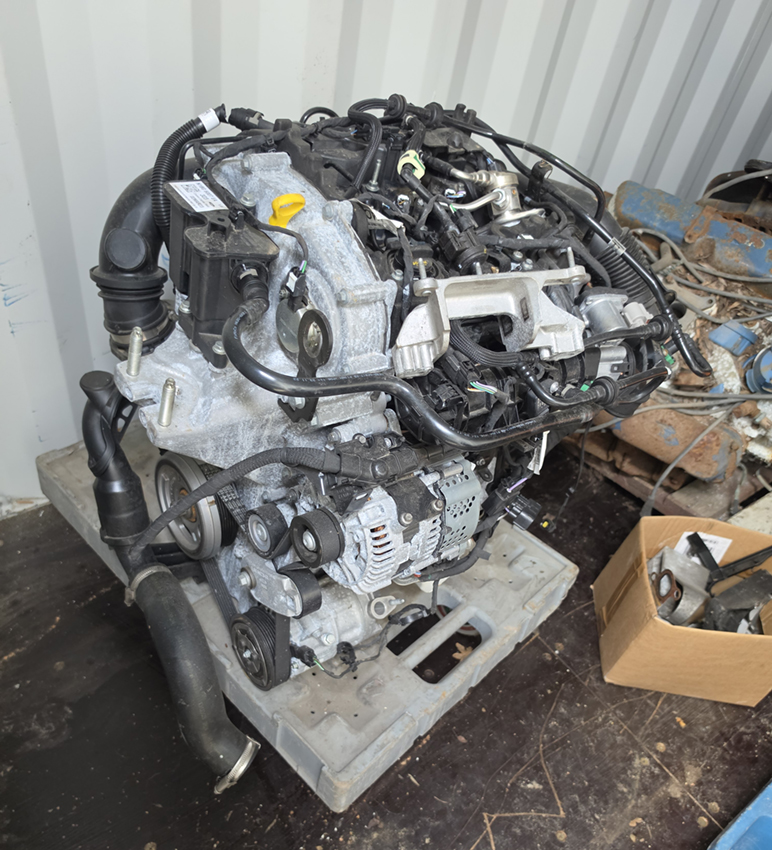
Other engines are element secured storage in their own individual containers, these will be put into storage containers now we can get to them.
The rest of these ‘parts’ are now stored with some like new restored examples. The process for restoring and reconditioning of these engines and gearboxes will be ongoing and not a high priority, just yet. The logic behind it? We asked Adam what the plans were for these engines and gearboxes, his response was “Second hand parts – nah, we ain’t got none!” However, although they are not for sale, if your wallets are deep enough and you desperately want something, then it could be yours, everything has a price. Time wasters need not apply and try to negotiate.
The New:
A good customer of ours has bought himself a new vehicle which has come into us for a little Mustang Maniac Magic to be bestowed upon it.
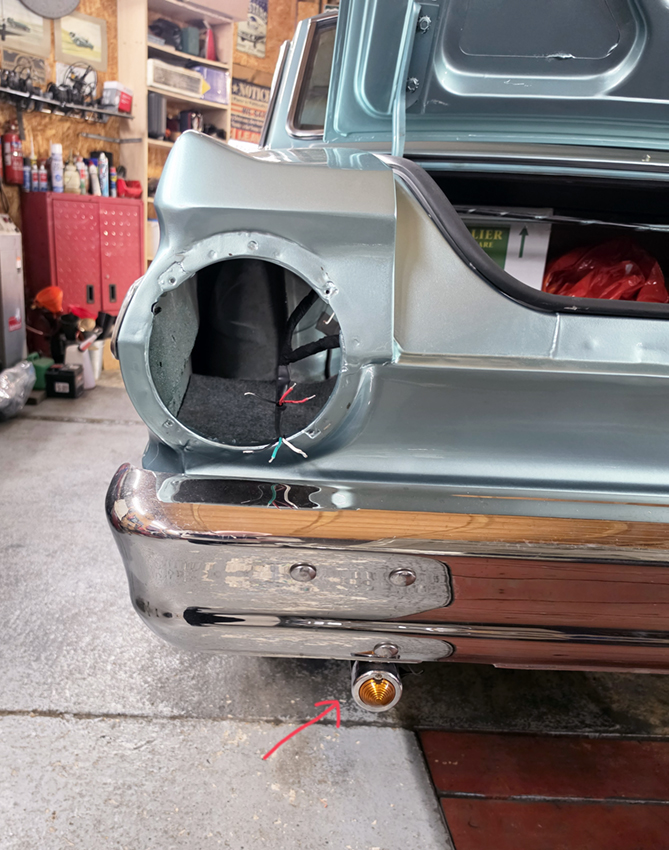
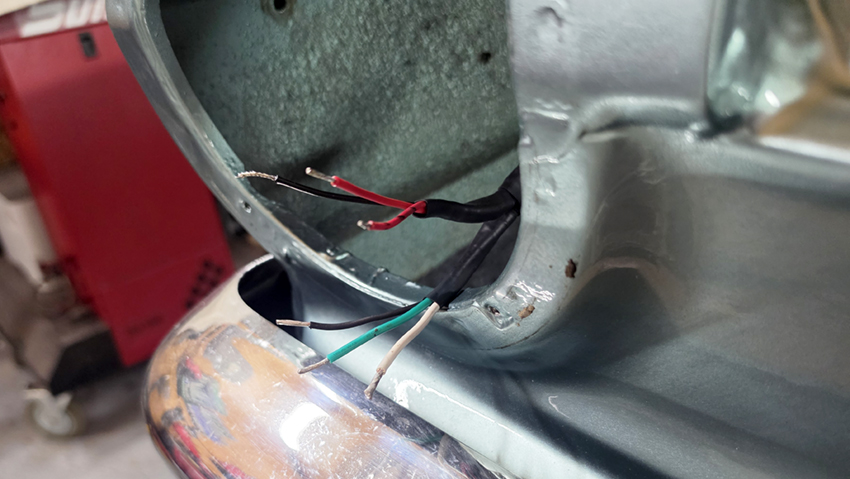
This Falcon has been resprayed by us and needs fettling to iron out some little niggles. One of the challenges put to us by the owner is that he wants some LED rear lights. The problem is there is no such commercially available. We have been been ordering many variations of LED bulbs for size, fittings and LED configurations. We have then done some ingenious things with them to make them, a) fit in the stock housing and b) make them work.
Mark has been bench testing the configuration and made some rather clever progress. We have a video here if the LEDs being tested manually with bespoke circuits and then later on in the video integration with stock flasher units. We still need to add bespoke circuitry to make the brightness of the bulbs where they should be and a then create a neat package that fits with the stock look for these lamps.
We have created many bespoke options for our customers and this is another example of our willingness to help out where we can, and Mark likes the challenge. (This video has no sound). You never know we make them available as a parts option if it’s viable in the future.
The reason for this request is that the indicators are aftermarket and mounted low down under the bumper, arrowed. This isn’t the worst solution that we have seen, and won’t be the last work around for our UK laws.
WebShop
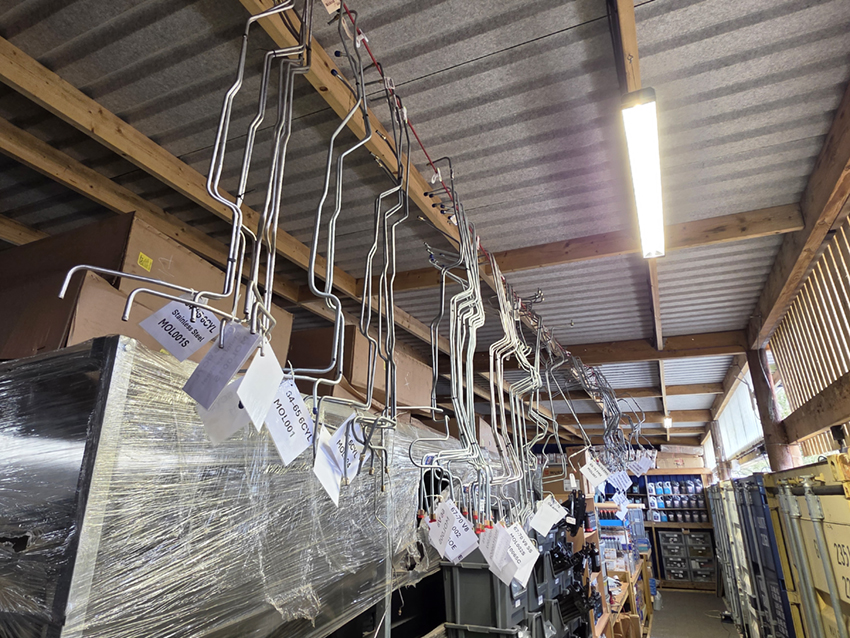
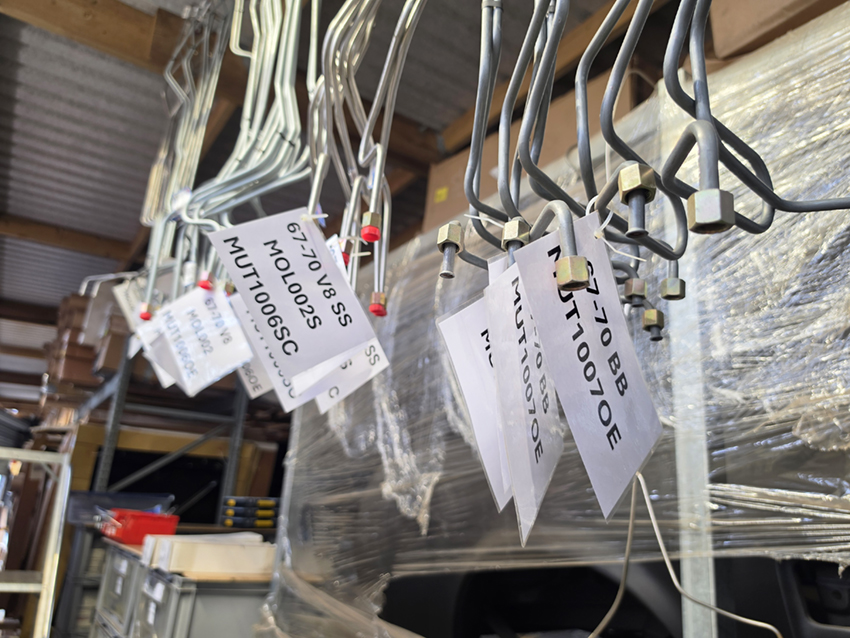
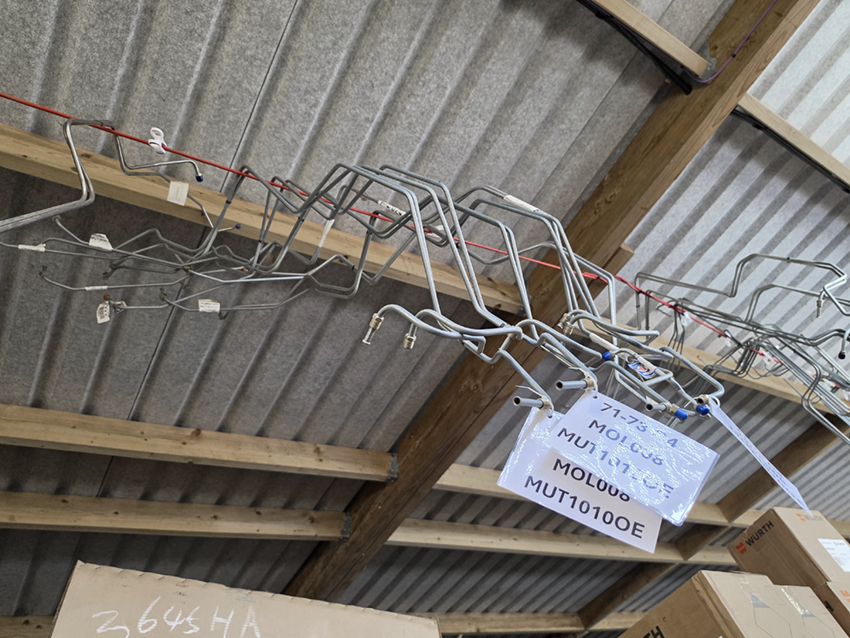
We have a new solution to store our stock of transmission lines to stop them being damaged. So simple why didn’t we think of it before? Hang them up.
Posting them out is a real problem as they can be bent or crushed. Something we can’t control that once it leaves our stores, but we try our very best to protect them.
We have updated our WebShop header with an additional email that our our customers can use for “Support”. We have noticed that a couple of customer support questions have been inexplicably missed, apologies for the late responses. In order to prevent this going forward, we now have an dedicated “Support” email address which will be handled by Adam and our technicians. This isn’t a twenty four seven response service. However we will endeavor to get back to you as soon as we possibly can.
We do need to point out that this new email address is not going to be a ‘free for all’ support line for your; “I bought this part from ‘So & So Experts’ and it don’t fit, how can I do it”, type scenarios. The purpose for the new ‘Support’ email is for our customers to ask a question if the parts we supply will fit your car, or you need any additional parts to complete your project, maybe even the odd tip or two. Hopefully this will streamline our responses to help out where we can. We reserve the right to not respond to particular enquiries if we deem the new ‘Support’ email service is being abused.
Below left, the new WebShop header bar email links, and the email addresses on the right.
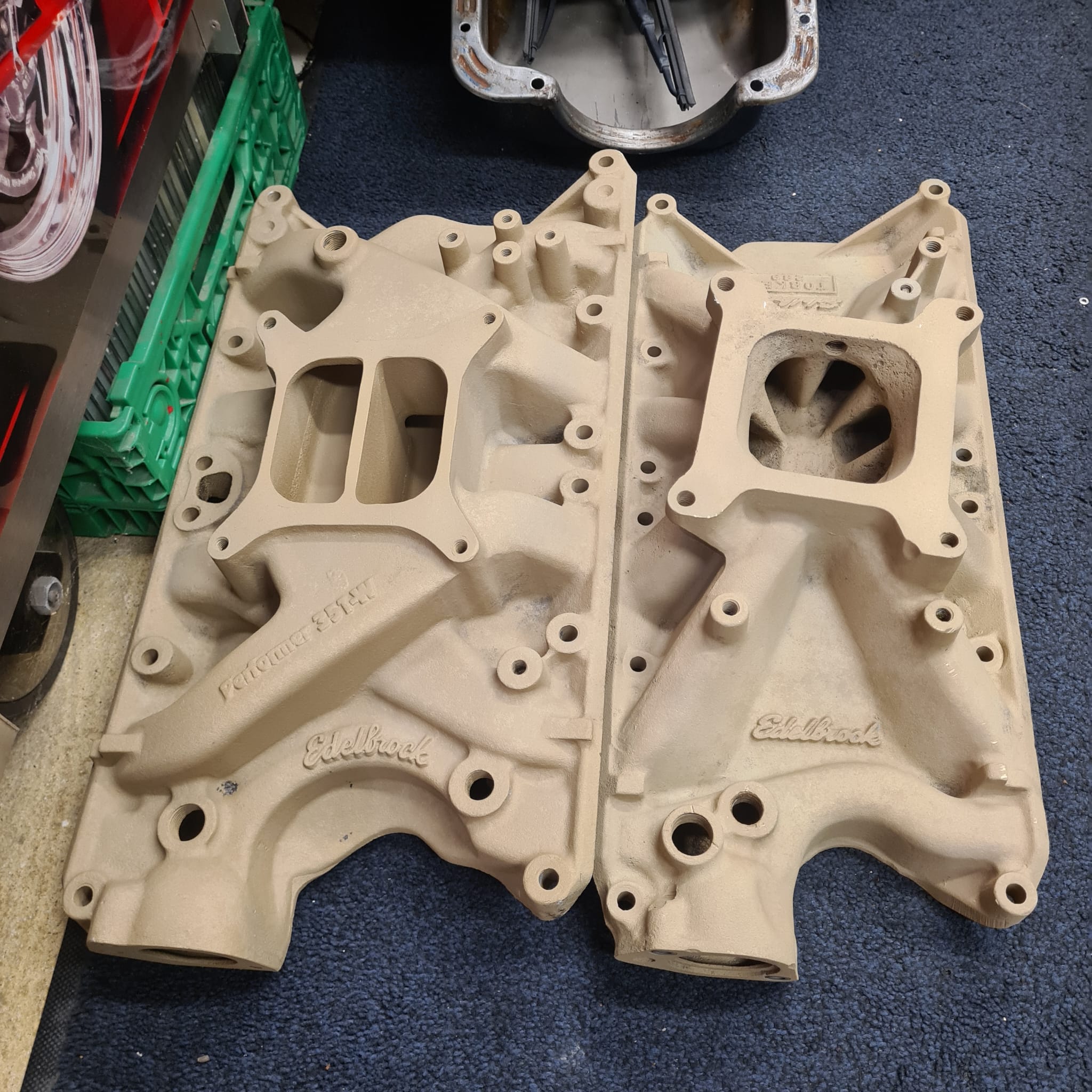
Two intakes we had sitting around for for few years were starting to oxidise and “powder up” so we decided to give them a bit of love and have them surface treated by Ash and Tony, the two magicians that electroplate all our parts.
These will now go back in the stores and maybe one day be used for future projects.
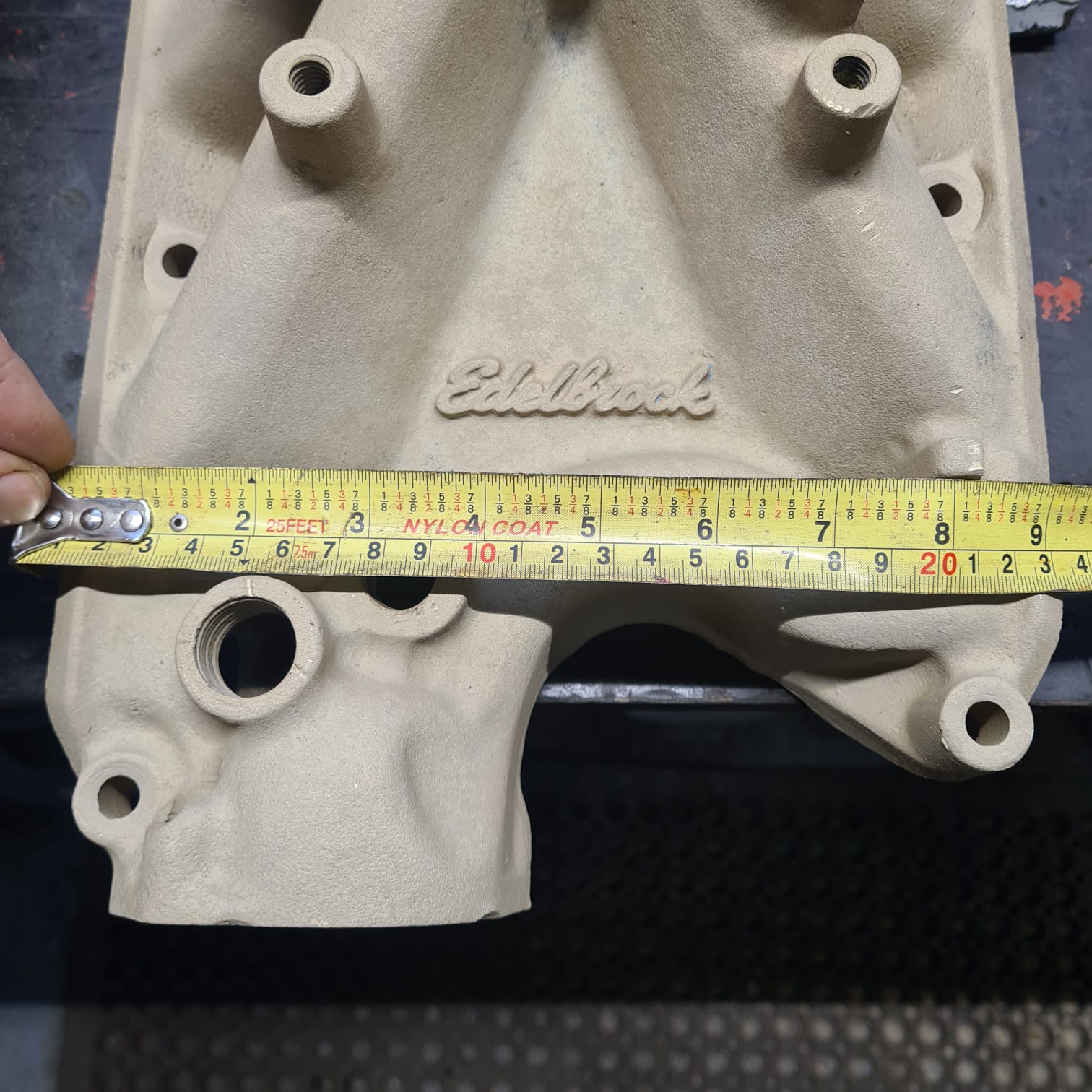
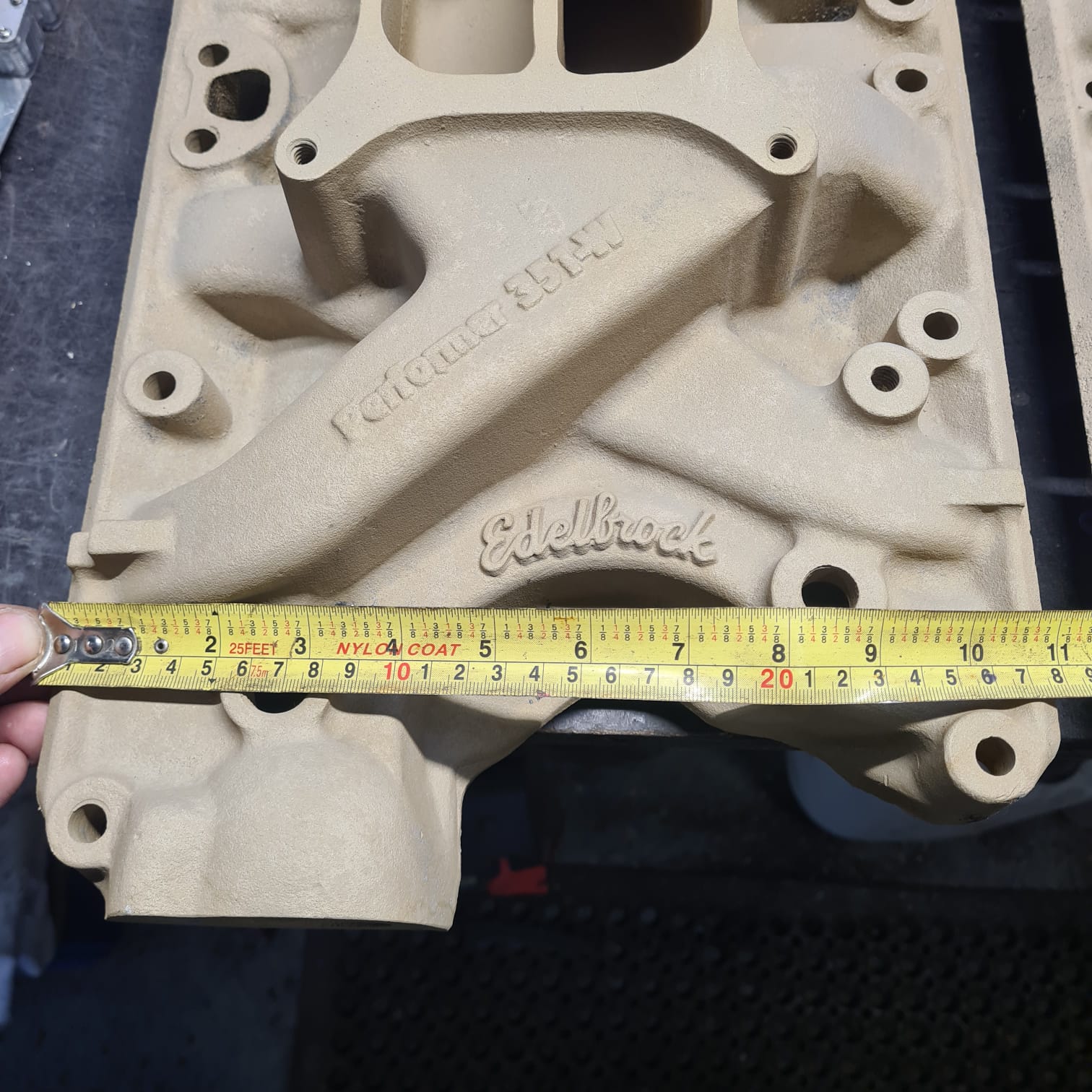
This is also a good opportunity to see the size difference between the two deck heights. As you can see, the 351 intake is almost 2 inches wider.
Our Cars
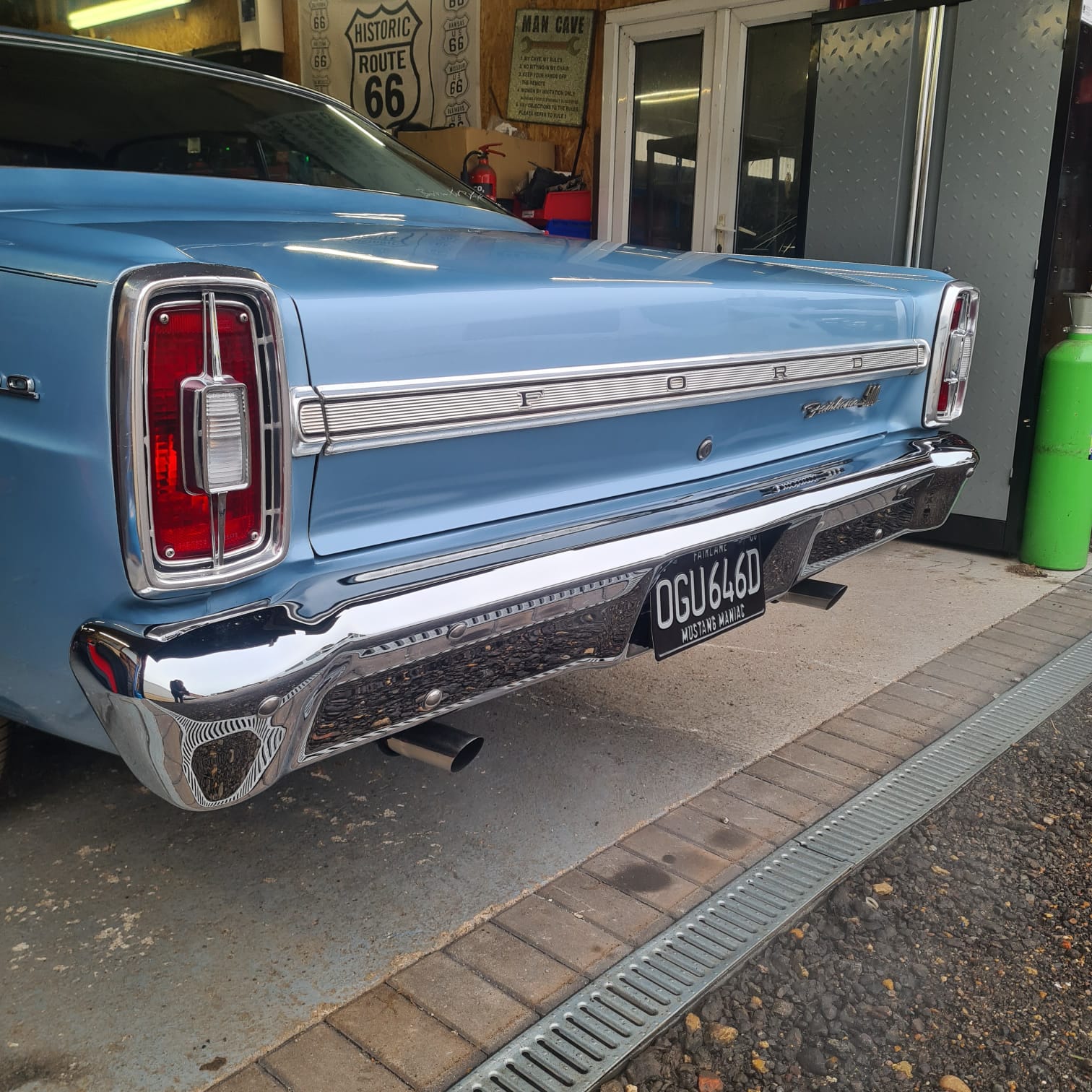
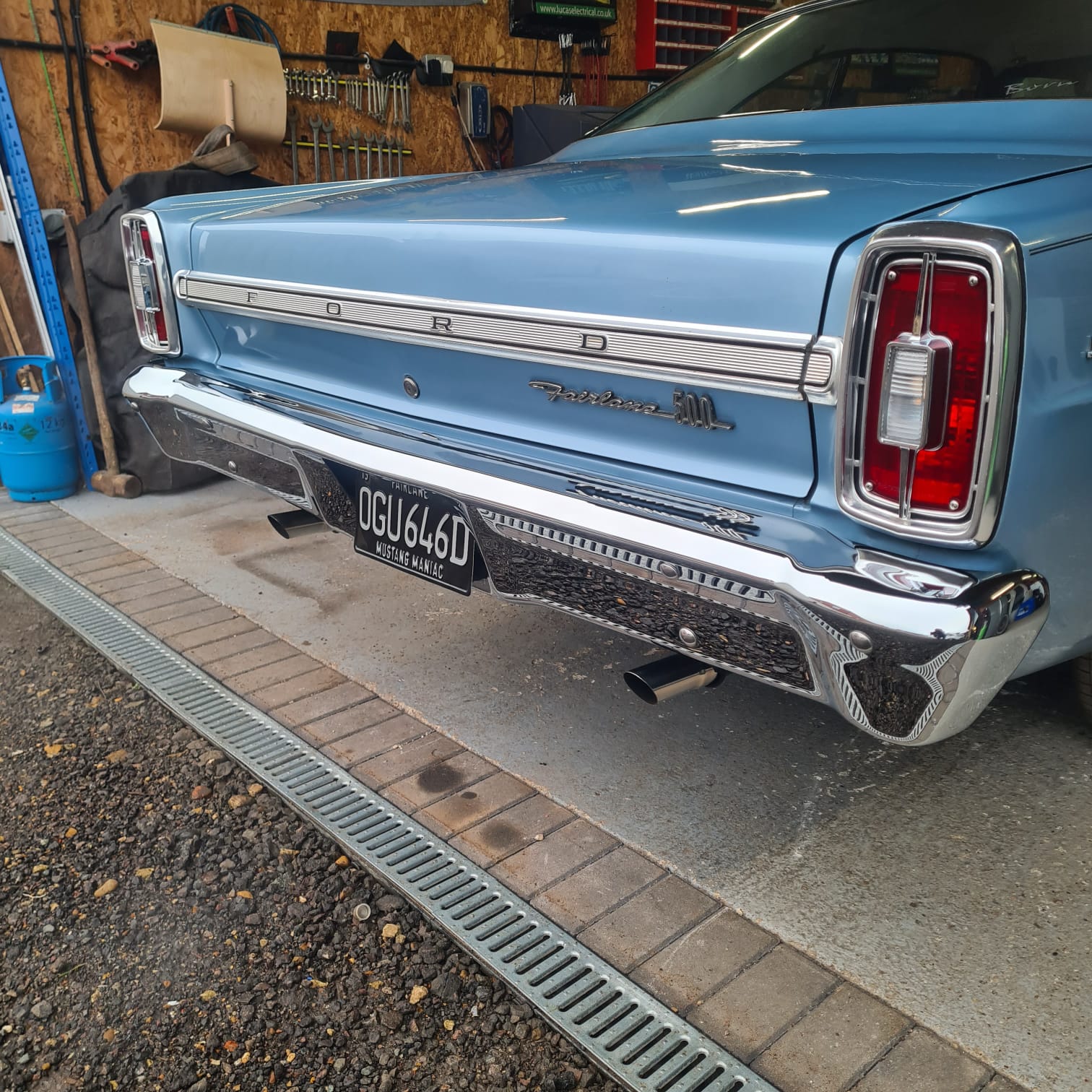
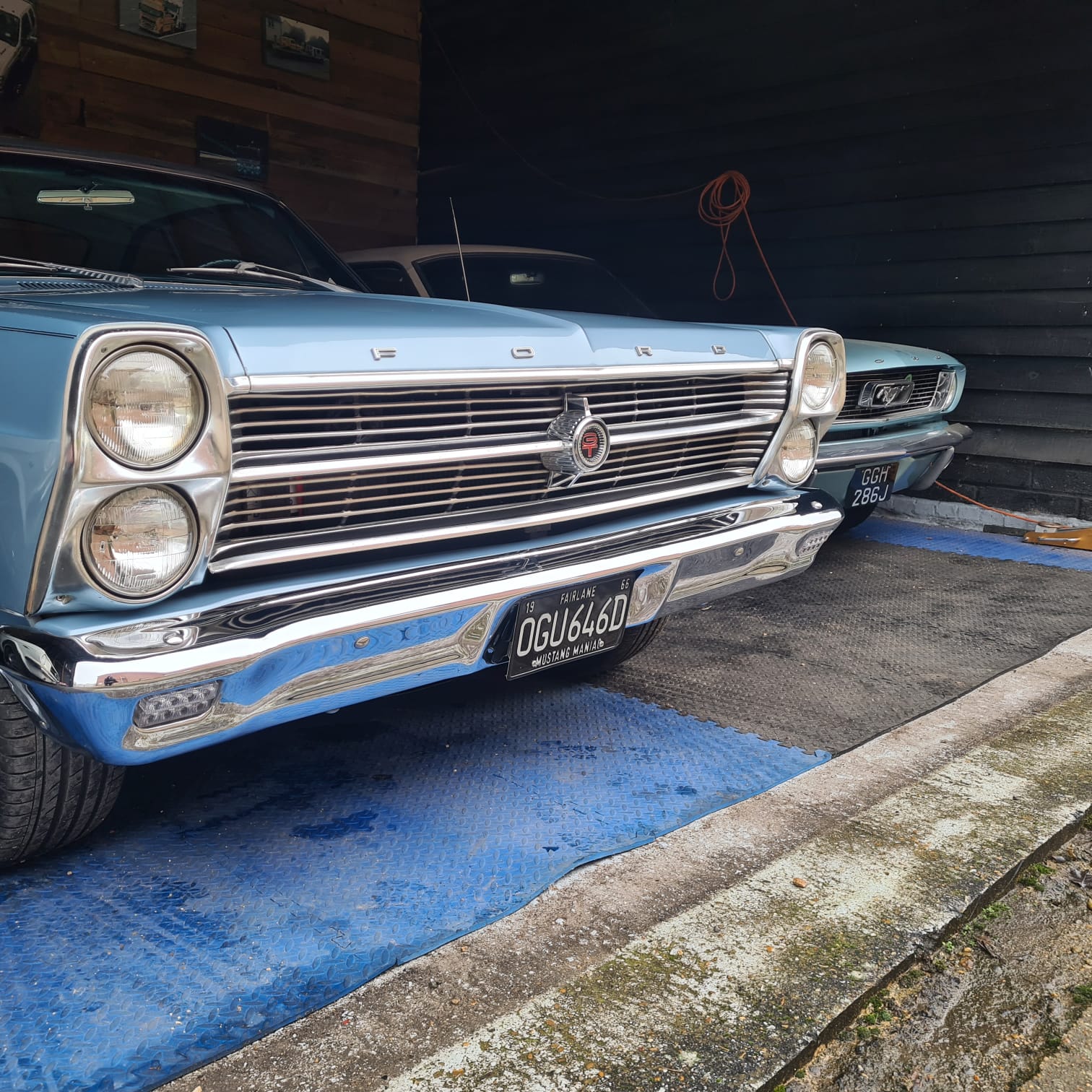
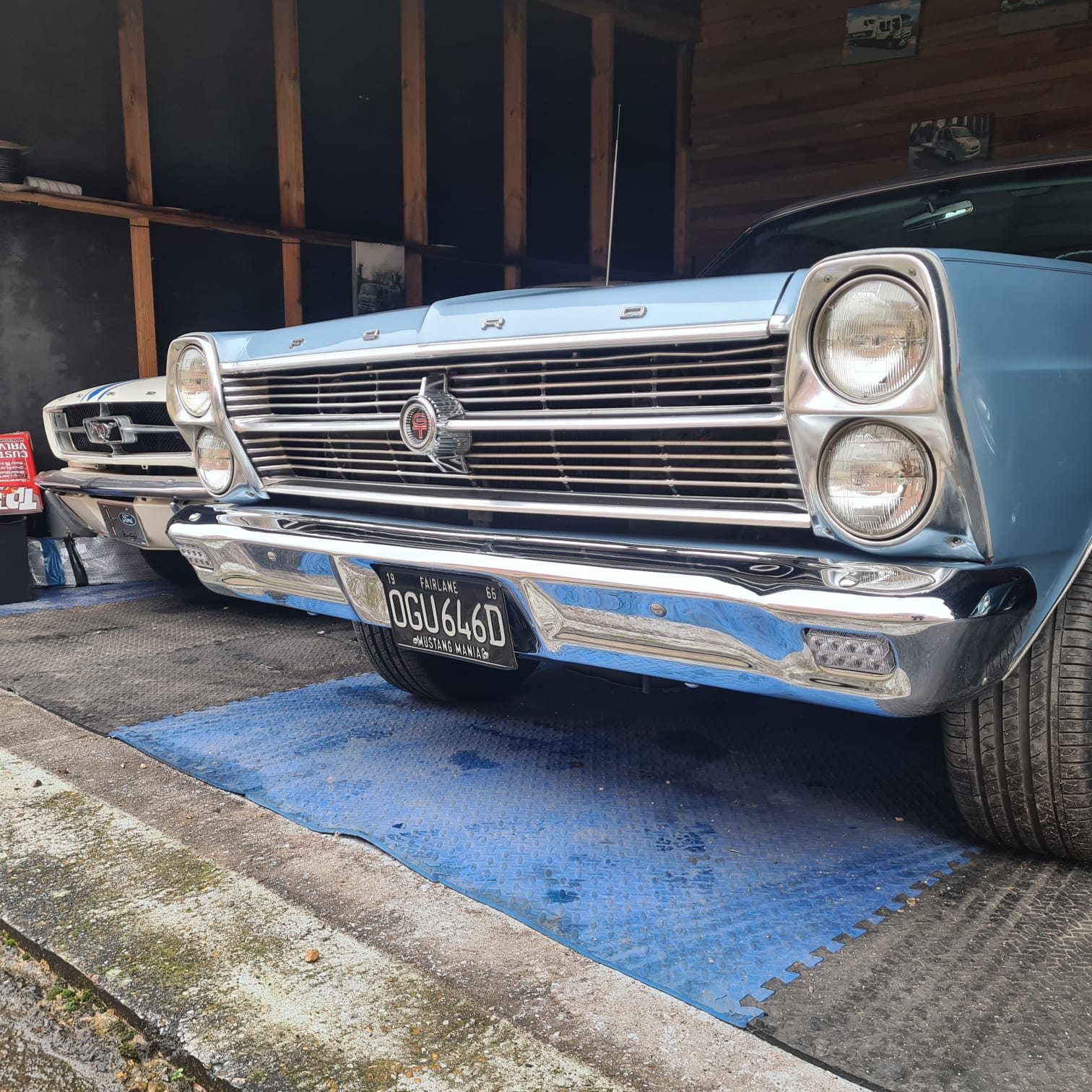
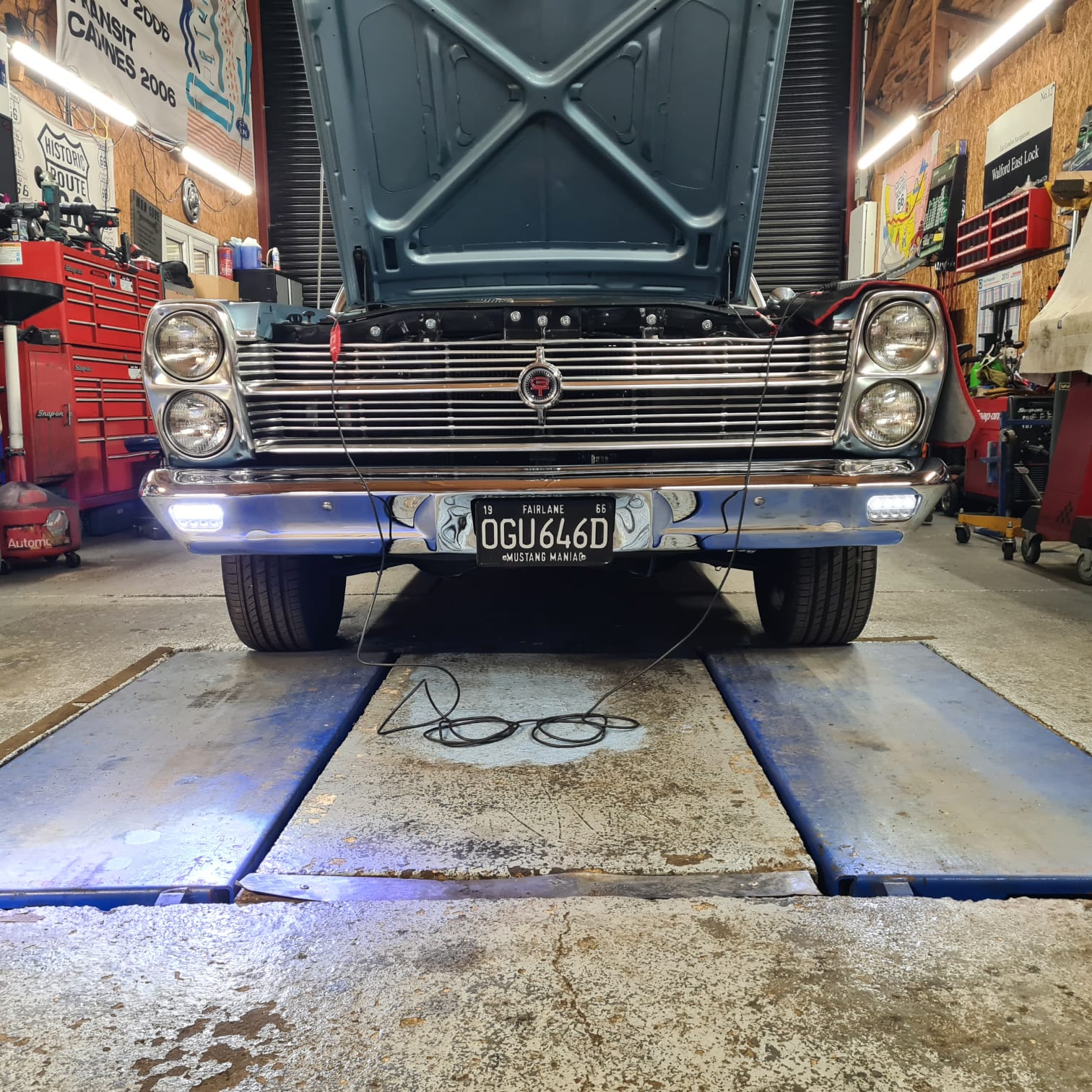
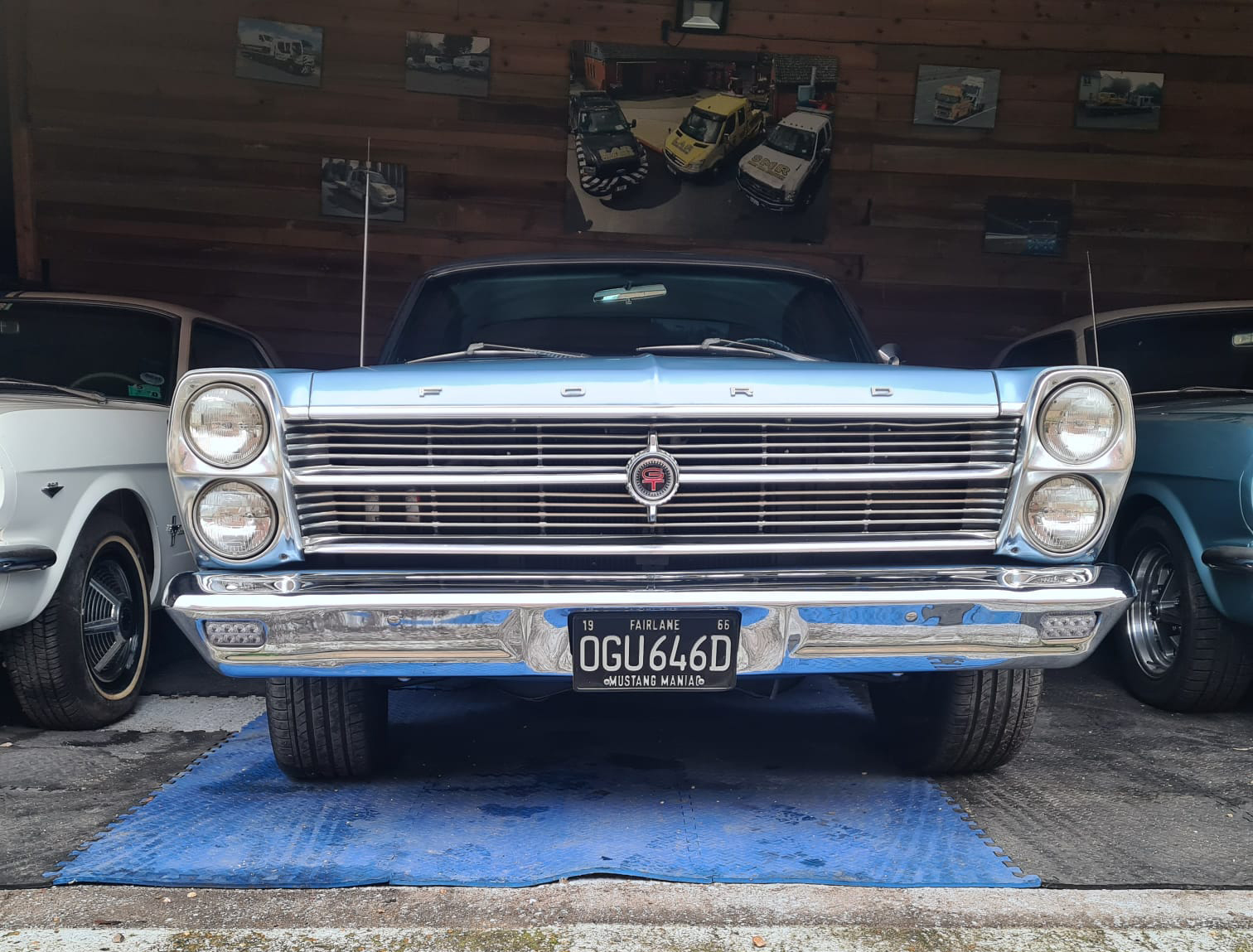
Also, this week, we also gave the Fairlane 500 some more love.
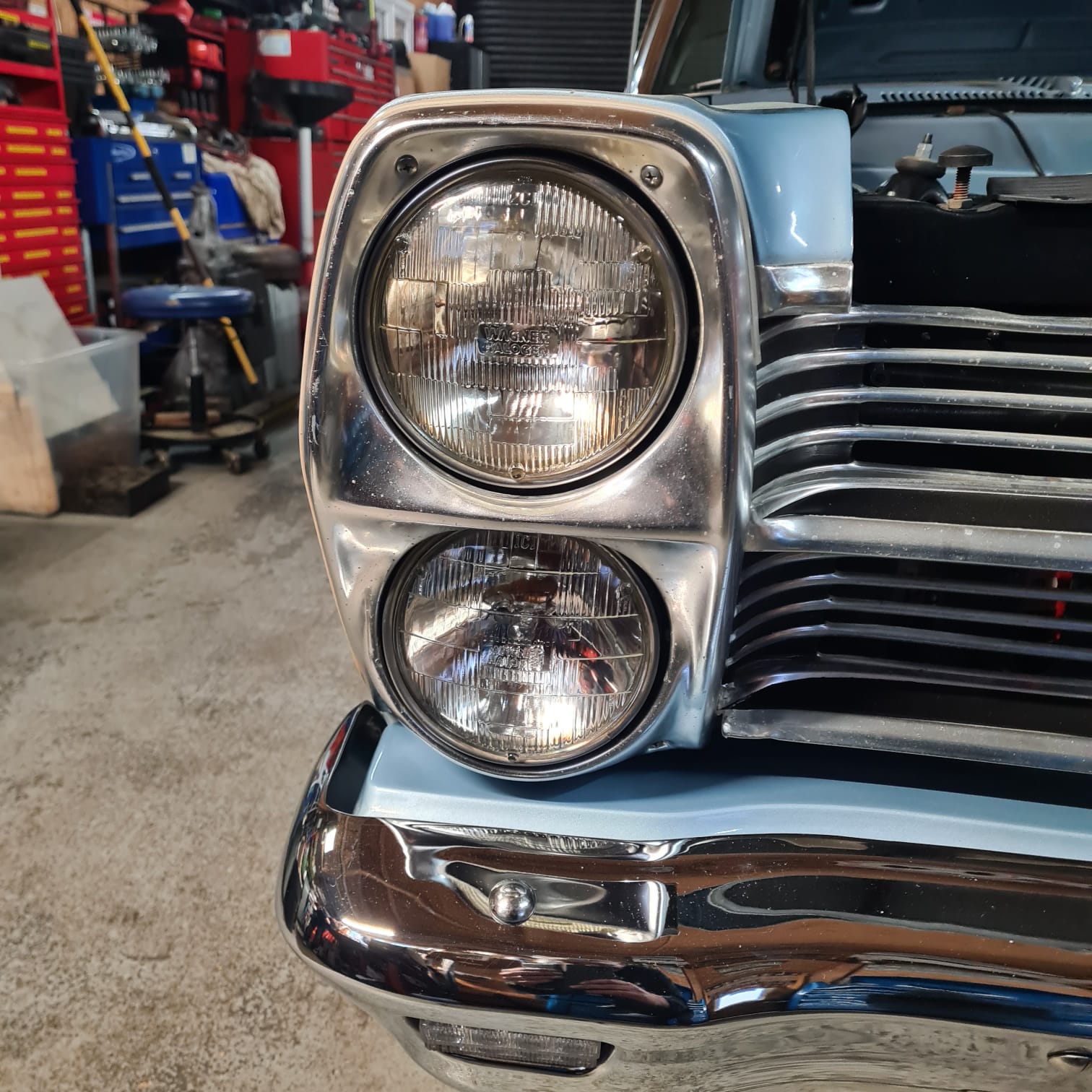
Now, this is a VERY presentable car in its own right, everyone here loves the Fairlane. However, some here felt the bumpers, which were just starting to pit, could do with replacing. Others thought it was a bit of overkill and not strictly necessary. There was nearly a bun fight in the tea room over it.
Adam has a bit of a soft spot for the Fairlane and decided to replace the bumpers. They turned up this week, and first impressions out of the box were that they looked good, had decent chrome and no sharp edges as so many modern reproduction bumpers do.
First, the rear bumper was replaced and this turned out to be a pleasantly painless task. It was loosely bolted into place in about ten minutes. Then, the art of getting it sat central and gapped equally to the bodywork began. To our surprise and delight, it was virtually perfect already, and a push here as a bolt was tightened there, resulted in a very good fit.
The front bumper fitment wasn’t so amicable. This was primarily down to the four bumper brackets already on the car and how the previous bumper was positioned. A couple of holes in the brackets had to be elongated, primed and painted but eventually that also went on and was loosely bolted in place. Final fitment took an acceptable amount of time to produce a virtually perfect fit.
Upon fitting the LED side lights and turn signals we took the time to address an issue that niggled us slightly. We always felt the side lights overpowered the turn signals in terms of brightness.
The original look left, way to bright. Updated on the below right, much clearer and safer.
While the car was on the ramps and all the wiring was accessible we took the time to alter the side light wiring to reduce their glare and let the turn signals show their amber colour through clearer. This should also make an intented turn more obvious to other road users, thus slightly safer.
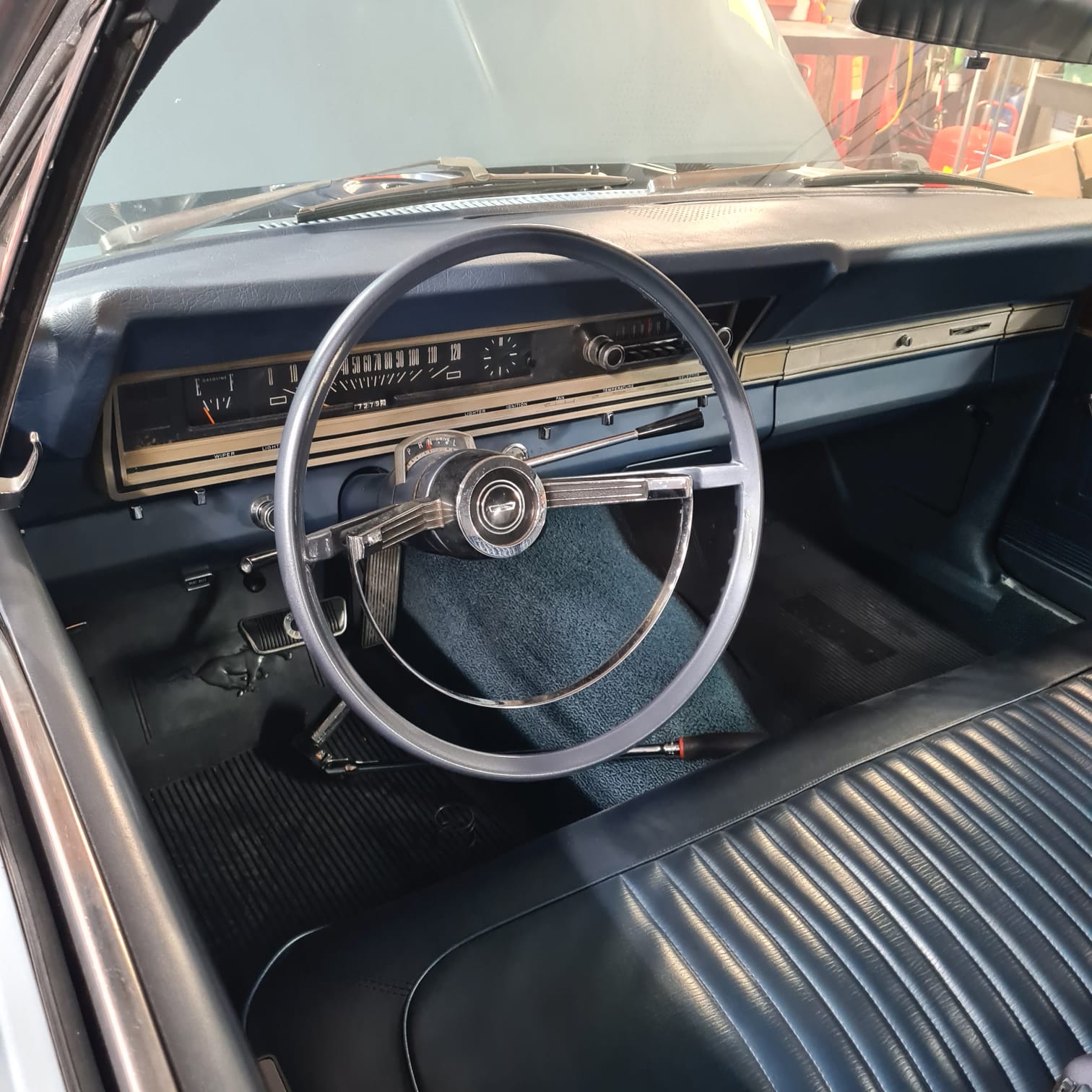
Also, we noticed now that the only thing that let the car down slightly was the well-worn steering wheel. So this was temporarily removed and given some small repairs, primed and painted and then reinstalled.
When the job was all finished and pulled out in daylight it was agreed, even by the naysayers (myself included) that changing the bumpers was the right move and made more of a positive visual difference than the mind could imagine. There’s just something about good chrome!!
The old girl was then lovingly put away in her hidey-hole on trickle charge until the show season starts. We’ll look forward to seeing her again soon.
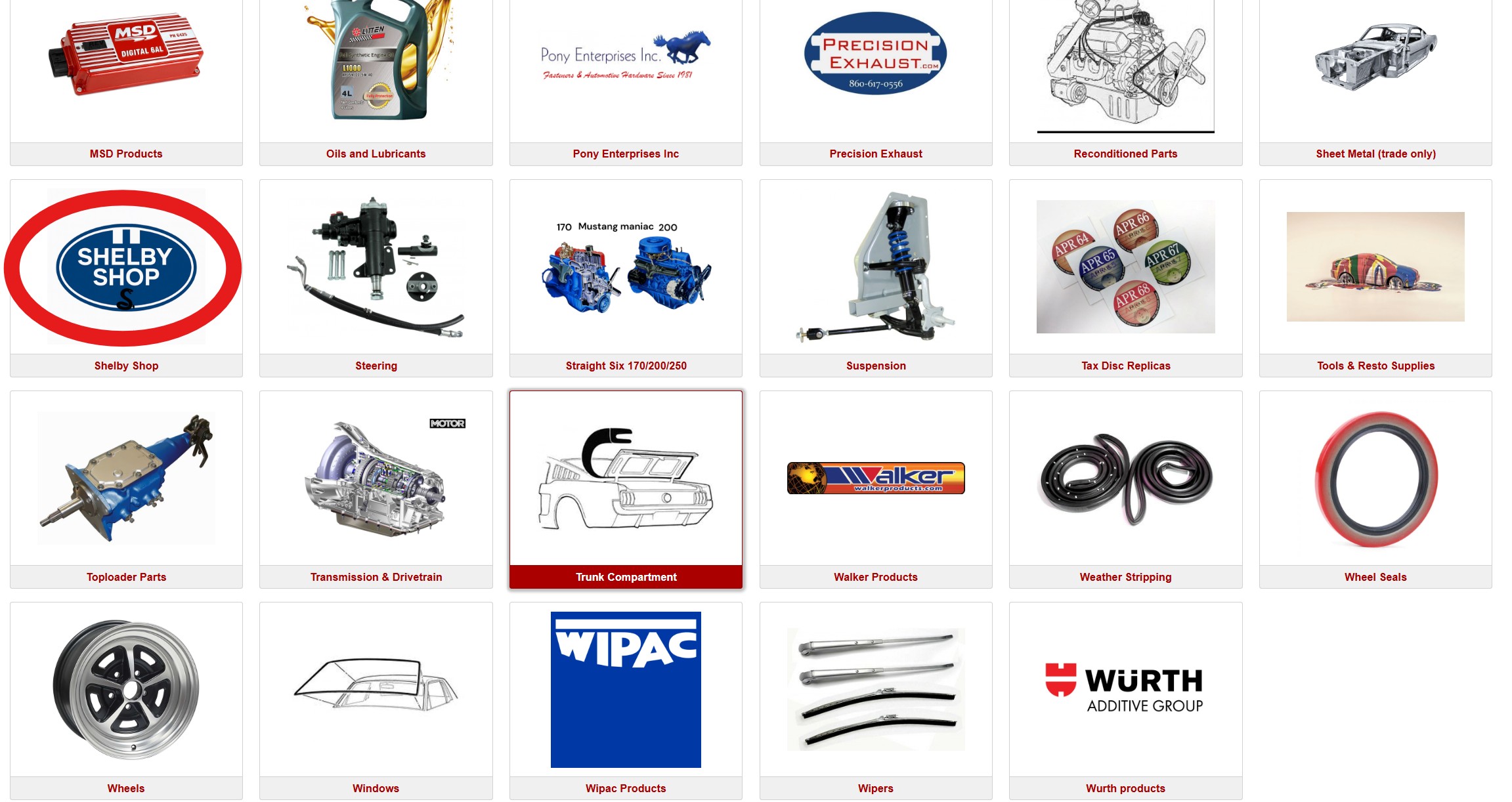
Our regular readers and customers will know that we relocated our main offices to our yard and added some much needed new storage space. Adam decided that he wanted an updated look for the WebShop to go with the move those changes are now live. The branding has been updated at the top of the WebShop page and we have listed out many of the sections we have available for your parts. We are painstakingly updating our WebShop to note the location of where the parts are made where we can determine that of course, like USA, China, Turkey, UK etc. IS there anything that our customers would like to see on our WebShop? Drop us a comment or an email and we will see what we can do.
We have moved away slightly from the restoration and servicing references as a standard offering in order to focus on our parts. However, behind the scenes if you are one of our regulars or one of our loyal customers we may still offer the service, provided Adam has the time and workshop allocation space to look after your car. Primarily this was a decision made a while ago due to the fact that we no longer wanted to continually put right other ‘expert’ repairers efforts.
The good news is that you will see that we now not just stock the usual expansive and ever increasing Mustang parts for all years 1964 to present day, we now we also stock other Ford vehicle parts for; Falcon, Transit and even N Series Tractors. Our off the shelf stock parts availability are often much more superior to that of some main Ford dealers and their service parts.
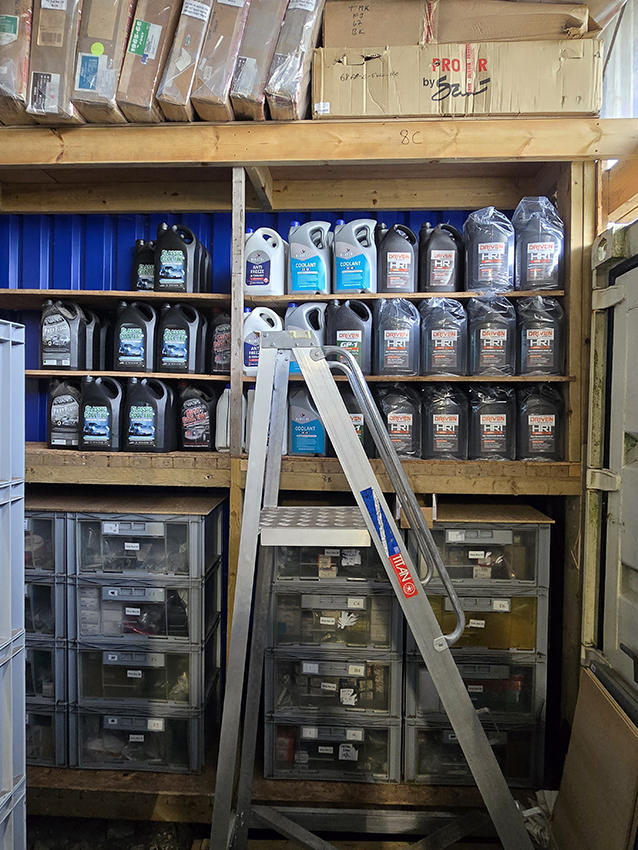
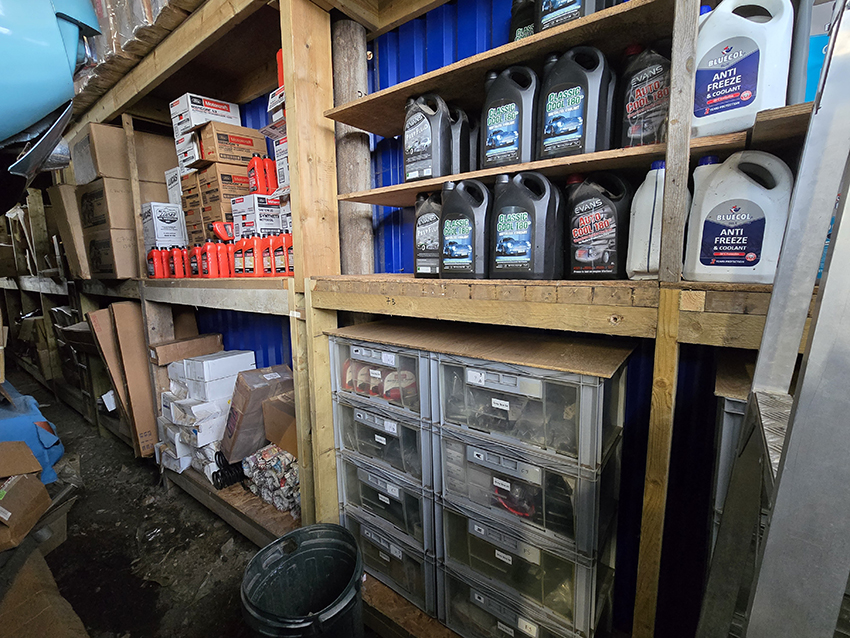
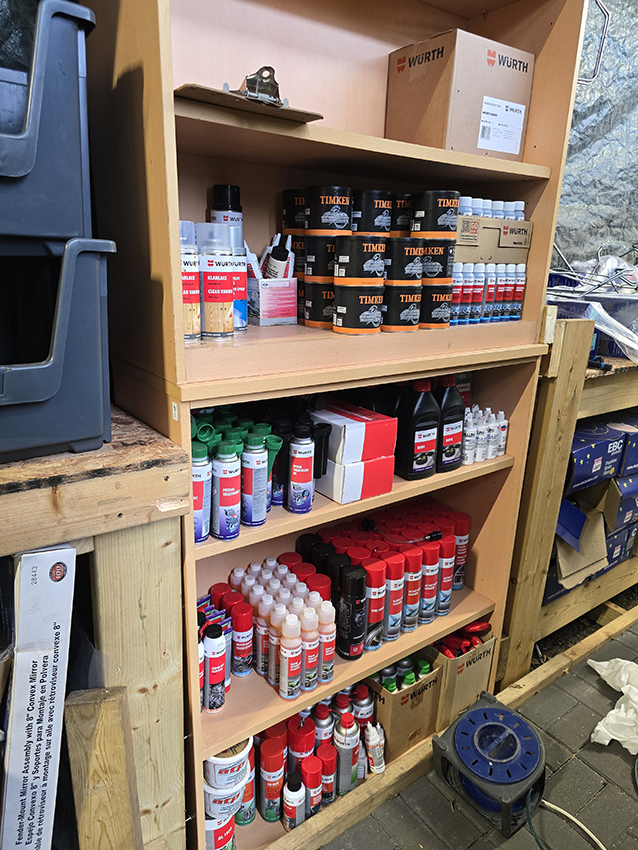
We are complementing our branded parts by an increasing range of sundries like our range of oils which includes classic oils, break in oils, synthetic oils as well as the specific requirements of modern day car blends.
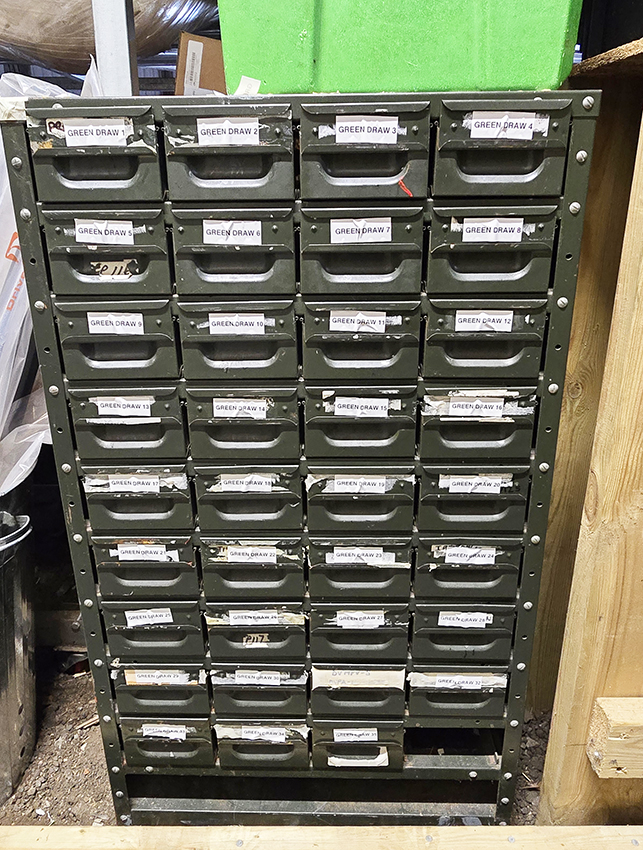
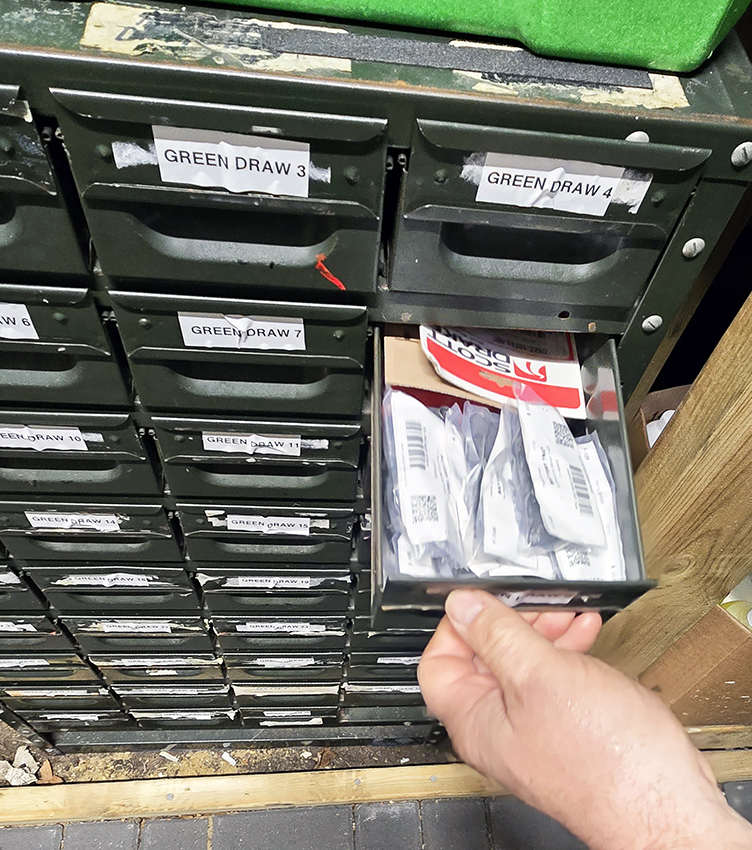
We are stocking more of our own range of engineered parts that are no longer produced for our beloved classic cars. During a recent move from another of our storage yards, we found this ideal cabinet which we now use to store the smaller hardware parts close to the main office for easier access.
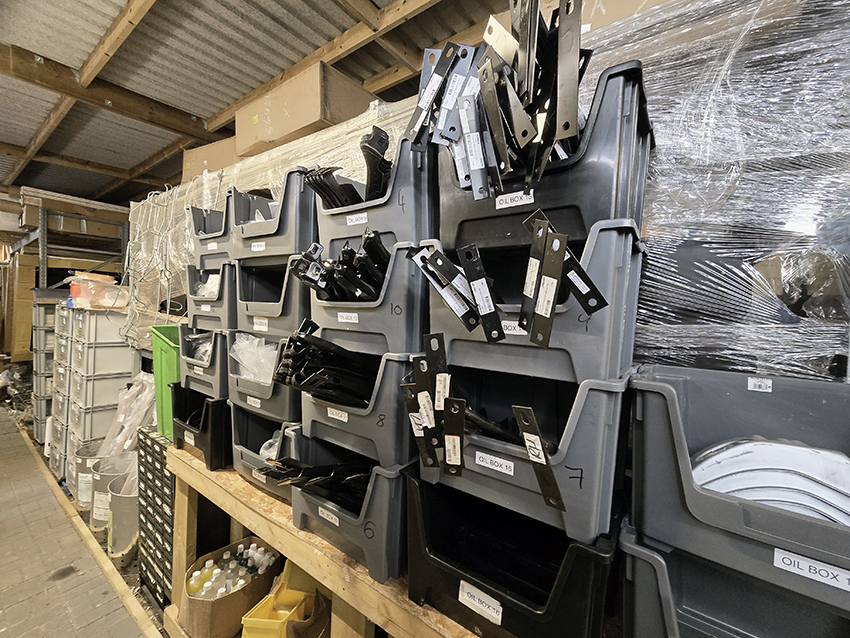
After an unusual order of many brackets which left us running low, we have now restocked back to an acceptable level.
Customer’s Cars
We have this little lady in with us that wasn’t running that well, we went back to basic engine timings before we correctly set up the older style Holley 600CFM carb.
After a couple of replacement parts, a little tuning and a road test or two we have her up and running again how she should be. The dark art of carburettors and their tuning is a difficult and now becoming a specialized skill, especially as a ‘tune up’ now days means plugging in a laptop to an OBD port on a car. It’s not quite the same sense of satisfaction as hearing a carb sucking the air fuel mix down the barrels to make an engine bark with every stab of the gas peddle! Some will argue with that of course, but we are company with a special set of skills that is increasing harder to come by.
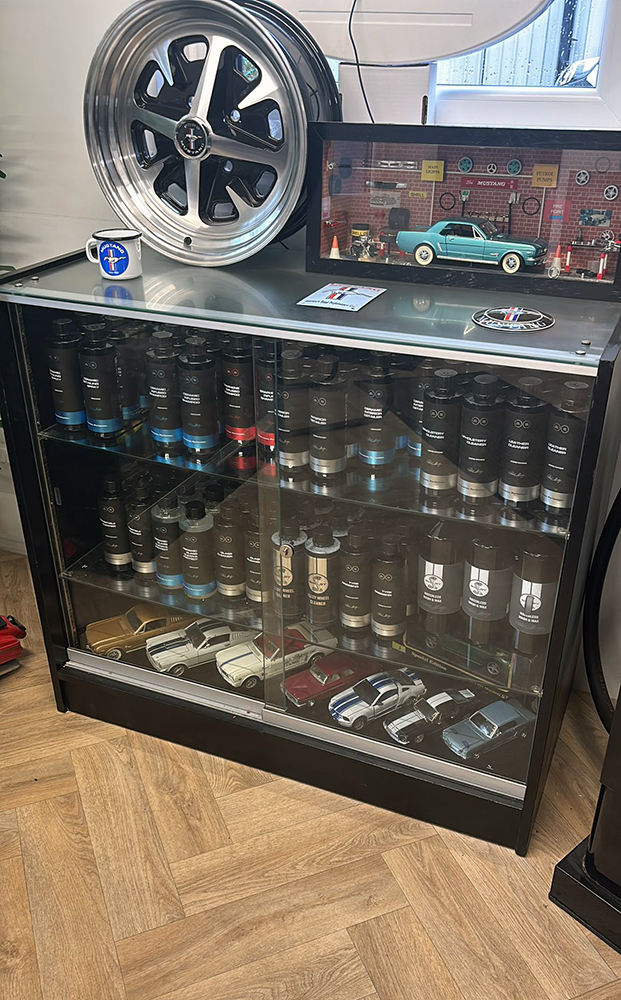
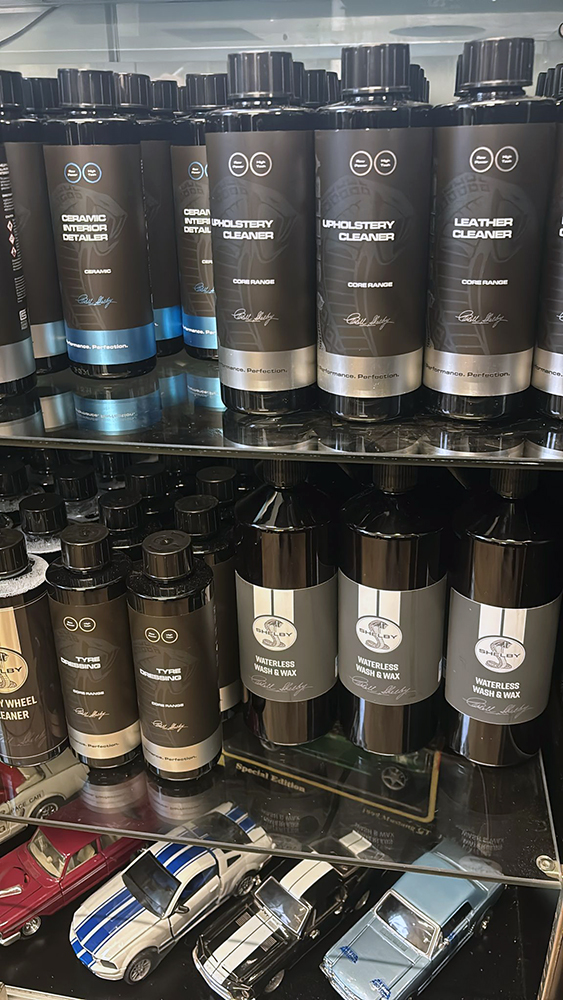
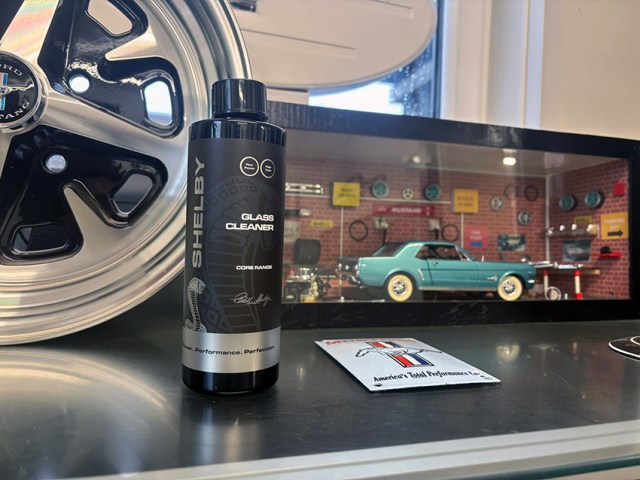
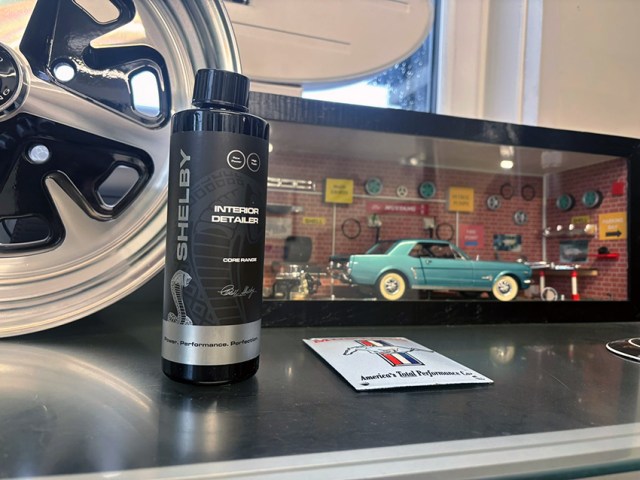
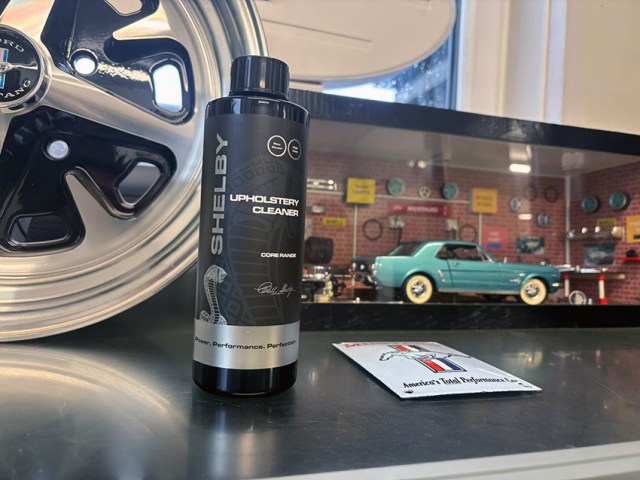
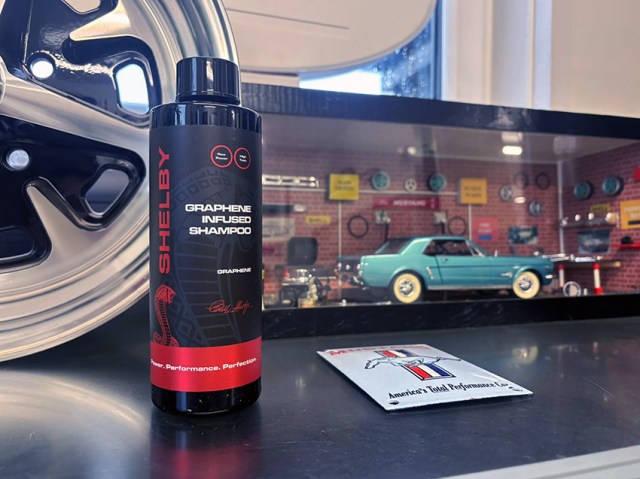
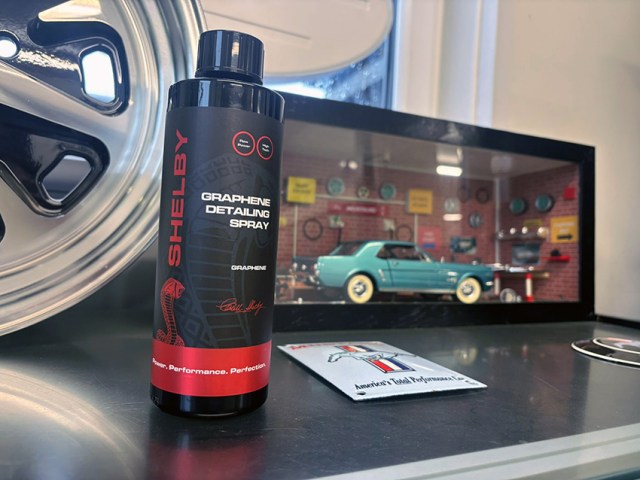
We have been working on another new partnership for Mustang Maniac, we can now share the good news with our customers and followers of our news, we are now stocking Shelby cleaning and detailing products.
Shelby have been winning awards for their detailing product ranges for a quite a while now and have made an impact on the detailing market, and we have been impressed with their samples. We liked them enough to reach out and become a UK Shelby Product Range Supplier.
We know that many of our customers use premium products on their pride and joy both old and new. There are a few customers who are very fastidious about what goes on their cars. We believe these Shelby products will fulfill those needs for everybody. The stock has finally arrived and we have updated our WebShop to show the new product line and put them on display in the Customer collection area.
You don’t have to own a Mustang to use these products of course, it’s just that Shelby has put their weight and name behind these products, that’s how confident they are with their products, this statement being made on their websites; “fed up with weak products, flashy labels, and results that didn’t last. So we built our own. From the lab up. Every formula we make is precision-engineered, relentlessly tested, and made to outperform in the real world.“
The products and their descriptions are listed there.
We have selected a range of the Shelby Detailing products which we think our customers will want to use, either as a weekend washing warrior, or a daily detailer.
There are three ‘ranges’ of cleaning products for varying types of applications and budget. Click on each of the images to take you to our WebShop pages.
Waterless formula quickly lifts dirt, grime, and contaminants without the need for water
High carnauba content provides a deep, glossy shine and excellent protection
Creates a smooth, hydrophobic layer that repels water, dirt, and debris
Safe for use on all paint finishes, ideal for on-the-go detailing or quick touch-ups
Easy to apply, leaving a showroom-quality finish with long-lasting protection
Shelby’s Waterless Wash and Wax is the ultimate solution for cleaning and protecting your vehicle in one easy step. Formulated with a high carnauba content, this waterless wash quickly lifts dirt, grime, and contaminants without the need for water, making it perfect for on-the-go detailing. The rich carnauba wax provides a deep, glossy shine while offering exceptional protection against the elements. It creates a smooth, hydrophobic layer that repels water, dirt, and debris, helping your vehicle stay cleaner for longer.
This versatile formula is safe for use on all paint finishes and is ideal for quick touch-ups or when water access is limited. The high carnauba content enhances the paint’s depth and shine, leaving behind a flawless, showroom-quality finish. Easy to apply and quick to use, Shelby’s Waterless Wash and Wax offers a convenient way to maintain your vehicle’s appearance while adding a layer of protection that lasts.
Powerful PH neutral formula removes brake dust, road grime, and embedded contaminants
Safe for use on alloy, chrome, and painted wheel finishes
Breaks down grime and brake dust making it easy to rinse away for a deep clean
Provides a protective layer to resist future build-up and keep wheels cleaner longer
Easy and Ready to use, delivering professional-quality results with minimal effort
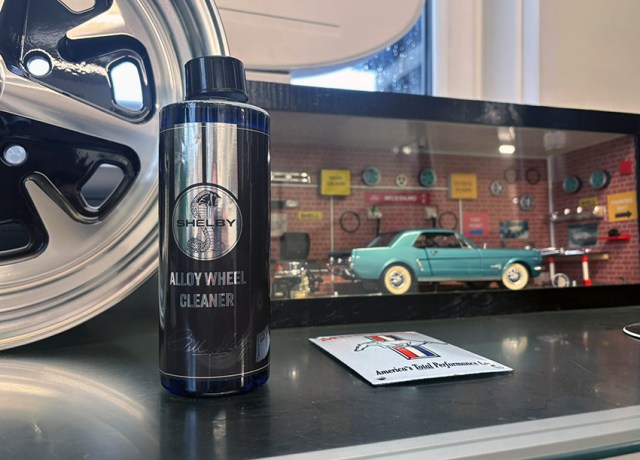
Shelby’s Alloy Wheel Cleaner is the ultimate solution for restoring the shine and cleanliness of your wheels. Specially formulated to tackle tough brake dust, road grime, and embedded contaminants, this powerful cleaner quickly lifts and dissolves stubborn dirt, leaving your alloy wheels looking like new. Safe for use on all alloy, chrome, and painted wheel finishes, Shelby’s Alloy Wheel Cleaner ensures a deep clean without the risk of damage or discoloration.
Its advanced formula breaks down and encapsulates brake dust and other grime, making it easy to rinse away, while providing a protective layer that resists future build-up. Shelby’s Alloy Wheel Cleaner is perfect for both regular maintenance and deep cleaning, offering a professional-quality finish with minimal effort. Keep your wheels shining and protected with this easy-to-use cleaner that delivers lasting results.
Provides a high-gloss, wet-look finish for a brand-new appearance
Restores and revitalises faded or dull tyres, making them look fresh
Helps prevent cracking and fading caused by UV rays and environmental factors
Resists dirt and dust buildup for a long-lasting, clean finish
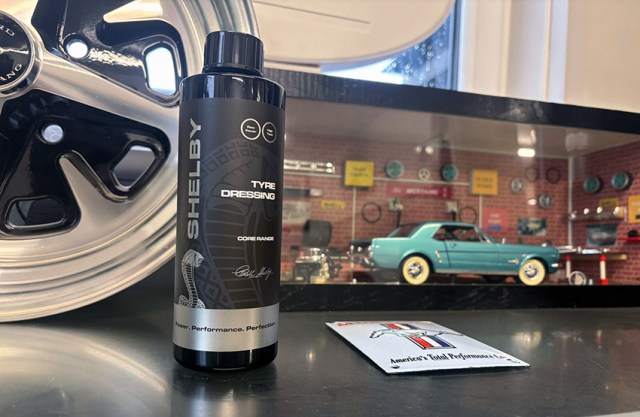
Shelby’s Tyre Dressing is the ultimate solution for achieving a flawless, high-gloss finish on your vehicle’s tyres. Formulated to provide a rich, deep shine, this premium tyre dressing enhances the appearance of your tyres, making them look brand new with a sleek, wet-look finish. The easy-to-use formula restores and revitalises faded or dull tyres, leaving them with a long-lasting, glossy shine that resists dirt and dust buildup.
Shelby Tyre Dressing not only enhances the look of your tyres but also provides a layer of protection, helping to prevent cracking and fading caused by UV rays and environmental exposure. Safe for all tyre types, it applies smoothly without streaking or residue, ensuring a perfect finish every time. With Shelby’s Tyre Dressing, your tyres will look sharp and stay protected for the long haul.
Specially formulated to clean both fabric and vinyl convertible tops
Effectively removes dirt, grime, bird droppings, and other contaminants
Prepares surfaces for protection treatments, extending the life of your convertible top – such as Shelby’s Convertible Reproofer
Easy to apply, delivering professional-quality cleaning with minimal effort
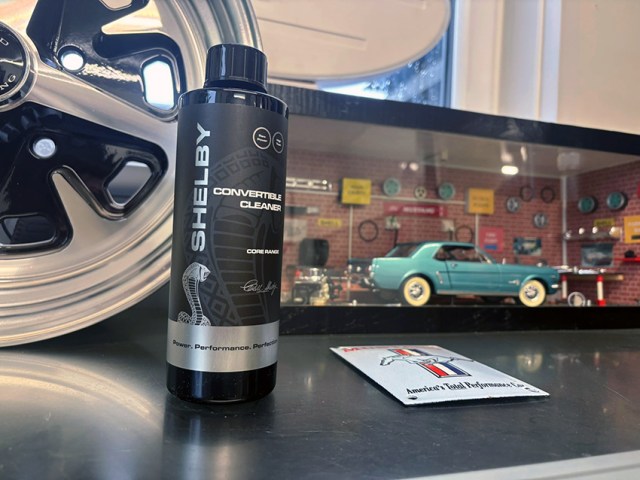
Shelby’s Convertible Cleaner is the ultimate solution for keeping your convertible top looking fresh and pristine. Specially formulated to clean and restore both fabric and vinyl convertible roofs, this powerful cleaner effectively removes dirt, grime, bird droppings, and other contaminants without damaging or fading the material. The gentle yet effective formula helps preserve the look and feel of your convertible top, ensuring it stays looking new for longer.
Designed to be tough on stains yet gentle on fabrics, Shelby’s Convertible Cleaner is safe for use on all convertible roof types, providing a deep clean that rejuvenates the material without compromising its integrity. Easy to apply and quick to use, it also prepares the surface for further protection treatments, keeping your roof shielded from environmental elements. For a clean, well-maintained convertible top, Shelby’s Convertible Cleaner is the go-to product for effortless care.
Quickly and effectively removes dirt, fingerprints, and smudges from glass surfaces
Delivers a streak-free, crystal-clear finish with no residue left behind
Safe for use on windows, mirrors, and tinted glass
Fast-drying, non-ammonia formula ensures a flawless clean without damaging surfaces
Ideal for both interior and exterior glass, enhancing visibility and driving safety
Shelby’s Glass Cleaner is the ultimate solution for achieving streak-free, crystal-clear windows both inside and out. This advanced formula quickly and effectively removes dirt, fingerprints, smudges, and other contaminants from glass surfaces, leaving them spotless and gleaming. Ideal for use on windows, mirrors, and other glass-like surfaces, Shelby Glass Cleaner delivers professional-quality results without the harsh chemicals, ensuring a safe and effective clean every time.
Formulated to be both powerful and gentle, Shelby’s Glass Cleaner ensures no streaks or residue are left behind, providing a flawless finish. Its fast-drying, non-ammonia-based solution is safe for tinted windows and delicate glass surfaces. Whether you’re cleaning your windshield, side mirrors, or interior glass, Shelby Glass Cleaner ensures a clear, crisp view for enhanced driving visibility and safety.
Cleans, shines, and protects interior surfaces, including dashboards, consoles, and vinyl
Removes dust, dirt, fingerprints, and light stains, leaving a polished finish
Anti-static properties help repel dust, keeping your interior cleaner for longer
Easy to apply, delivering a professional-grade clean with minimal effort
UV protection helps prevent fading, cracking, and discolouration from sun exposure
Shelby’s Interior Detailer is the perfect all-in-one solution for keeping your vehicle’s interior spotless and fresh. This powerful yet gentle formula cleans, shines, and protects a wide range of interior surfaces, including dashboards, consoles, plastics, and vinyl. It effortlessly removes dust, dirt, fingerprints, and light stains, restoring a clean, polished finish without leaving behind greasy residues. The result is a pristine interior that looks and feels like new.
With its advanced anti-static properties, Shelby’s Interior Detailer helps repel dust and dirt, keeping your interior looking clean for longer. Its UV protection shields surfaces from harmful sun rays, helping prevent fading, cracking, and discolouration. Easy to apply and quick to use, Shelby’s Interior Detailer is perfect for a fast, professional-grade clean that enhances the longevity and appearance of your vehicle’s interior.
Effectively removes dirt, stains, and odours from seats, carpets, and upholstery
Tough on stains yet gentle on fabric, preserving the integrity of your interior
Cleans deep into fibres for a thorough clean, leaving a fresh, pleasant scent
Safe for use on all fabric types, ensuring versatility and convenience
Easy to use, providing professional-quality results for regular maintenance or detailing
Shelby’s Upholstery Cleaner is the perfect solution for restoring and maintaining the cleanliness of your vehicle’s interior fabric. Formulated to effectively remove dirt, stains, and odours from seats, carpets, and upholstery, this powerful cleaner lifts and breaks down contaminants without damaging or fading your fabric. The advanced formula is tough on stains yet gentle enough to preserve the integrity of your interior, leaving your upholstery looking fresh and revitalised.
Designed for use on all fabric types, Shelby’s Upholstery Cleaner cleans deep into the fibres, ensuring a thorough clean that leaves behind a fresh, pleasant scent. Whether you’re tackling everyday grime or dealing with more stubborn stains, this easy-to-use cleaner provides professional-quality results and is perfect for regular maintenance or detailing. Keep your car’s interior spotless and looking like new with Shelby Upholstery Cleaner.
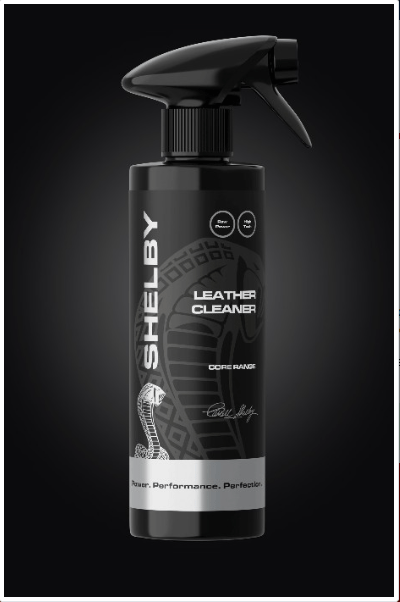
(We forgot to take a picture of this one as we prepped this post, it is in stock)
Special water-based formula
Effectively removes dirt, grime, and impurities
Prepares leather for long-lasting protection
Shelby Leather Cleaner is the perfect solution for maintaining and cleaning your vehicle’s leather upholstery. This gentle yet effective formula removes dirt, grime, and oils without damaging or drying out the leather. Designed to deep clean while preserving the integrity of your leather, Shelby Leather Cleaner ensures that your seats, steering wheel, and trim stay looking fresh and well-maintained. It lifts contaminants from the surface, restoring the leather’s natural beauty without leaving any greasy residue behind.
Ideal for use on all leather surfaces, Shelby Leather Cleaner is pH-balanced to keep the leather soft, supple, and protected. With its easy-to-use formula, Shelby Leather Cleaner provides a simple yet thorough cleaning solution to help preserve your vehicle’s interior and maintain that luxurious leather feel.
Combines powerful cleaning with award-winning ceramic protection
Creates a hydrophobic surface that repels water, dirt, and contaminants
Enhances gloss, providing a high-shine, showroom-quality finish
Instantly enhances hydrophobic qualities, making water bead and slide off surfaces effortlessly
Snow foam compatible for a thorough, foam-based cleaning experience with added protection
Easy to use, delivering professional-grade cleaning and protection with every wash
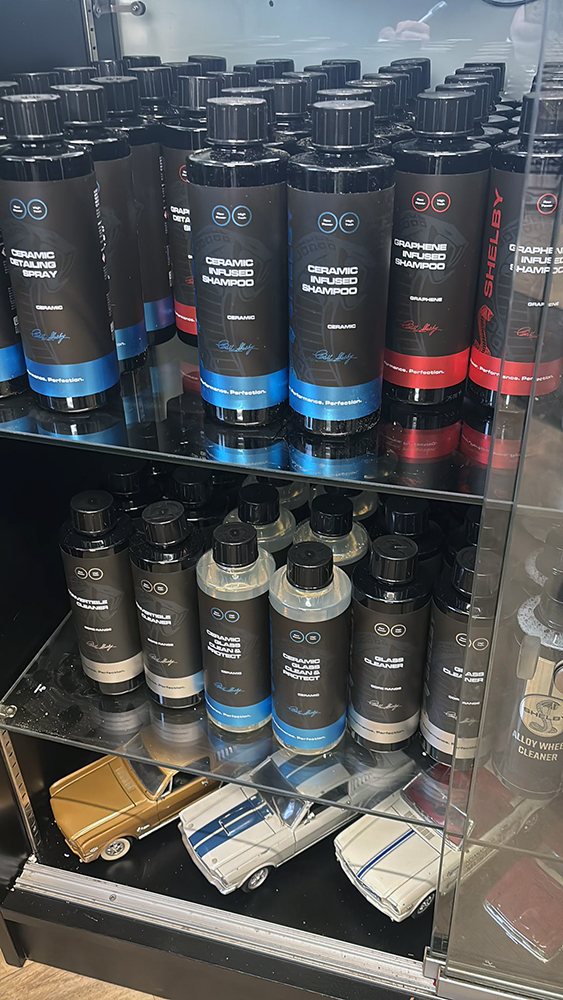
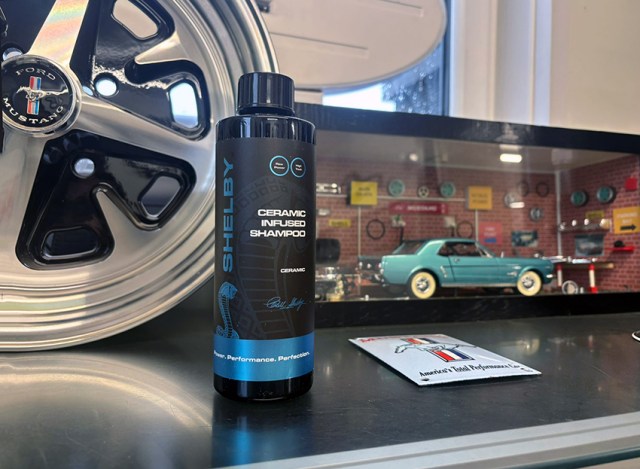
Shelby’s Ceramic Infused Shampoo offers a premium cleaning solution with the added benefit of award-winning ceramic protection. This advanced formula effectively removes dirt, grime, and contaminants, while simultaneously infusing your vehicle’s surface with a durable layer of ceramic. The result is a hydrophobic surface that repels water, dirt, and contaminants, keeping your vehicle cleaner for longer. It enhances gloss, leaving behind a high-shine, showroom-quality finish after every wash.
Designed to offer long-lasting protection, this ceramic-infused shampoo provides added scratch resistance and superior UV protection, ensuring your vehicle’s paint stays looking pristine. Whether you’re washing your car for the first time or maintaining a coating, Shelby’s Ceramic Infused Shampoo delivers professional-grade results with ease. With its award-winning formula, you can trust this shampoo to protect and enhance your vehicle’s paintwork with every wash.
(We didn’t get a chance to photograph these as they sold them all as soon as we got them, plus the ones we used.)
Waterless formula that lifts dirt, grime, and contaminants while providing ceramic protection
Infused with advanced ceramic technology to create a hydrophobic layer that repels water, dirt, and debris
Enhances gloss and depth, leaving a high-shine, showroom-quality finish
Provides long-lasting scratch resistance, UV protection, and durability
Convenient and easy to use for on-the-go detailing with added benefits of ceramic technology
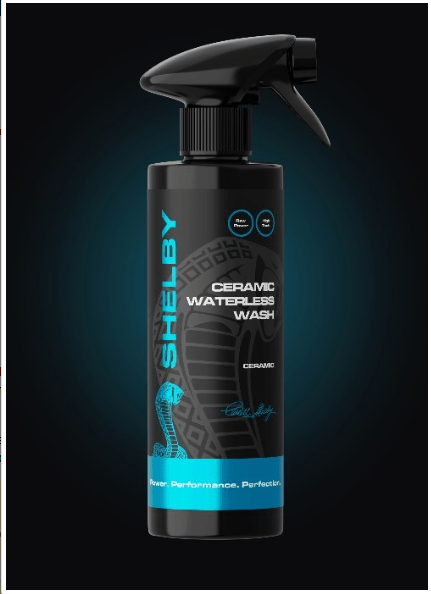
Shelby’s Ceramic Infused Waterless Wash combines the power of ceramic protection with the convenience of a waterless wash, delivering a superior clean and lasting protection in one simple application. Infused with advanced ceramic technology, this formula not only lifts dirt, grime, and contaminants but also leaves behind a hydrophobic layer that repels water, dirt, and other environmental contaminants. This innovative formula enhances the depth and gloss of your vehicle’s paint, leaving a high-shine, showroom-quality finish while providing long-lasting ceramic protection.
The ceramic infusion creates a durable, protective layer that bonds to the paint, offering superior scratch resistance, UV protection, and enhanced durability. It acts as a shield, preventing contaminants from adhering to the surface, making future clean-ups easier and keeping your vehicle cleaner for longer. Shelby’s Ceramic Infused Waterless Wash is ideal for on-the-go detailing, providing a quick, convenient solution with the added benefits of ceramic technology for long-lasting paint protection.
Award-winning formula recognised for its exceptional durability and performance Provides ceramic protection without the need for a full coating
Hydrophobic surface repels water, dirt, and contaminants for easier cleaning
Uses advanced silicon dioxide (SiO2) technology for superior protection
Quick and easy application for long-lasting protection with minimal effort
Improves gloss depth and clarity for a high-shine, showroom-quality finish
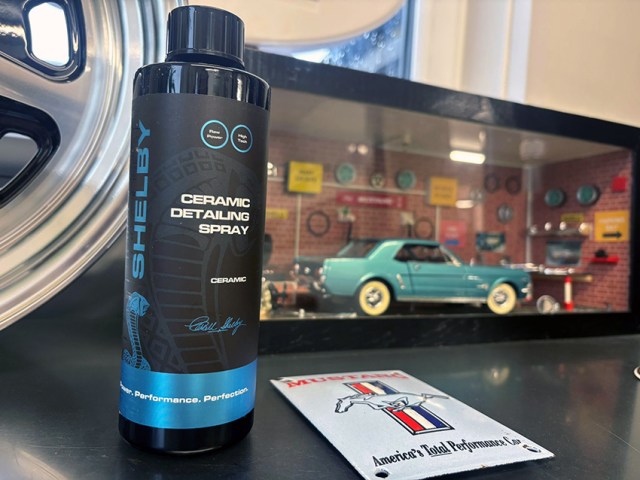
Shelby’s Ceramic Detailing Spray is a versatile, easy-to-use quick detailer that delivers the power of ceramic protection without the need for a full coating. Whether you’re enhancing an existing coating or using it independently, this spray provides a hydrophobic layer that repels water, dirt, and contaminants, keeping your vehicle cleaner for longer. It enhances gloss, leaving behind a high-shine, showroom-quality finish, and adds a layer of ceramic technology protection. Perfect for quick touch-ups or as a standalone product, Shelby’s Ceramic Detailing Spray ensures your vehicle stays protected with minimal effort.
Harnessing advanced ceramic technology, this spray uses silicon dioxide (SiO2) to create a durable, water-repellent surface that offers superior protection against the elements. Trusted for its performance, Shelby’s ceramic products have earned industry recognition, with our ceramic coatings winning multiple awards for their exceptional durability and high-quality results.
Dual-action formula cleans and protects in one easy step
Infused with advanced ceramic technology for long-lasting hydrophobic protection
Effortlessly removes dirt, fingerprints, and smudges from all glass surfaces
Leaves a streak-free, ultra-clear finish that resists water, grime, and road film
Safe for use on all glass, including tinted and treated windows
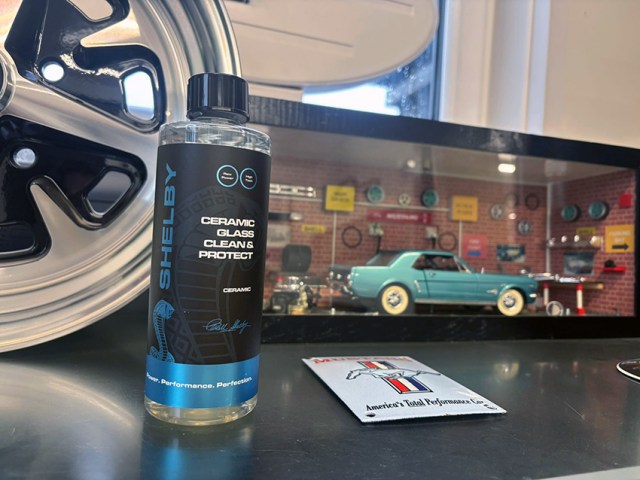
Shelby’s Ceramic Glass Clean & Protect is your all-in-one solution for spotless clarity and lasting defence. This advanced formula combines powerful cleaning agents with our award-winning ceramic technology to remove contaminants while laying down a durable, hydrophobic layer of protection. Dirt, smudges, and fingerprints disappear instantly, leaving behind crystal-clear glass that stays cleaner, longer.
Ideal for both interior and exterior use, this fast-acting spray is safe on all glass types—including tinted and coated surfaces—making it a must-have for every detailer’s kit. The ceramic-infused layer repels water, grime, and environmental fallout, improving visibility and reducing the need for frequent reapplication. Shelby’s Ceramic Glass Clean & Protect delivers professional-grade results with every wipe—clean, protect, and drive on.
Cleans, shines, and protects interior surfaces with the added strength of ceramic technology.
Removes dust, dirt, fingerprints, and light stains while enhancing surface durability.
Ceramic-infused formula provides a slick, anti-static finish that repels dust and grime.
Delivers long-lasting UV protection to help prevent fading, cracking, and discolouration.
Leaves behind a clean, non-greasy finish that feels as good as it looks.
Shelby’s Ceramic Interior Detailer takes interior care to the next level, combining premium cleaning performance with advanced ceramic protection. Designed for use on dashboards, consoles, vinyl, plastics, and trim, this all-in-one formula removes everyday dirt, smudges, and light stains while infusing surfaces with a smooth, durable ceramic shield.
The ceramic-enhanced layer not only boosts gloss and depth but also creates a protective barrier that repels dust, fingerprints, and grime—helping your interior stay cleaner for longer. With built-in UV blockers, it helps defend against sun damage, reducing the risk of fading, cracking, and discolouration over time. Easy to apply and fast-drying, Shelby’s Ceramic Interior Detailer delivers a showroom-worthy finish with minimal effort, leaving your interior looking polished, protected, and ready for the road.
Combines advanced graphene technology with a powerful cleaning formula
Creates a hydrophobic surface that repels water, dirt, and contaminants
Enhances gloss, leaving behind a high-shine, showroom-quality finish
Instantly enhances hydrophobic qualities, making water bead and slide off surfaces effortlessly
Snow foam compatible for a thorough, foam-based cleaning experience with added protection
Provides superior scratch resistance, flexibility, and UV protection
Shelby’s Graphene Infused Shampoo takes car care to a whole new level by combining advanced graphene technology with a powerful cleaning formula. This shampoo not only removes dirt, grime, and contaminants from your vehicle’s surface, but it also infuses a layer of graphene protection during the wash. The result is a clean, hydrophobic surface that repels water, dirt, and other contaminants, keeping your vehicle cleaner for longer. With each wash, your car is left with enhanced gloss and a showroom-quality finish, while graphene provides superior protection from scratches and environmental damage.
Harnessing the power of graphene, this shampoo creates a strong, resilient bond with your vehicle’s paintwork, offering improved durability, flexibility, and UV protection. The unique molecular structure of graphene enhances the wash process, leaving your vehicle not only clean but also protected for long-lasting shine and defence. With an award-winning formula, Shelby Graphene Infused Shampoo ensures a premium clean while boosting the longevity of your paint’s protection.
Delivers advanced graphene protection for enhanced durability and performance
Provides graphene protection without the need for a full coating
Hydrophobic layer repels water, dirt, and contaminants with unmatched efficiency
Uses graphene technology for superior scratch resistance, flexibility, and UV protection
Quick and easy application, offering professional-grade results with minimal effort
Improves gloss depth and clarity for a high-shine, showroom-quality finish
Shelby’s Graphene Detailing Spray takes paint protection to the next level, offering the superior benefits of graphene technology in a quick and easy application. Designed to deliver an ultra-slick, hydrophobic layer, this spray repels water, dirt, and contaminants with unmatched efficiency, keeping your vehicle cleaner for longer. It enhances gloss and adds a layer of durable, long-lasting protection, leaving behind a high-shine, showroom-quality finish. Whether used independently or to complement an existing graphene coating, Shelby Graphene Detailing Spray delivers professional-grade results with minimal effort.
Utilising advanced graphene technology, this quick detailing spray forms a stronger, more resilient bond than traditional ceramic products. Graphene’s unique molecular structure provides enhanced scratch resistance, remarkable flexibility, and superior UV protection, ensuring your vehicle’s paint remains flawless and protected. With an award-winning formula, Shelby Graphene Detailing Spray is the ultimate choice for those looking to elevate their vehicle’s protection and maintain a pristine appearance with ease.
If you want to pick up from our new WebShop customer counter or order online we’re sure you won’t be disappointed.
The current year 2025 is coming to an end and we can now look forward to the New Year. We have plans for the WebShop we mentioned quite a while ago, we haven’t forgotten it’s just how we provide the update. Everything is complete we just need to make it live. The decision hasn’t been made on just how we do that yet, but it is coming where the end result will be a first on the internet we are certain of that.
Mustang Maniac would like to wish all our Customers, friends both old and new;
Merry Christmas & Happy New Year!
The Mustang Maniac office and storage move is now complete just in time for the end of year, thanks to all our staff that managed to complete such a massive undertaking in a relatively small amount of time.
And with a little help of some artistic license via some AI, we transformed our new Mustang Maniac offices into a Christmas themed picture.
Customer’s Cars:
We have been busy with a few projects and will continue into the new year, we have a 351 Cleveland which has had a make over and looking good. The car was running a little rough so we have replaced the carb with a Holley 600cfm and is now running as we expect it to be.
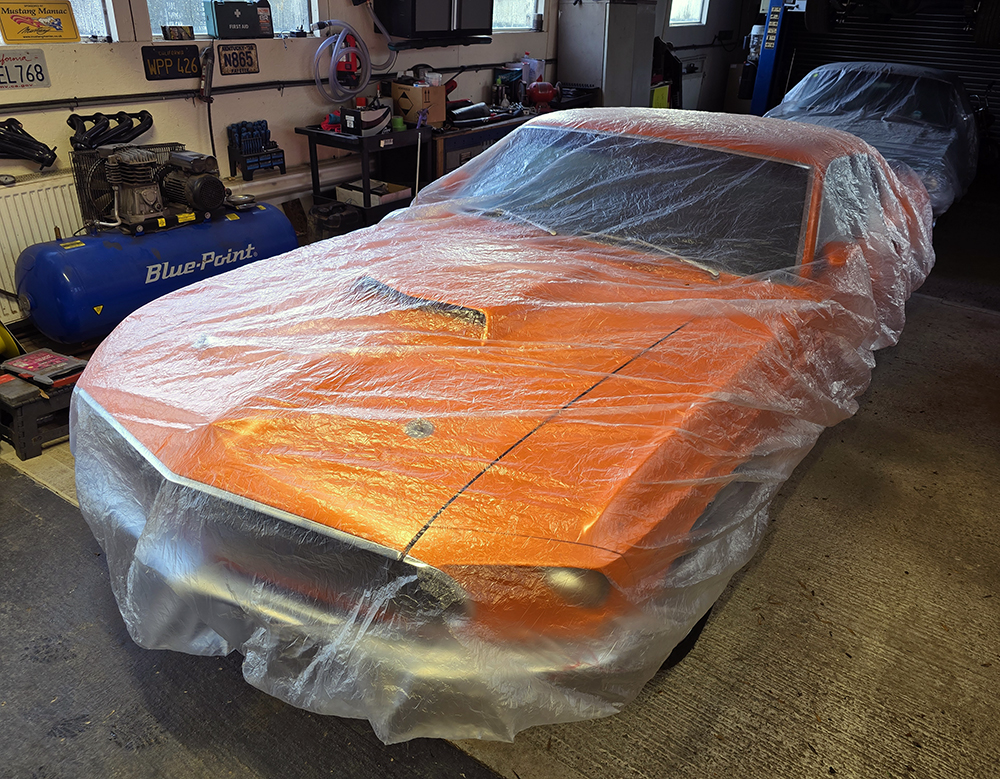
We have another little lady in for some of our Mustang Maniac Magic, we have wrapped them up over the Christmas break to keep them from dust until we’re ready to work on them. Not quite Christmas wrapping paper, but wrapped up all the same.
Stock:
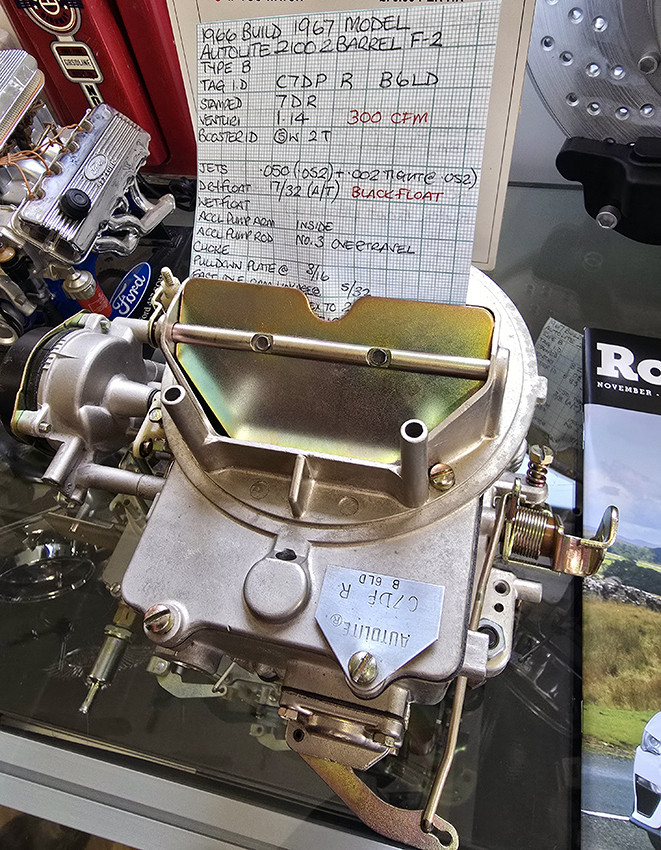
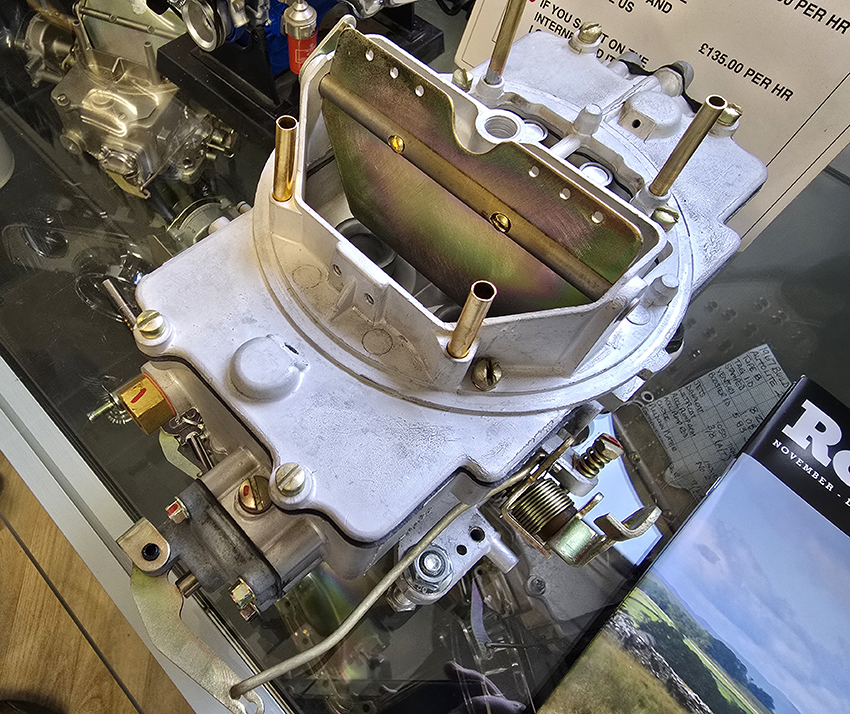
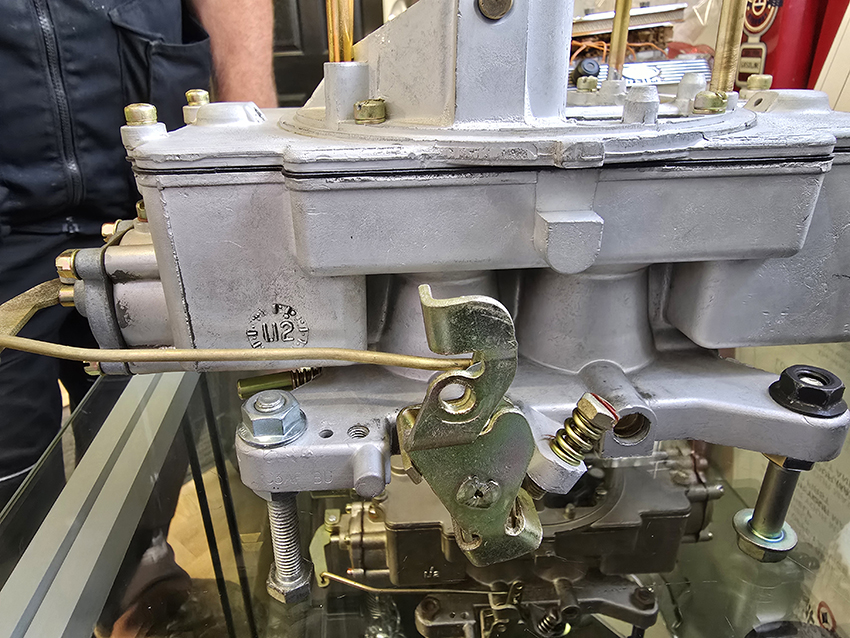
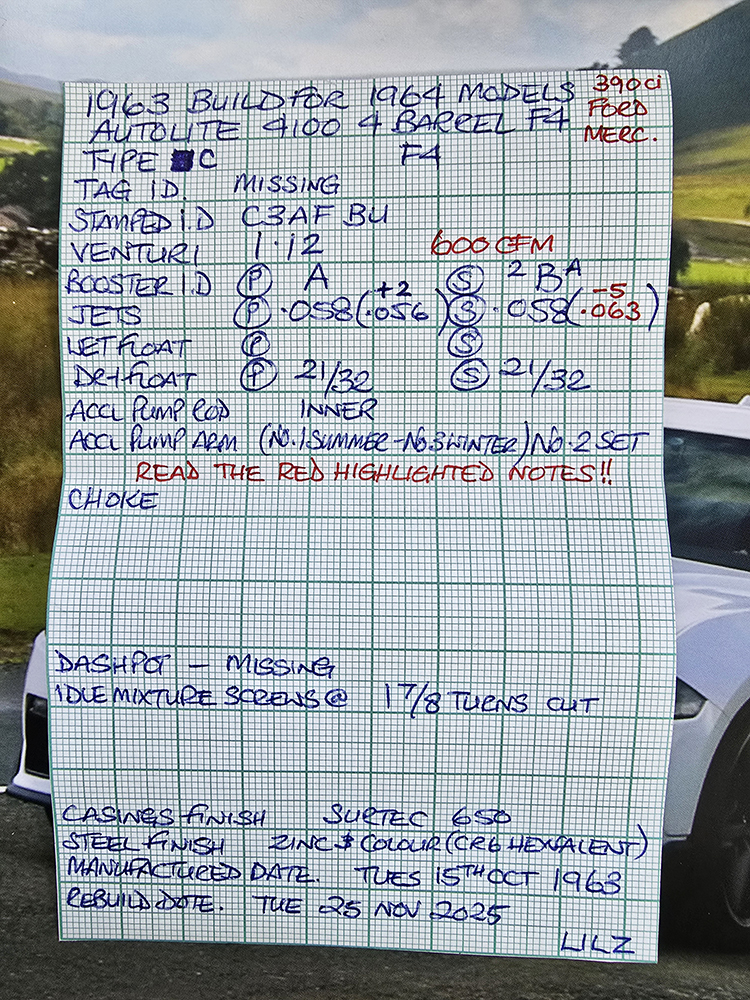
We are continuing to restore our stock of carburetors like this Autolite 4100, it has been completely stripped down, coated and rebuilt with precision replacing parts where needed. There is a list of everything that has been done to these carb so you know exactly what you’re getting.
If you want an original, period correct part this is as good as NOS, if not better, then we could do it; at a price.
We hope to see you at our new offices within the Mustang Maniac yard to spend some of the Gift Vouchers on line or with us at the counter.
Stay Safe & Take Care!
P.S. Don’t Drink & Drive over the festive season! The local constabulary would like nothing more than to add a few points to your license or take it away as parting gift for 2025.
Here at Mustang Maniac we think that the Christmas Season starts earlier each year, We even spotted some Christmas decorations before Halloween. We tend to prepare for the inevitable seasonal rush by checking the stock levels of the more “gift” orientated items ready for our customers. We get requests for things like oil & filter kits, fender grippers, decals, emblems and even one of our specialist tools. Although oil may seem like an odd thing to buy, but for petrol heads (“gear heads” for our friends on the other side of the pond), it can be an expensive necessity every year. We often get asked by spouses “What can I buy him (or her)”? There are a few suggestions we can come up with to help like above suggestions, but the easiest and fail safe is our Mustang Maniac Gift Vouchers. The lucky recipient can then choose what they want – when they want! These vouchers are available online for instant delivery via email, so there’s no need to worry about them getting ‘lost’ in the post. Click on the images below or click the link here to make your choice of amount.
This year we have our Mustang Maniac Limited Edition 2026 Calendar ready, we have a few shots if it below. We are giving these away, yes you read that right, giving them away with a orders from Mustang Maniac. These are in short supply, as they are every year. We have already posted a number out to our regular customers. If you are planning on making an decent sized order with us and want a calendar, please let us know and we will put it in with your order on a first come first served basis. Hurry, there’s only two boxes left!
These calendars are perfect for noting down the dates of Classic Car shows, car events, birthdays etc. on the one month to view configuration, and you get to look at some Classic Fords too.
Clearance Sale Items:
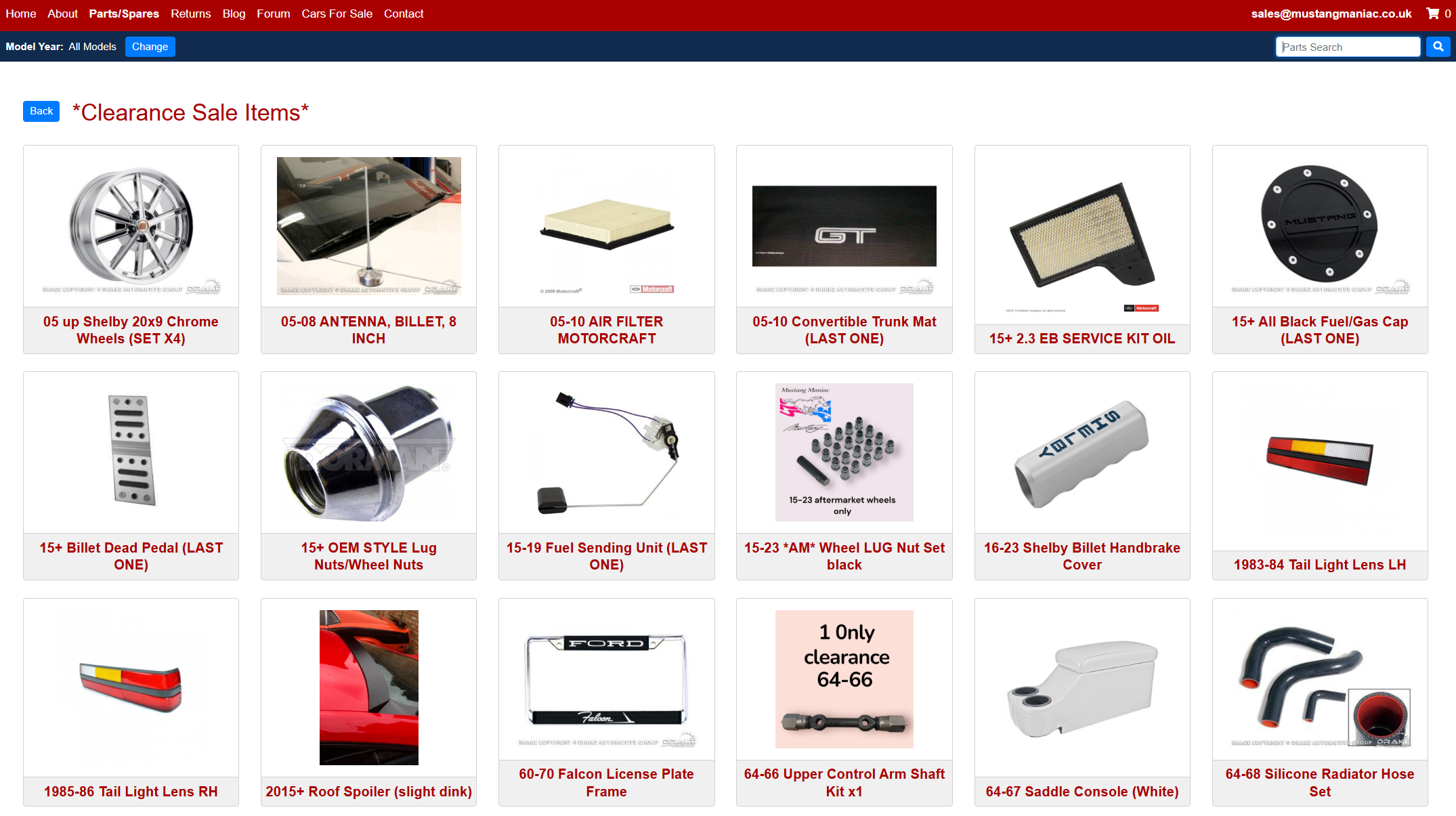
Our section of Clearance Sale Items is going well. We tend to add to this section of the WebShop on an ad hoc basis, which could be a couple of times a day depending on what mood Adam is in. Check out the page here for a bargain or two or just for a few ideas. You may not know you need the item until it’s on sale and want to upgrade your own item. Worn boot (trunk) carpet, perished hose and fancy a nice new silicon set, a damaged wheel, or new lug nut, fuel sender playing up, fancy a gold coloured brake reservoir cap for a little under hood bling, or maybe a hump hugger for a little extra storage? Check it all out here or click the image below.
Offices:
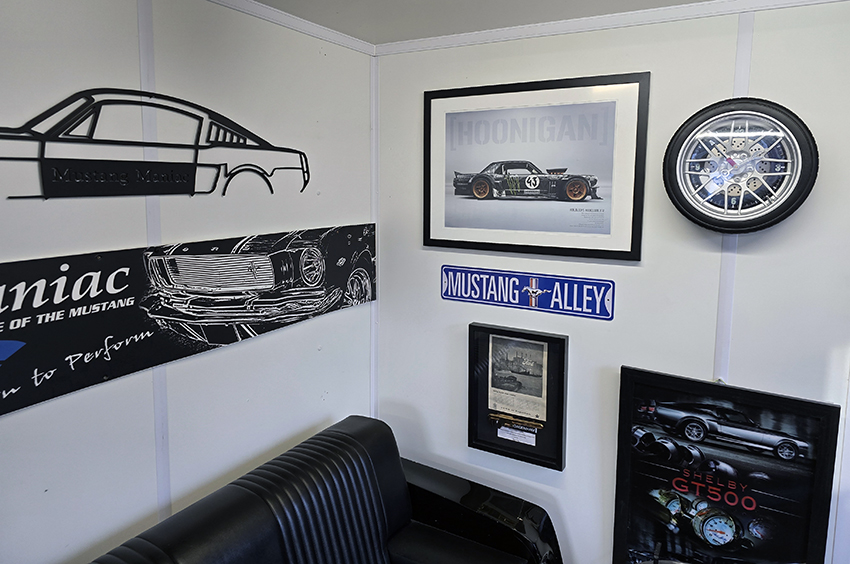
Our new offices are pretty much complete now with only more obscure items to be found a home. Adam likes the new setup where he can hand items over the sales counter for orders that have been arranged to be collected direct from the stores. If you need the part fast and we have it in stock, if you want to call in, we can get it for you while you wait.
Mystery ImprintSpotted
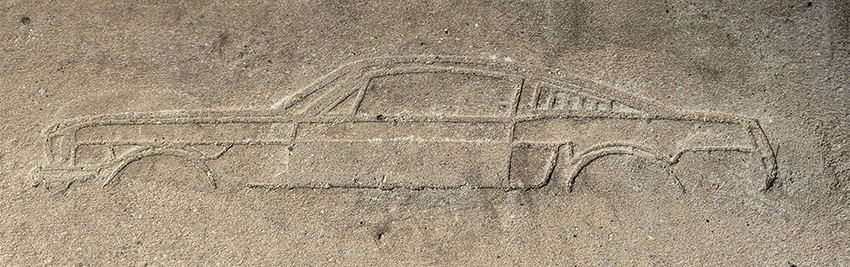
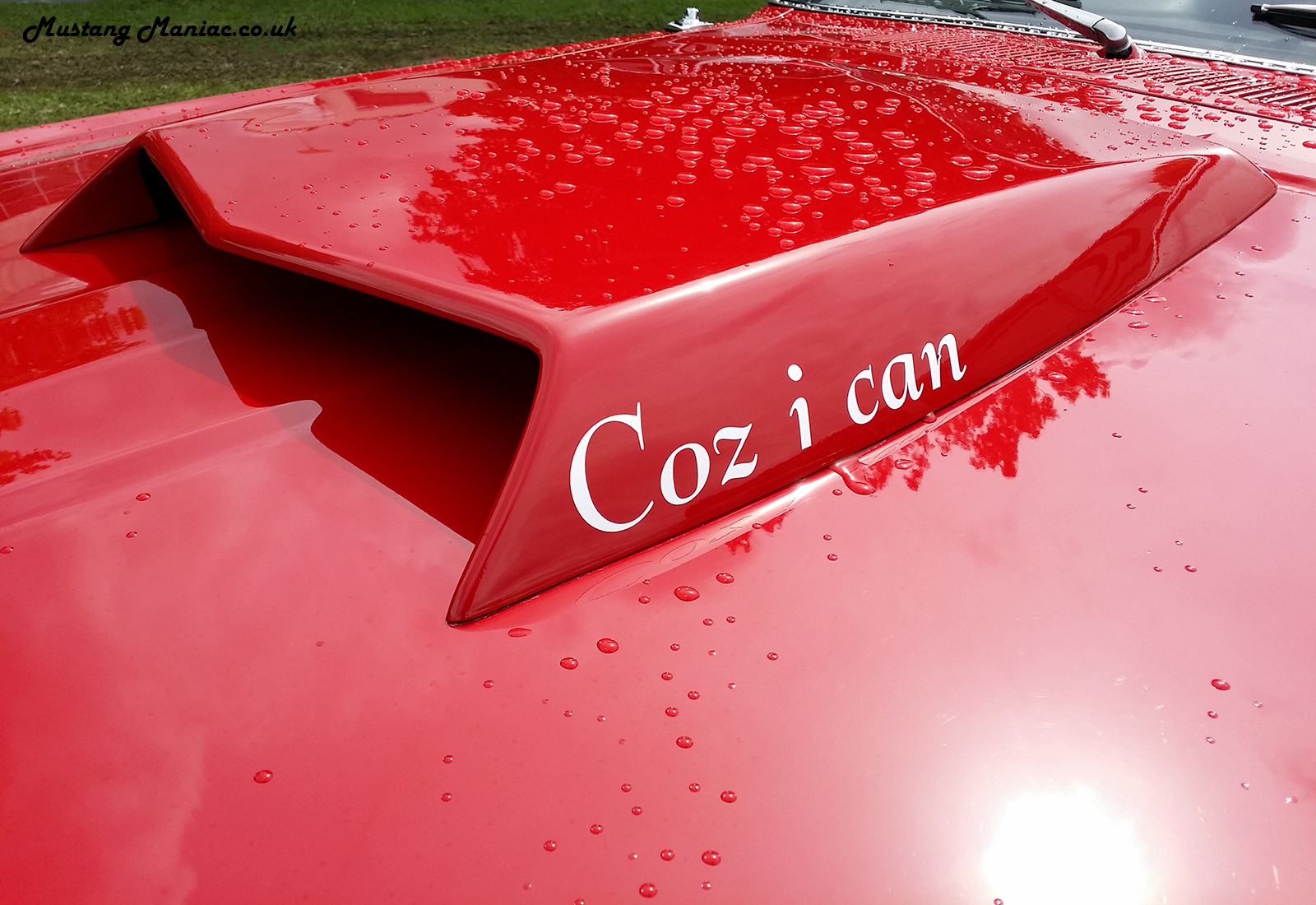
A little while ago we posted about a hidden imprint we just put in for the fun of it. Since that post there has been a couple of eagle eyed customers point out the location of the Mustang imprint. We would like to say there is a prize for spotting it, but it’s just for fun!
“Adam is the UK’s leading Mustang Expert, highly recommended by the club and work out of a Mustang Disneyland with piles of spares, lines of parts cars, and treasures….”
Quentin Willson – Classic Car Magazine June 2015.
“Mustang Maniac in Ware has done a really cracking job detailing the engine, fitting new suspension, replacing both floors and now she’s solid, shiny and sweet driving.”
Quentin Willson – Classic Car Magazine June 2015.
————————————–
“Adam and the team, with a very special mention to Al, have had my car for a few weeks to carry out its annual inspection, MOT and to fix some jobs they had discussed with me last year. Having just collected it from them today (Fri 07/08/2015), it runs better now than it ever has thanks to the care, attention to detail and ‘other magic’ they know. As usual the whole process has been completely painless – it’s a great feeling to know that the people looking after my old car think as much of it as I do…so I have absolutely no worries leaving it in their capable hands. This time they completed all the jobs on my list as well as rectifying a few more that I never realised were an issue, thus saving me from future trouble. I would strongly recommend Adam and the Mustang Maniac team to anyone wanting proper experts to look after all their Mustang needs….then you can simply leave them to it in the knowledge they will always do what’s best for these lovely old cars”
GW – retired Ford Motor Company Director
————————————–
“Mustang Maniac are the font of all knowledge. Adam is always there with advice and parts I need. My one stop Mustang shop. The standard of workmanship from his team is unmatched in the trade”. 101% recommended.
http://onemanandhismustang.com
—————————————-
‘Adam and his team cannot be more helpful, not only do they do what you ask to be done, they go be-yond and actually replace/repair or correct things that you would never know should be done. Always lend and ear, and get you out of tricky situations…I wouldn’t take my classic mustang anywhere else”!
Lance Barrington.
————————————–
“Wow! As soon as I arrived at Mustang Maniac I knew I my car was in the right place. The service was so efficient, professional and boy do Adam & the Team know their stuff! I couldn’t recommend a company more highly. I even drove away with a tear in my eye – and this time it wasn’t the exhaust fumes!”
Liv Davidson
—————————————
“Chaps, what a difference, a lovely drive back home and even floored it for a while which chucked 40 odd years of leaves and crap out of the vents. Great fun at last!
Thanks again for all your time and attention spent on the car you guys have done an amazing job.
Cheers.”
Jon O’Leary
————————————–
“The work that you guys at Mustang Maniacs have done on the car was phenomenal – differences you have made since you got it and did a couple of days work, Pulls and accelerates noticeably better – absolutely beautifully and even sounds better. The brakes also seem to work so much better and it handles and steers so so much better in the bends and straight – no more steering wobble or unnoticeable !!! Petrol consumption is also so much better – really very noticeable indeed.”
Adam Dabrowski.
“First of all thank you for your hospitality and the rubber aerial seal and the keyring. The drive home was an absolute pleasure. I enjoyed driving the car before, now I LOVE IT. You and Alan definitely worked your magic on the Stang. You have transformed it from a good car to a great car. I will be your life long loyal customer.”
Mitch Rustem
“Just a brief email to say thanks that I was made welcome on arrival and the effort for taking the time to show me around the workshop and meeting with the mechanic (Alan I think) who ran through the work and set up he carried out on my car, this felt a very personnel service indeed. This is testament to your knowledge and love of Mustangs and how you operate your business.
My Mustang felt so much more driveable with all the little tweaks done. The brakes felt so much sharper, I didn’t have to apply the regular 120lb of pressure to stop. The steering was much more tighter, it held the line on the motorway with no shaking at speed. The handling has improved threefold and actually goes where you steer now. I didn’t realise how poorly she handled until Mustang Maniac put it right. All the cosmetically components and upgrades have given me a huge smile. Absolutely love it.
Thanks again for making my Mustang a good drivable car. I will be back for the next upgrades and advice at some stage as a returning customer. A very happy Mustang owner.”
Paul P.
“Mustang Maniac done some suspension work on my 1966 Fastback in went in with the usual old car problems lots of noises and bangs and worsted of all lots of body roll, they fitted a new pair of front shocks and springs a new 1” shaw bar and they sorted some other jobs that needed doing, the car now looks great with its new shocks and springs and it is sitting right but best of all it’s driving like a completely different car to how it went in I’m really pleased with their service”
Kev Rushworth.
I have had a few orders from you now with many more to come and I would just like to say what a fantastic service you provide shipped on day of purchase received next day on every order 1st class the best
If only the Americans could take a leaf out of your book
Regards
Greig Duffill