This week we are going to show you just what E10 ethanol does to your pride and joy. Modern day cars are using E10 compatible fuel hoses, which is fine. But, what happens to the inside of the bits you don’t see that aren’t E10 proof? Just over a couple of years ago when E10 fuel was forced on us we posted about the horrors of this E10 ‘fuel’. We posted a few facts as follows:
- Ethanol is an alcohol substance, those properties will dry out the rubber components in a fuel system. This leads to cracking and brittle fuel lines, floats, seals and diaphragms, caps off’s etc.
- Ethanol is corrosive when in comes into contact with certain materials within the fuel delivery systems and its related storage. This will be things like the flexible joining parts, rubber compounds and also the more worrying aspects of the zinc and aluminium alloys used in carburettors. Yep, your nice new shiny carb will slowly disintegrate inside out.
- Ethanol is ‘hydrophilic’. In other words it loves water. Because of the water absorbency properties, the water content enters fuel containers when they are filled up, that’s your fuel tank, jerry cans, plastic petrol cans etc. Once water is in the fuel it forms a chemical mix that causes corrosion of internal parts. As the fuel level in your fuel tank or container drops, water condenses on the cool surfaces of the container, droplets form and run down into the fuel where the ethanol absorbs it.
- Ethanol is also a solvent in older or classic car engines. Not such a bad thing you say? Well, the ethanol begins dissolving the varnish and other deposits in your tank and fuel lines. These deposits are then carried to the carburettor or injection system where they can clog the small or tiny orifices involved. The results of which could cause all sorts or problems, over fuelling, fuel starvation, stuck floats, blocked jets, engine stumbling, idle issues, pick up issues and so on.
With all that said (again), we had a car into brought into us to be taken for an MOT after it has been stored for some time. It wasn’t running very well at all, maybe 5 out of the 8 cylinders is what it sounded like. We did as we were told and booked the car in for an MOT. Now, all credit due to the owner, the car doesn’t need an MOT, as it’s exempt due to the age. However most responsible owners want to know they are driving a safe car.
The car was taken down the road to the test centre where all of a sudden a pungent smell of fuel suddenly filled the cabin of the car. Adam pulled over as soon as he could and got out to have a look. Looking down the road there was a trail of fuel following him with a puddle getting bigger by the second under the back of the car. Adam looked and could see that there was a stream of fuel pouring out the tank. Instinct was to plug the hole with his finger, and luckily Adam had his phone in a pocket and managed to call the yard for somebody to bring out a box of rubber bungs while he was laying in some fuel. The car was in a layby just a few miles down the road from the workshops and within minutes help had arrived. The hole was plugged and the car was quickly taken back to the yard with the rescuing car following behind to keep an eye on things.
The car was put straight up onto the ramps for a good look. To make the car safe the car was drained of fuel and stored safely, for now. The smell of it will mean that we will have to dispose of it properly. There wasn’t to much left of the fuel as a fair amount of it was down a dual carriage way, and also down Adams arm. If somebody had thrown a lit cigarette butt out their car, there could have been fire, with some serious injury – that isn’t worth thinking about. The sender fitting was removed from the tank where the guys could see that the electrical connection from the sender in the tank had rotted away and just fell out.
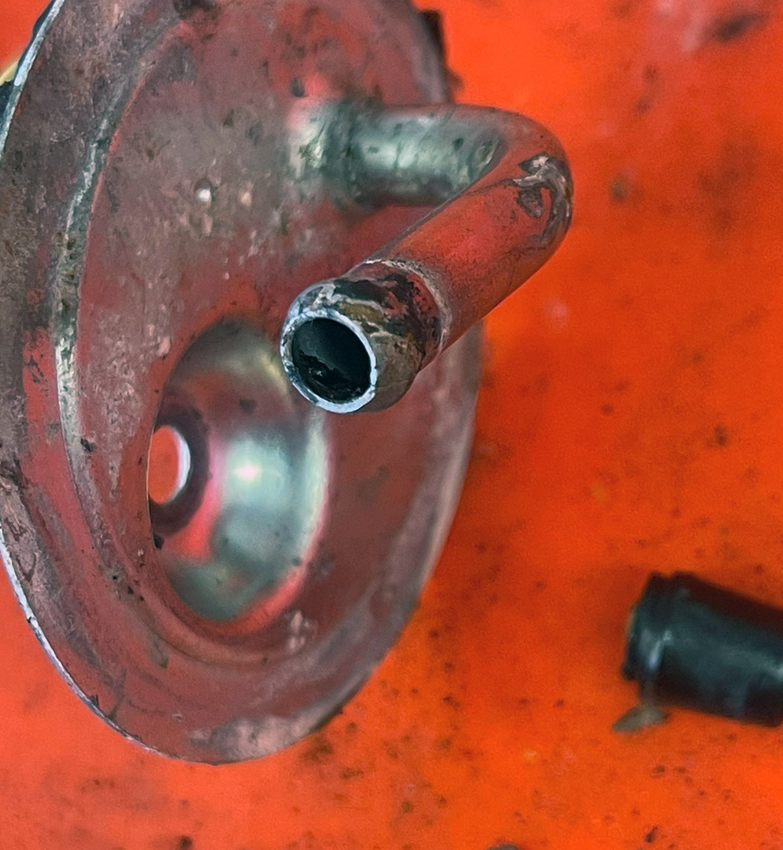
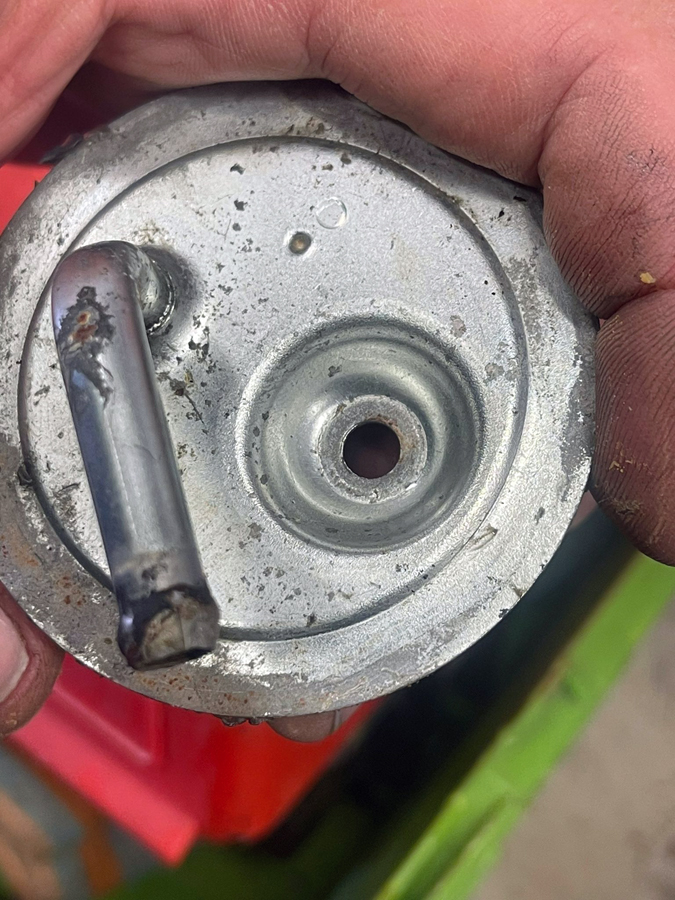
The fuel line rubber pipe was removed and Adam cut it open to see what was going on, believing it to be the ethanol causing the problems. He wasn’t wrong, the pipe was in a bad way too.
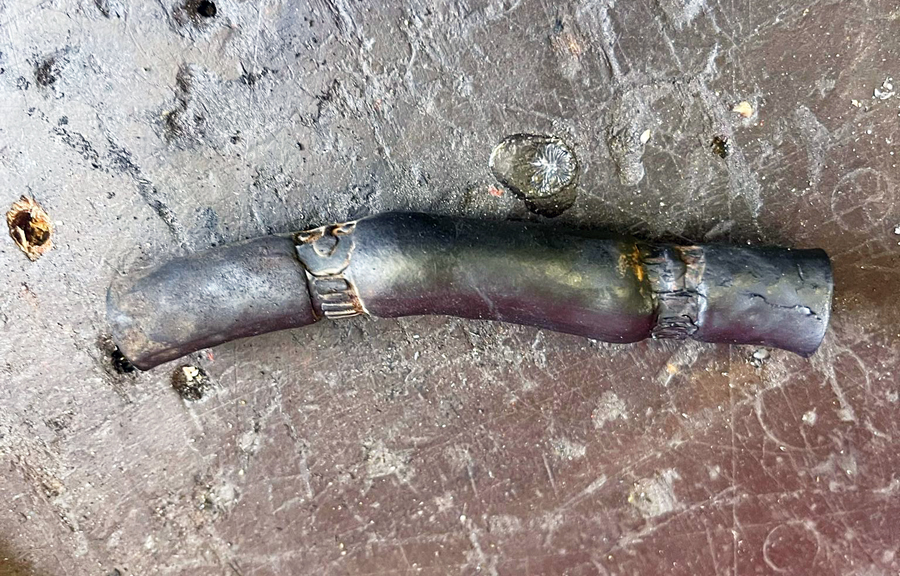
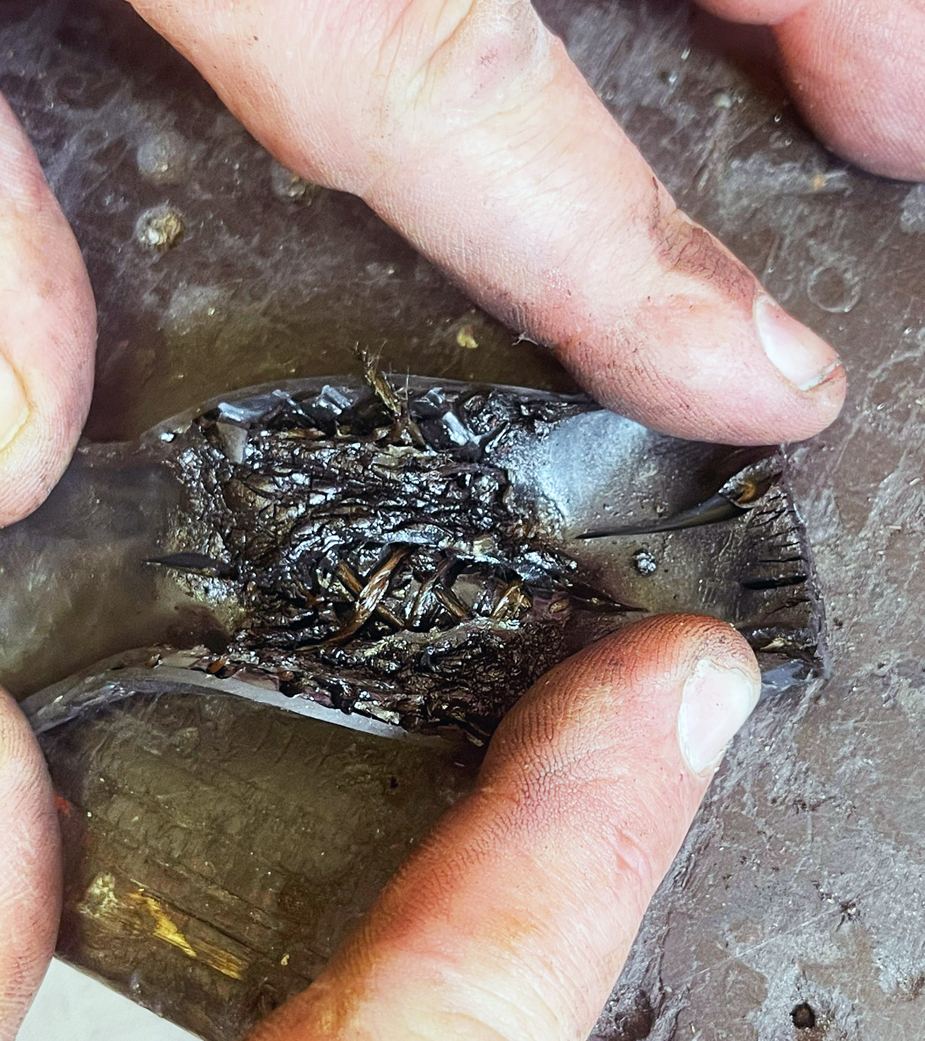
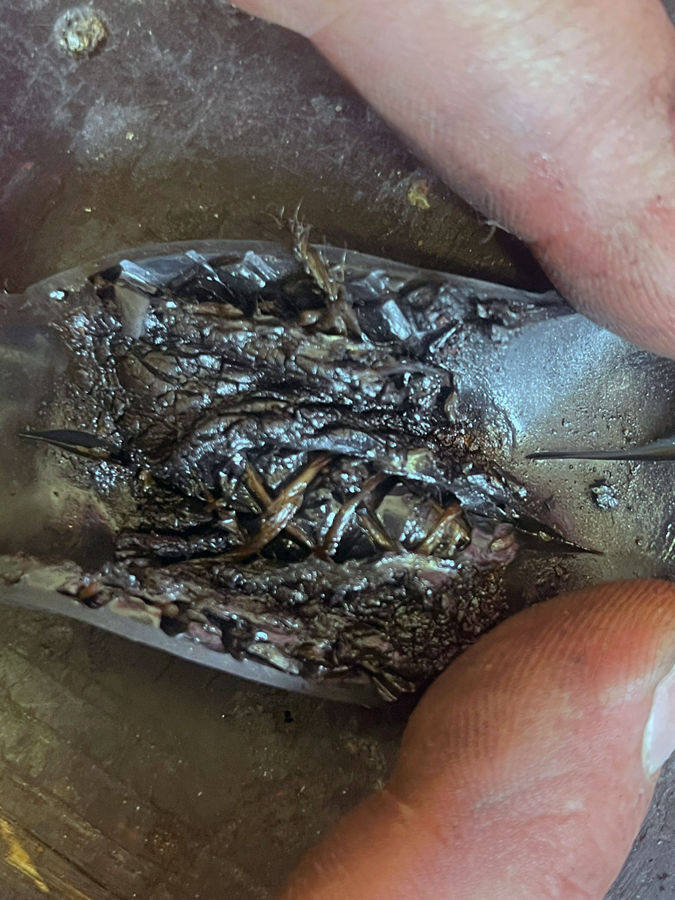
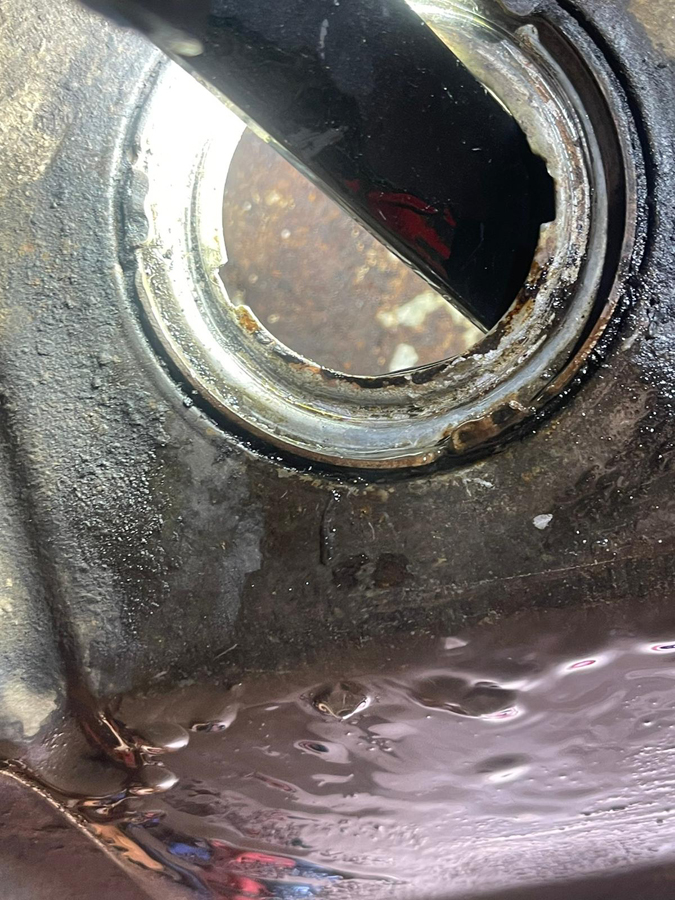
The pipe looks like something out of a H. R. Giger Alien horror movie. The ethanol had eaten through the pipe’s inner wall and was almost through the outside wall. With a sudden loss of fuel from the pipe splitting, the car would have stalled and ground to a halt, all with fuel pouring out. Another fireball accident waiting to happen if there was a bad enough rear end collision. The inside of the fuel tank was a mess and will need a new one, as does the sender. You only need to see the damage the ‘fuel’ has caused on this car. You can see the yellow coiled wire going to where fitting should have been.
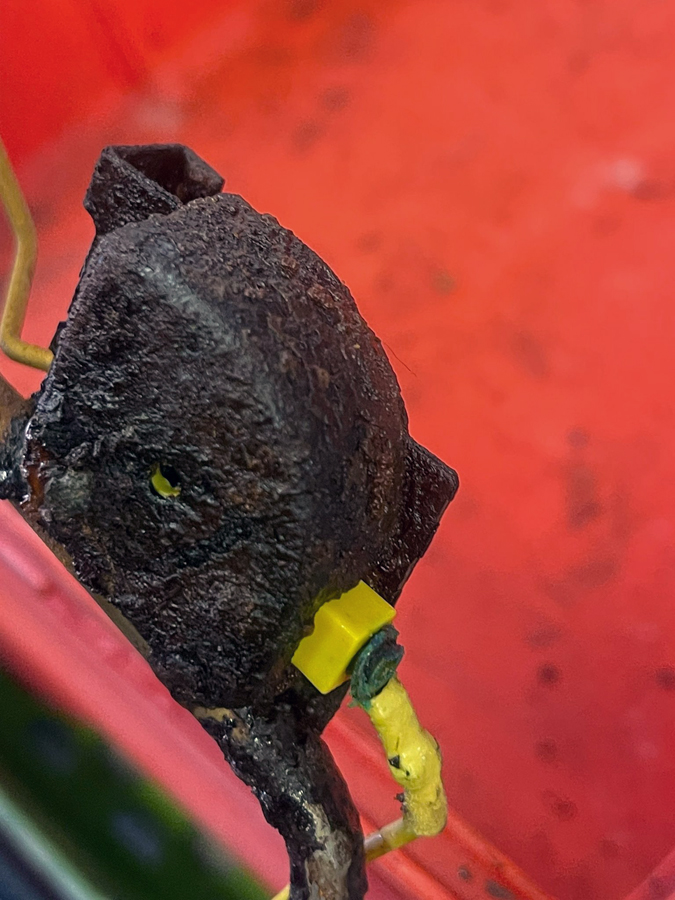
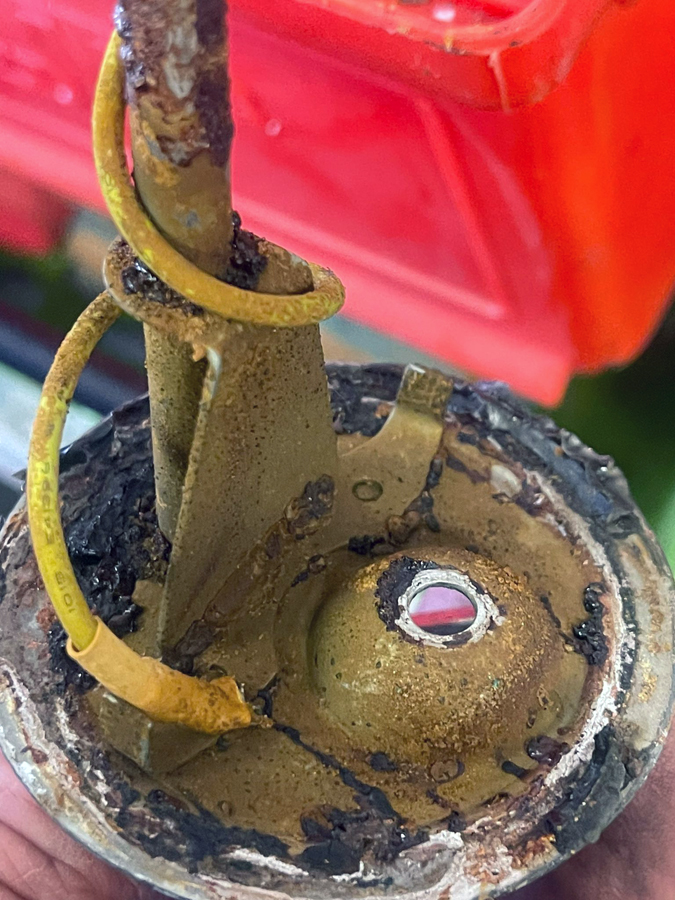
The carb was taken apart to inspect what was going on, the still image below was taken from the video at the time where float chambers needed to be picked off before cleaning.
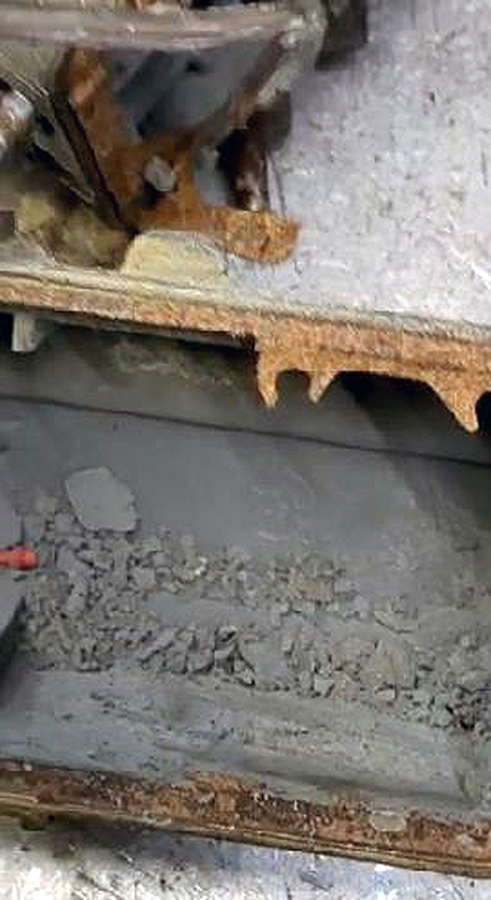
The carb needed a full clean out and a full seal kit to rebuilt it. We’re still not sure how the carb’s seals hadn’t leaked to be honest. As the inside of the fuel tank was like this too, we just can’t get in there to clean it.
So what are we saying? If you haven’t already digested the points above then this fact may shock you. Petrol has a shelf-life of six months if stored in a sealed container at 20 degrees – or just three months if kept at 30 degrees. The more it’s exposed to heat, the more quickly it will go off. It has also been noted on many motoring organisation websites, that E10 fuel has a shelf life of up to three months. So if you store your car over the winter like we all do, then the car’s fuel system is under attack from standing ethanol.
You can add fuel stabilisers to help of course, but we have found that even after a short period of time the fuel goes bad and the cars tend to run like a bag of ol’ nails. We’re not exactly sure how long this car had been stored before it came to us, but it was bad. We think that a some fresher fuel was put into the tank in order to bring it to us. All the fuel lines will have to be replaced, all the rubber hoses will need be E10 proof and fuel filters need to be replaced.
We are not trying to sell you anything (although we do sell E10 fuel pipes), or create panic with a horror story. What we have shown here is a very real problem with the E10 rubbish fuel forced on us. If you haven’t replaced the hoses on your classic car and you use E10, or if your pride and joy has been stored for a while, we seriously recommend that you go and carefully check the the full fuel system before you drive. The best way to store your car for any considerable time? Empty the fuel tank.
This particular fix is going to be an expensive hobby for the owner, fuel lines, seal kits, fuel filters, sender, and fuel tank along with our time and effort to clean everything and put it back together again. Use E10 stabilisers as a minimum, or even better just use premium fuel without much ethanol in it.
Please check your fuel lines!






 Mustang Maniac






Oh my goodness what a horror story thanks for telling it like it is guys!!!! BE WARNED.
LikeLiked by 1 person
Thanks Simon, It has cost the customer a lot of money, not so much in parts but in how long it takes to sort this things out. Rebuilding a carb is not a quick process. Get it wrong and the car will run as bad as the fuel that just came out of it.
LikeLike
Excellent article, informative and to the point.
LikeLiked by 1 person
Excellent article, well done!
LikeLiked by 1 person
Thank you. Even we were a little shocked at the damage this ethanol causes.
LikeLike
Pingback: A Few Words Of Warning – MG RV8 info
Pingback: A Few Words Of Warning – MGB tips mods and maintenance